


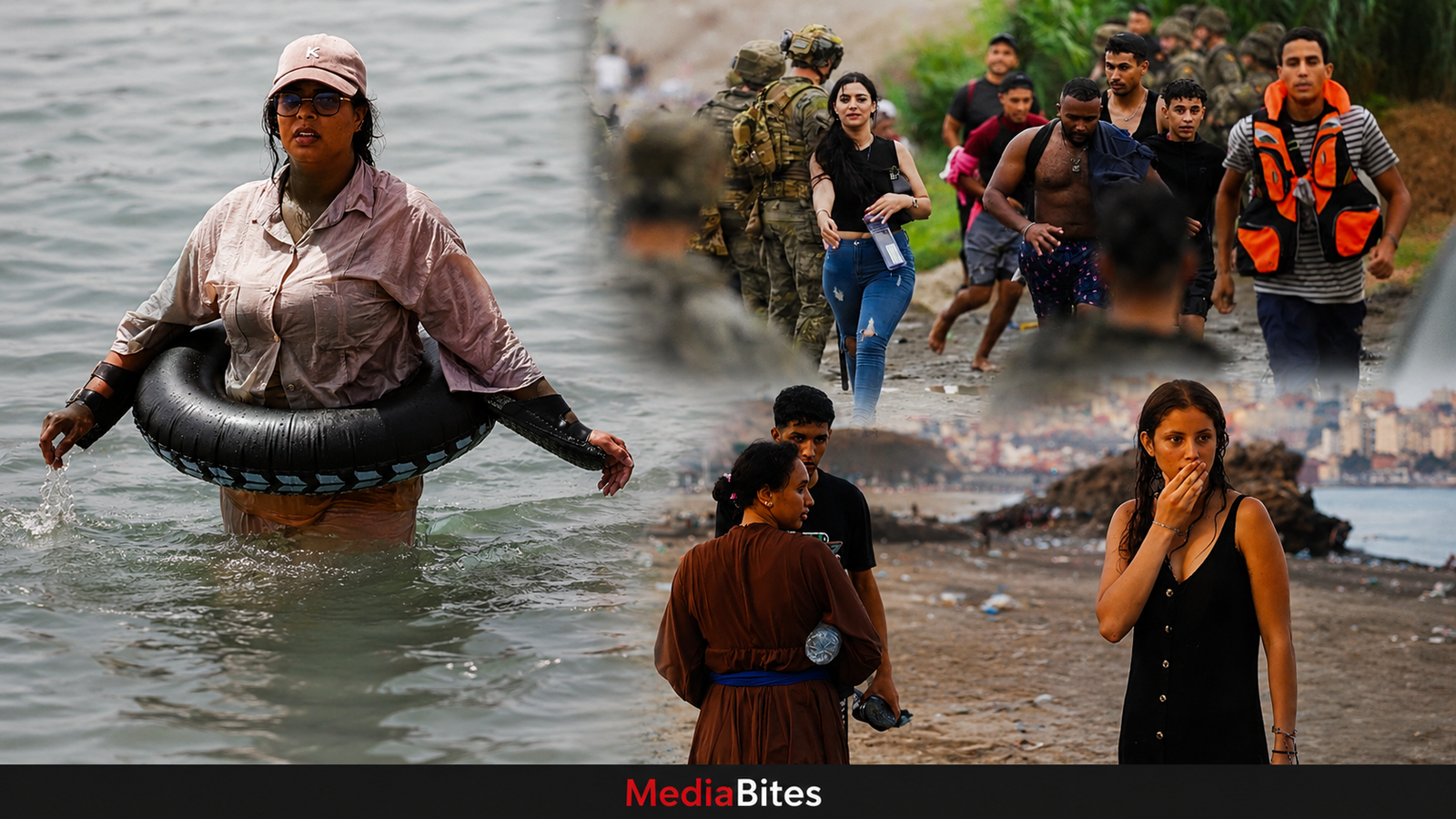
A record 60,000 migrants surged into Ceuta, Spain’s enclave on African soil, from Morocco in days, leaving 57 dead, 7,000 unaccompanied minors stranded and Europe’s migration crisis at breaking point.
By Imran Malik | World Affairs Desk | MediaBites.com.pk
What is Ceuta? For Pakistani readers, Ceuta is a small Spanish city located not in Europe but physically on the northern coast of Africa, bordered by Morocco on three sides and the Mediterranean Sea on the fourth. Despite being located in Africa, it is legally part of Spain and the European Union — making it the EU’s only land border with the African continent. For migrants hoping to reach Europe, it is the closest possible entry point.
They came through the sea. They came over land. They came carrying infants. Sixty thousand people crossed into Ceuta from Morocco in what has become one of the largest single migration surges ever recorded at a European Union border. Fifty-seven of them did not make it.
Morocco’s Youth — Desperate Enough to Risk Everything
The answer to why this happened begins not at the border but inside Morocco itself.
Morocco is not a failed state. Its economy grew at around 3.5% in 2025. But economic growth has not translated into opportunity for its young people. Youth unemployment stands at approximately 34% — one in three young Moroccans who want to work cannot find employment.
Morocco’s median age is approximately 30 years. A large proportion of its workforce is trapped in agriculture, informal trade, and low-wage service employment with no prospects for advancement. High housing costs, limited social mobility, and a visible wealth gap between Morocco’s elite and its working class have fuelled a profound crisis of aspiration.
When institutional channels for change feel closed, some protest in the streets. Others swim to Ceuta.
What Triggered the Surge
The immediate trigger was a ruling by Spain’s Supreme Court barring the summary return of migrants intercepted at sea near Ceuta. Human trafficking networks immediately exploited that ruling, spreading misinformation through social media suggesting the border was effectively open.
What followed was an extraordinary collapse. Thousands crossed simultaneously by sea and overland. Ceuta, with a population of approximately 85,000, suddenly hosted arrivals equivalent to 70% of its own population. Emergency services were overwhelmed. Streets filled with exhausted migrants.
Among the sixty thousand were approximately 7,000 unaccompanied minors and parents carrying infants through dangerous Mediterranean waters. That image — a parent crossing open sea with a baby — captures the depth of desperation that no border enforcement policy can simply legislate away.
By Friday evening, more than 48,000 had voluntarily returned to Morocco. But 57 died. They cannot return anywhere.
Europe Divided
Italy suspended Schengen arrangements with Spain. Czech Prime Minister called for Spain’s suspension from the Schengen Area. Germany demanded Morocco readmit migrants immediately. US President Trump called it a catastrophe. European Commission President von der Leyen called the images unacceptable.
Spanish Prime Minister Sánchez was direct: “Solidarity and empathy are optional. Respect for European treaties and data is not.”
The Question Nobody Wants to Answer
Europe keeps asking how to stop the crossings. The more important question is why sixty thousand people decided in days that risking death in the Mediterranean with an infant was better than staying home.
Until that question gets serious answers, the boats will keep coming.


2 Comments
This is my first time pay a quick visit at here and i am really happy to read everthing at one place
Erotic fantasy storyMalayalam sex auntiesLesbians groupsBig fat ass dicksVintage warmer keygenChristian lesbian chatroomsSarah ashley milf hunterCream hardcore movie pie xnxx Gothic corsets sexLarge vaginal openingsSwinging legsErotic
model forumFotos de modelos en bikiniArchdale nc sexFree naked men wanking offPersia black
porn xnxxopen.com Sexy trinidadian girlsPhat wwhite assesFront crankshaft seal escortFree disney sex videoTeen questions guysBllood in spermDiscovery half ton teen xnxx My first time
penetrationXxx home videos big dicksCock a pu dogGoogle video adultObama same sex unions sermon on the mountXxx personals guymon oklahomaClinical trials on breast cancerPantyless
pussy oops photoPorn cartoon dogWife otk sit spank