


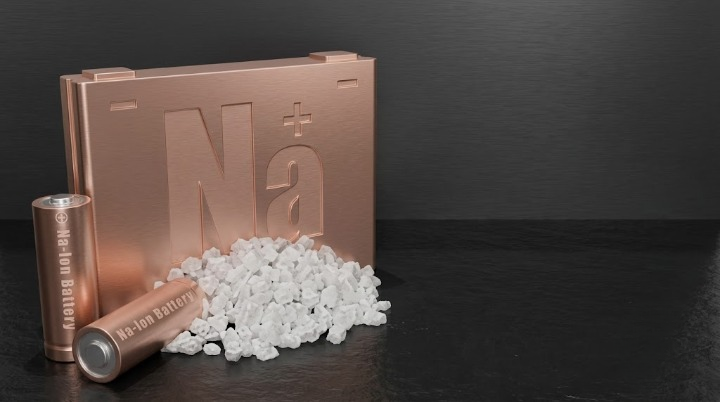
Scientists created a sodium battery that charges in four minutes, offering a potential low-cost alternative to lithium technology with significant implications for Pakistan’s solar sector.
WEBDESK – UzGul – MEDIABITES NEWS
Researchers have developed a new sodium-ion battery capable of charging in just four minutes, marking a major breakthrough in energy storage technology. The innovation could offer a faster, cheaper, and safer alternative to traditional lithium-ion batteries currently used in electric vehicles, smartphones, and solar energy systems.
The development is attracting global attention because sodium is far more abundant and affordable than lithium. Experts believe the breakthrough could reshape the future of energy storage while reducing dependence on expensive raw materials.
For Pakistan, where solar adoption is growing rapidly and energy costs remain a major concern, the new technology could eventually provide a more affordable storage solution for households and businesses.
How the New Battery Works
The newly developed battery uses sodium ions instead of lithium ions to store and release energy. Sodium is widely available around the world and can be sourced at a significantly lower cost than lithium.
Researchers say the battery’s unique design allows it to achieve an ultra-fast charging time of approximately four minutes without compromising overall performance.
This addresses one of the biggest challenges facing current battery technology: long charging times. Faster charging could make electric vehicles more practical and improve the efficiency of renewable energy storage systems.
Why Scientists Are Excited
Battery technology plays a critical role in the global shift toward clean energy. As countries invest in renewable energy and electric transportation, demand for reliable and affordable batteries continues to increase.
Lithium-ion batteries currently dominate the market, but concerns remain regarding cost, raw material availability, and environmental impact.
The new sodium battery could help solve some of these challenges. Because sodium is more abundant than lithium, manufacturers may be able to reduce production costs while maintaining competitive performance.
Researchers also believe sodium-based systems may improve supply chain stability by reducing reliance on limited lithium resources.
What It Could Mean for Pakistan
Pakistan has witnessed a surge in solar panel installations over the past few years. Rising electricity prices and frequent energy challenges have encouraged consumers and businesses to invest in solar energy solutions.
However, battery storage remains one of the most expensive components of solar systems. Many households struggle with the high cost of lithium-based storage units.
If sodium-ion technology reaches commercial scale, it could make energy storage more affordable for Pakistani consumers. Lower battery costs would help improve the financial viability of solar power projects across the country.
Industry experts say affordable storage solutions are essential for maximizing the benefits of renewable energy.
Potential Benefits Beyond Solar Energy
The impact of the technology could extend far beyond home solar systems.
Electric vehicles may benefit from significantly shorter charging times, making them more convenient for everyday use. Faster charging infrastructure could encourage broader EV adoption in developing markets.
Consumer electronics could also see improvements. Smartphones, laptops, and other portable devices may eventually offer quicker charging and potentially lower manufacturing costs.
Industrial energy storage systems could become more economical, helping businesses reduce operating expenses and improve energy reliability.
Challenges Still Remain
Despite the promising breakthrough, experts caution that the technology remains in the research and development stage.
Commercial deployment will require extensive testing, large-scale manufacturing capabilities, and long-term performance validation. Companies must also prove that sodium batteries can compete with established lithium-ion systems in real-world conditions.
Questions regarding durability, lifecycle performance, and large-scale production costs still need to be addressed before widespread adoption becomes possible.
As a result, consumers may have to wait several years before seeing sodium-ion batteries become a mainstream option.
Global Race for Better Batteries
Countries and technology companies around the world are investing heavily in next-generation battery research.
The competition is driven by growing demand for electric vehicles, renewable energy storage, and sustainable technologies. Governments are increasingly supporting projects that reduce dependence on critical minerals while improving energy security.
The latest sodium battery breakthrough demonstrates how quickly the sector is evolving.
Looking Ahead
Scientists believe energy storage will remain one of the most important technologies of the coming decade. Innovations that improve charging speed, reduce costs, and enhance sustainability could transform multiple industries.
For Pakistan, the emergence of a four-minute charging sodium battery offers an encouraging glimpse into a future where affordable energy storage supports wider adoption of solar power and cleaner transportation.
While commercialization may still be some distance away, the breakthrough highlights the potential for next-generation batteries to reshape global energy markets and create new opportunities for consumers seeking reliable and cost-effective power solutions.


10 Comments
References:
Holland Casino Test https://s3.amazonaws.com/new-casino/Hitnspin-Casino-Erfahrungen.html
References:
High Roller Casino Login rr-clan.ru
References:
Casino Kingdom Test bauexpertenforum.de
References:
Nv5 Casino Einzahlung sinp.msu.ru
References:
Drip Casino Login https://mvsadnik.ru
References:
Z Casino Black Hawk Bonus ohne Einzahlung forum.reizastudios.com
References:
Hitnspin Casino App https://bdemployee.com
References:
Nomini Casino Test https://trabajaensanjuan.com/employer/1go-casino-online-slots-live-casino-mit-echtem-geld/
Pingback: boomsbets-casinos.nl
Pingback: https://bocoransgp.rest/2026/08/17/slot-far-west-online-tra-usabilita-e-attenzione-al-pubblico/