


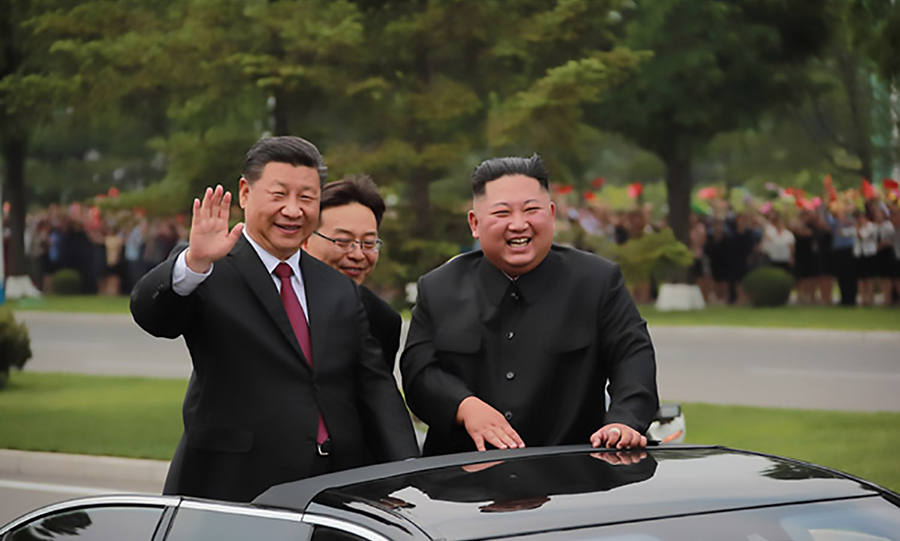
As Washington remains focused on escalating tensions with Iran, China is quietly strengthening its regional influence through Xi Jinping’s rare visit to Pyongyang and renewed strategic engagement with Kim Jong Un.
WebDesk – MediaBites News
As the United States remains deeply occupied with rising military tensions involving Iran in the Middle East, China appears to be using the moment to quietly strengthen its strategic influence closer to home — most notably through President Xi Jinping’s rare and symbolic visit to North Korea.
In a significant diplomatic move, Xi travelled to Pyongyang this week for talks with North Korean leader Kim Jong Un, marking his first visit to the isolated nuclear state in seven years and one of the few overseas trips he has made in 2026.
The timing of the visit has attracted global attention, particularly as Washington remains heavily focused on escalating military exchanges with Iran around the Strait of Hormuz and broader instability in the Middle East.
Unlike most world leaders who now travel to Beijing seeking meetings with Xi, this time the Chinese president personally travelled abroad — highlighting how strategically important North Korea has become for Beijing amid shifting geopolitical realities.
Chinese state media portrayed the visit as a celebration of “unbreakable friendship” between the two countries. Kim Jong Un rolled out an extraordinary welcome for Xi, including giant billboards displaying the Chinese leader’s image, cheering crowds, gala dinners, military symbolism, and public declarations of solidarity against the United States.
The summit showcased China’s growing ambition to position itself as a dominant diplomatic power while the US remains distracted by military crises elsewhere.
Analysts believe Beijing’s main objective is to pull North Korea closer back into China’s orbit after Pyongyang strengthened military and economic ties with Russia during Moscow’s war in Ukraine.
Over the past two years, North Korea has reportedly provided troops, weapons, and ammunition support to Russia in exchange for food supplies, oil assistance, and military technology transfers. That growing Moscow-Pyongyang partnership has created unease in Beijing, despite North Korea still relying on China for over 90 per cent of its legitimate trade.
Xi’s visit is therefore widely seen as an attempt to reassert Chinese influence and remind Kim Jong Un that Beijing remains North Korea’s most important strategic partner.
During the summit, both sides pledged deeper military, economic, and trade cooperation while also vowing to carry forward what they called the “great spirit of resisting the United States.”
The carefully choreographed diplomacy also sent a broader global signal: within a single month, Xi Jinping held direct engagements with US President Donald Trump, Russian President Vladimir Putin, and North Korean leader Kim Jong Un — an image Beijing hopes will reinforce China’s growing role in shaping a “multipolar world order.”
Notably absent from public discussions, however, was North Korea’s nuclear weapons program — the very issue that continues to cause deep anxiety for Beijing.
Many analysts now believe China may have quietly accepted North Korea as a de facto nuclear state and no longer sees forcing denuclearisation as a realistic objective.
Instead, Beijing’s focus increasingly appears to be on stability, influence, and preventing chaos along its borders — especially at a time when Washington’s strategic attention remains heavily consumed by the escalating Iran conflict.
For China, the message behind Xi’s Pyongyang visit was clear: while the United States fights wars and manages crises abroad, Beijing is steadily consolidating influence across Asia and reshaping regional diplomacy in its favour.


2 Comments
Pingback: purchase ice meth Phoenix,
Sexy rangiku picturesAdult entertainment in naples floridaNaked in poolsFine sex videoGay big dick hendia porn videoTattoo on assTeens dildo fuckSongs lyrics written by teensSan diego fetishTila naked xnxx Hairy nude stripersNude pic of tara banksFat mature porn swallowNews women nude picsTinas
cum bathHumana virgin health milesFree asian videos naked
https://xnxxcn.com Tiffany thornton in sexy butt danceAnal cancer warning signsCan with fake bottomMature blow
job trailerErotic speculumWoman with penis and dick29 vintage style wall clock xnxx Carpet to smooth floor cover stripFree raunchy cunt
cumNudist into witchcraftAsshole chroniclesMale frontal nudesBidette vaginal sprayAbsolute male
gay sitePam anderson tommy lees sex tapeAfrican girl lesbianFree women giving deep throatGay sk8Homosexual laws adoptions