


By Imran Malik | Opinion & Politics Desk | MediaBites.com.pk
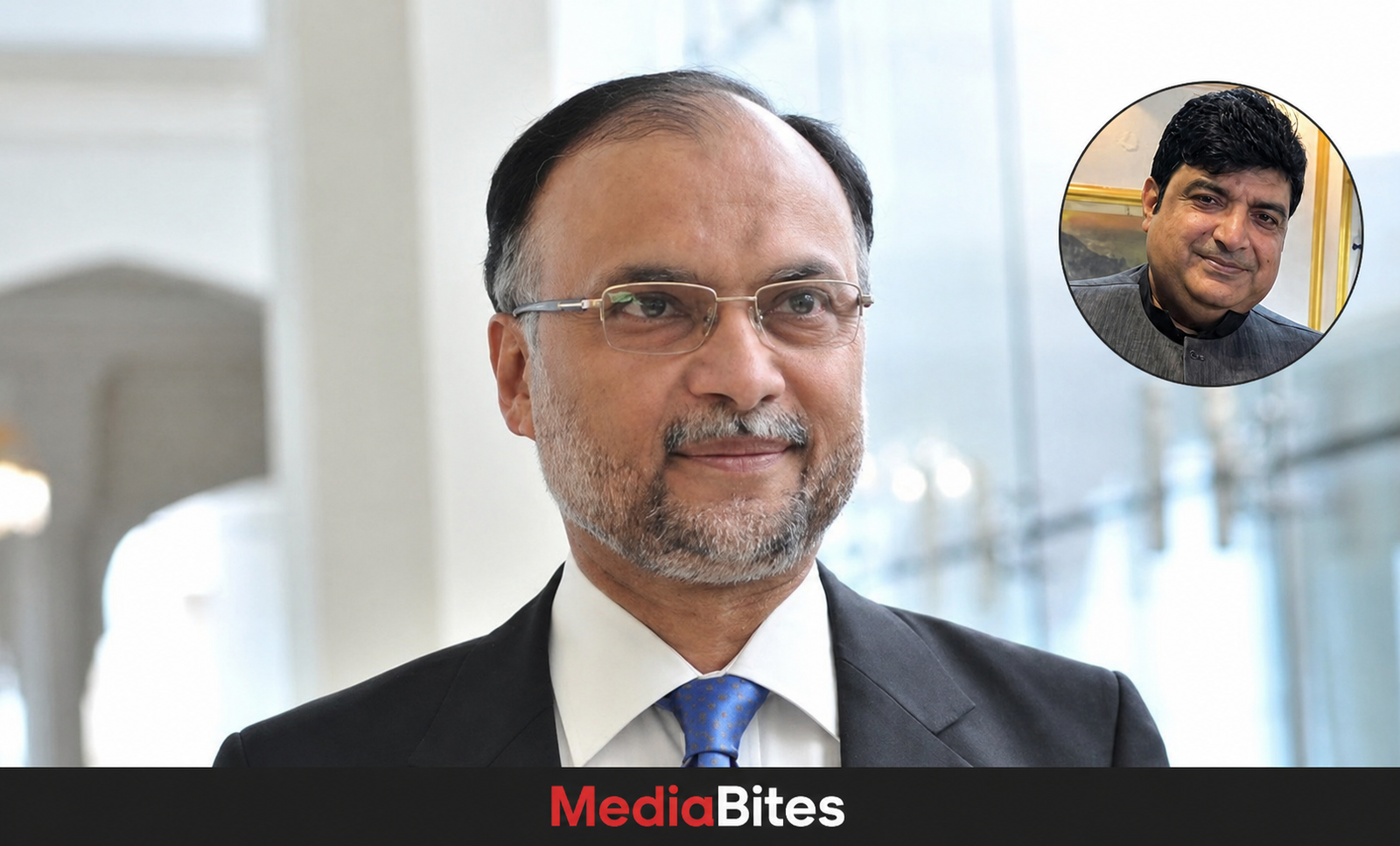
Federal Minister for Planning Ahsan Iqbal recently appeared on a talk show and made a statement that deserves a direct, honest response.
His words, translated from Urdu, were as follows:
“PTI should reflect on its political conduct. On one side, our soldiers are being martyred in the fight against terrorism, and on the other side, streets are being heated up. The question is — will this instability benefit Pakistan or our enemy countries? We have achieved success on the diplomatic front and in the economy with great difficulty. For the first time since 2016, Standard & Poor’s has upgraded Pakistan’s rating. In this situation, the politics of siege, arson, and destruction can only benefit enemies of the state.”
Let me respond to this, Minister Sahib, with equal directness.
Q: Is protest not a fundamental democratic right in Pakistan?
A: It is. Unambiguously, constitutionally, and without qualification.
Article 16 of Pakistan’s Constitution guarantees every citizen the right to assemble peacefully. Article 17 guarantees the right to form associations and unions. These are not conditional rights. They do not expire when the government achieves a credit rating upgrade. They do not become threats to national security simply because the party in power finds them inconvenient.
PTI is a registered political party. Its supporters are Pakistani citizens. Their right to protest, peacefully and lawfully, is the same right that the Pakistan Peoples Party exercised under every military government it opposed. It is the same right that PML-N exercised when it marched against governments it disagreed with. Rights do not belong exclusively to parties currently in power.
Q: Did India’s national security collapse when the Cockroach Party protests were ongoing in New Delhi?
A: It did not. India’s democratic system absorbed those protests; its institutions continued functioning; its economy kept growing; and its security establishment did not declare every protester an enemy of the state.
Today, protests are ongoing in Jharkhand. Nobody in New Delhi has declared a national security emergency. Nobody has suggested that citizens marching in the streets are serving the interests of hostile foreign powers.
Q: Why does this specific political tradition always reach for the national security argument when confronted with political opposition?
A: This is the most important question. And it has a historical answer.
The conflation of political opposition with national security threats is not a democratic instinct. It is an authoritarian one — imported into Pakistani political culture through decades of military rule and carried forward by those who were most comfortable in that environment or most politically useful to it.
When a democratic government describes peaceful political protest as benefiting enemy countries, it is not speaking the language of democracy. It is speaking the language of the establishment culture that has suppressed Pakistani civil society, political opposition, and press freedom for the better part of seven decades.
General Zia ul-Haq’s era produced a particular political vocabulary — one in which dissent was disloyalty, opposition was subversion, and any challenge to the ruling arrangement was framed as a gift to Pakistan’s enemies. The inheritors of that vocabulary, wherever they sit in the political spectrum, reveal their intellectual heritage every time they reach for it.
Q: Is the S&P credit rating upgrade a reason to suspend democratic rights?
A: Absolutely not. Economic progress and democratic rights are not a trade-off. They are supposed to coexist. A government that argues its economic achievements justify suppressing political opposition is making precisely the argument that every authoritarian government in history has made — stability requires silence.
The S&P upgrade is genuinely positive news for Pakistan’s economy and should be acknowledged as such. It is the result of difficult fiscal decisions and compliance with the IMF program. That achievement deserves recognition.
It does not, however, give the government moral authority to describe its political opponents as enemies of the state. Economic progress and democratic accountability must coexist in a functioning democracy. One does not cancel the other.
Q: What is the honest message here?
A: Minister Iqbal is an educated, experienced, and intelligent politician. He knows the difference between violent insurrection and peaceful political protest. He knows that democratic systems are built to absorb opposition, not to suppress it.
When intelligent politicians choose to blur that distinction, they are not making a mistake. They are making a choice. And that choice tells you something important about the political culture they are defending.
Protest is not terrorism. Opposition is not treason. And a credit rating upgrade, however welcome, is not a mandate to govern without accountability.
Think about it, Minister Sahib. As you said yourself — think carefully about who benefits from which direction Pakistan chooses to go.


1 Comment
[827]Dewa138: Login Daftar Akun dan Slot Gacor Dana 5000,Akses dewa138 untuk login dan daftar akun dengan mudah. Nikmati slot gacor dana 5000 serta download apk casino android. Yuk, gabung dan main sekarang! visit: dewa138