


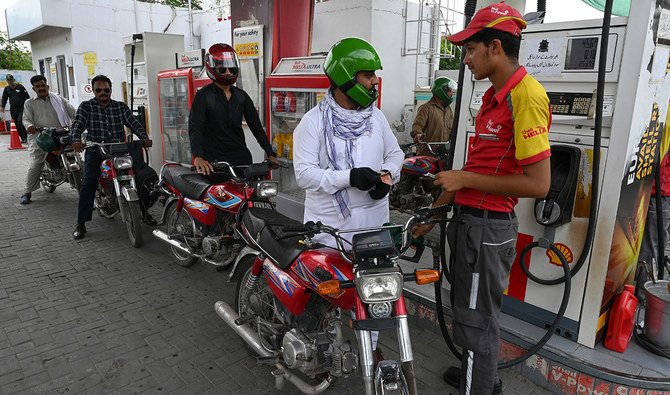
Global oil prices steadied at one-week highs on Tuesday as US-Iran peace deal hopes faded, with Brent crude at $87.62 a barrel — raising fresh questions about Pakistan’s next fuel price revision.
By Imran Malik | Energy & Economy Desk | MediaBites.com.pk
Pakistani consumers bracing for their next fuel price revision have reason to watch global oil markets closely today. International crude prices have surged to one-week highs and are holding firm — and the geopolitical developments driving that surge show no signs of resolving quickly.
Brent crude futures stood at $87.62 a barrel on Tuesday morning, while US West Texas Intermediate traded at $82.08 a barrel. Both benchmarks rose more than 5% on Monday alone — their highest levels since July 31 — before steadying marginally as markets recalibrated their expectations on a US-Iran deal.
Why Oil Prices Are Rising
The trigger for Monday’s sharp oil price surge was a significant development in US-Iran diplomacy — or more precisely, its apparent breakdown.
President Donald Trump responded to Iran’s conditions for a peace deal with his own counter-demands, insisting that Iran pay compensation for people killed in wars, attacks, and protests linked to Iranian activity. That demand significantly complicates the path toward any agreement to reopen the Strait of Hormuz, through which approximately 20% of the world’s daily oil supply passes.
Trump also declared that the US Navy now controls the Strait of Hormuz and claimed American forces had swept the strategic waterway for Iranian mines — a statement that signals continued US military presence rather than any imminent diplomatic resolution.
“There appears to be a gulf, no pun intended, between the US and Iran over what any agreement would actually look like,” said Tim Waterer, chief market analyst at KCM Trade.
Hormuz Flows Already Falling Sharply
The physical impact of the Strait of Hormuz standoff is now clearly visible in export data. According to analysts at Barclays, net exports of crude oil and refined products through the Strait of Hormuz averaged just 3 million barrels per day in the week ending August 7, down sharply from 4.4 million barrels per day the previous week.
That 32% decline in Hormuz flows in a single week captures how significantly the conflict has already disrupted global energy supply chains — and why insurance costs for shipping in the region remain elevated even during periods of relative calm.
Saudi Aramco has also postponed the restart of its 400,000-barrel-per-day Jazan refinery to August 30 after Iran-backed Houthi rebels claimed two attacks on the facility on Sunday — adding another supply-side pressure to global oil markets.
What This Means for Pakistani Consumers
Pakistan reviews and adjusts petroleum product prices fortnightly, with revisions tied directly to international crude price movements and the Pakistani rupee’s exchange rate against the dollar.
With Brent crude holding above $87 a barrel and showing no meaningful downward pressure given the unresolved Hormuz situation, today’s fuel price revision is unlikely to bring relief for Pakistani consumers.
If international prices remain at current levels or rise further on continued Hormuz uncertainty, Pakistani petrol and diesel prices could face upward pressure in the current or next revision cycle.
For Pakistan’s economy, which imports virtually all of its petroleum needs, every dollar increase in Brent crude directly increases the country’s import bill — adding pressure to foreign exchange reserves, widening the current account deficit, and ultimately filtering through to transport costs, food prices, and inflation that every Pakistani household feels.
The Bigger Picture — No Quick Resolution
The diplomatic picture suggests sustained pressure on oil prices rather than a quick return to pre-crisis levels.
Iran has demanded the lifting of the US naval blockade, removal of all sanctions, release of frozen assets, and compensation for war damage before reopening Hormuz. The US has now added its own compensation demand to the negotiating table. The gap between the two positions is not closing — it is widening.
“The chokehold risk around both the Strait of Hormuz and the Bab el-Mandeb remains highly significant,” Waterer said. “Even intermittent restrictions or the threat of further incidents keep insurance costs elevated and force longer shipping routes — hence energy flows look likely to stay constrained near term.”
For Pakistani fuel consumers, that near-term constraint is likely to be felt directly in the prices they pay at the pump.


1 Comment
Is this tool safe for converting private playlists? I’ve been looking for an M3U8转MP4在线工具 that doesn’t store my data. Any insights on its privacy policy?
— 来自 ezwebtools.net