


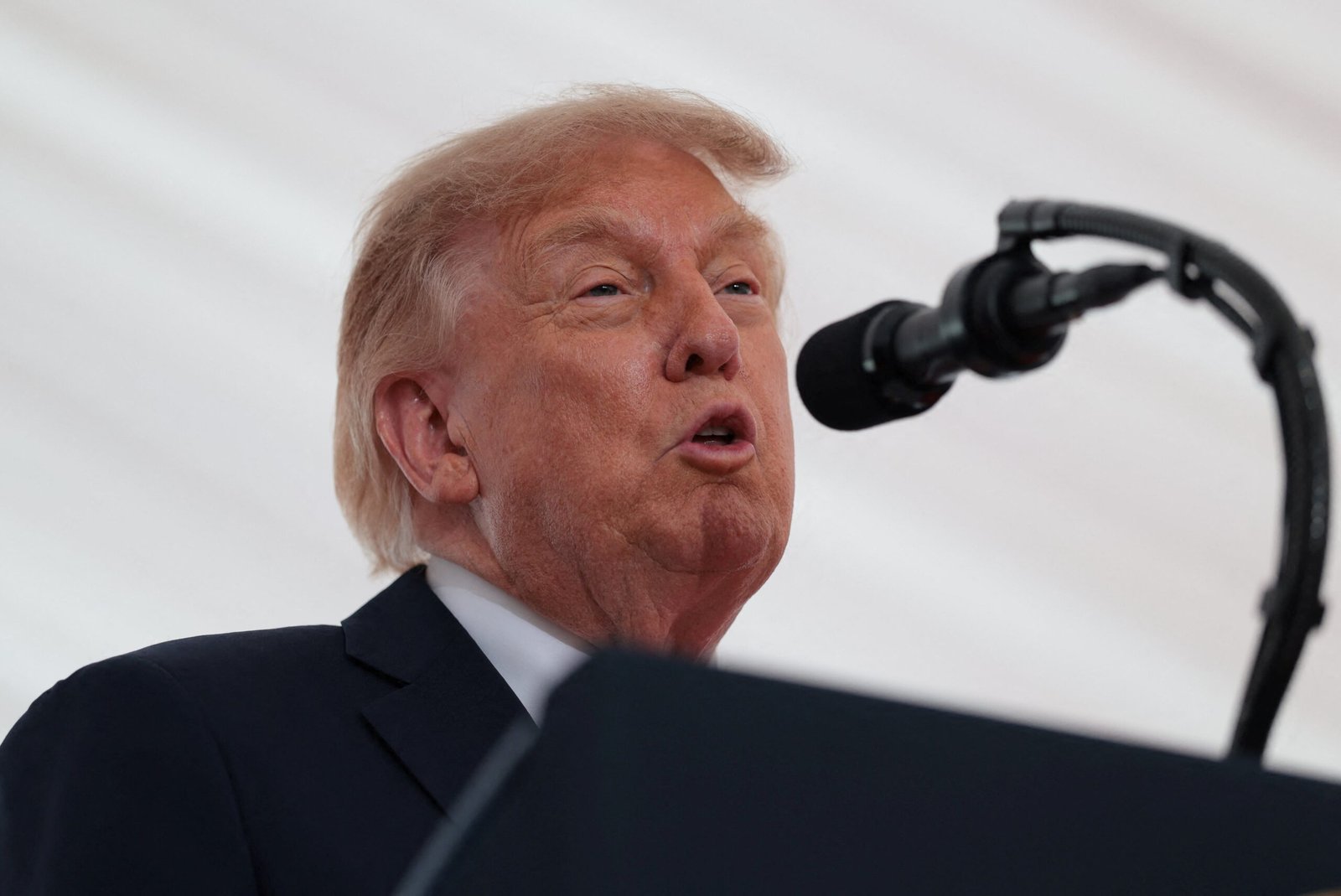
President Donald Trump says he expects the Iran war to end shortly after November’s midterm elections, as oil prices remain elevated and regional tensions threaten global energy supplies.
DUBLIN, Ireland — Sept. 12, 2026: President Donald Trump said Saturday that he expects the war in Iran to end soon after November’s U.S. midterm elections and predicted oil prices would fall sharply once the conflict is over.
Speaking to reporters during a visit to Ireland, Trump was asked when he believed the war would end.
“I think very soon, I think it’ll be right after the midterms, actually,” Trump said. “I would say shortly, and oil will come tumbling down when that happens.”
His comments came as global oil markets continued to absorb the impact of escalating tensions across the Middle East, with crude prices posting strong weekly gains despite retreating on Friday.
Brent crude, the global benchmark, settled at $104.61 a barrel, down 2.8% on the day. U.S. West Texas Intermediate crude fell 2.4% to $100.05. Brent had climbed to about $108 a barrel on Thursday, while WTI briefly moved above $104.
The latest price movements reflect growing concerns over disruption to some of the world’s most important oil and shipping routes.
Iranian state media reported that Tehran plans to meet Gulf states in Oman to discuss the Strait of Hormuz, suggesting diplomatic contacts are continuing despite the sharp escalation in fighting.
Iranian President Masoud Pezeshkian, meanwhile, struck a defiant tone, saying Iran would not surrender.
“Iran has successfully stood against Israel and the U.S.,” Pezeshkian said in New Delhi ahead of the BRICS summit. He said Iran would not yield to what he described as “bullying arrogance.”
Saudi Pipeline Attack Adds to Energy Concerns
Trump also said Iran was probably responsible for recent attacks on Saudi Arabia’s East-West crude oil pipeline.
Saudi authorities said Friday that they had shut the strategically important pipeline as a precaution after drones launched from Iraq attacked facilities in the Riyadh and Medina regions.
The attacks caused fires and damage and injured several people, according to Saudi officials.
The East-West pipeline is particularly important during the current conflict because it allows Saudi Arabia to move crude from the Persian Gulf across the kingdom to export terminals on the Red Sea, reducing its dependence on routes through the Strait of Hormuz.
The pipeline has a reported capacity of about 7 million barrels per day.
Trump said he had spoken with Saudi Crown Prince Mohammed bin Salman following the attacks.
Houthi Advance Raises Shipping Risks
The regional threat extends beyond the Gulf.
Trump said Iran-backed Houthi rebels in Yemen had contacted his administration and indicated they did not want a confrontation with the United States.
At the same time, reports said the Houthis had advanced onto Perim Island in the Bab el-Mandeb Strait, following their reported seizure of the Red Sea port city of Mokha.
The developments could give the Houthis greater influence over another critical global shipping chokepoint linking the Red Sea with the Gulf of Aden.
Any further disruption to shipping through either the Strait of Hormuz or Bab el-Mandeb could put additional pressure on energy markets and global trade.
Trump’s prediction that the conflict will end soon after the midterms offers a potentially bullish outlook for consumers and energy markets — but with fighting, diplomatic tensions and threats to key infrastructure continuing, the timing of any resolution remains uncertain.


3 Comments
Bạn bè mình thường chia sẻ FLY88 vì giao diện dễ sử dụng.
Interacting with JavaScript-heavy pages demands adaptive wait states and dynamic selector handling. Deploying dynamic web page interaction workflows resolves common UI timing challenges in web scripts.
I am impressed by the overall quality of the games. It is clear they put a lot of effort into the user experience. Check out krwinum now.