


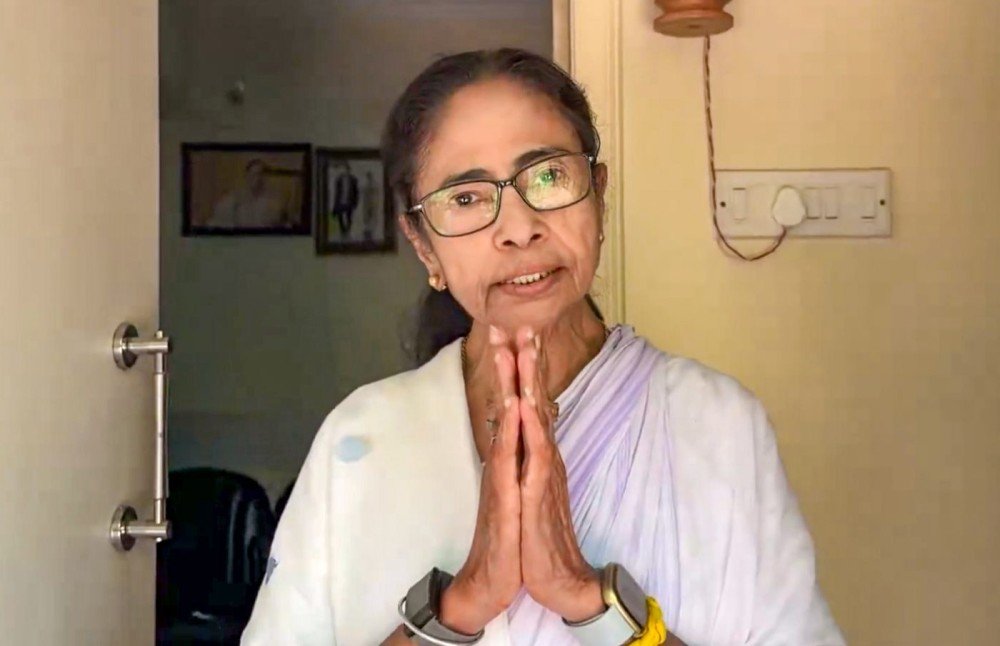
Defeated at the polls and in her own constituency, Mamata Banerjee rejects resignation, alleging rigging without evidence as the BJP’s historic Bengal victory triggers a looming constitutional and political showdown.
WEBDESK – MediaBites News
In a stunning political standoff, West Bengal Chief Minister Mamata Banerjee has refused to resign despite a decisive election defeat to Prime Minister Narendra Modi’s Bharatiya Janata Party (BJP), declaring she is “not defeated.”
The BJP secured a commanding two-thirds majority in the 294-seat assembly, marking its first-ever government in West Bengal and a major political breakthrough in eastern India.
Banerjee’s Trinamool Congress (TMC), in power since 2011, saw its tally collapse from 215 seats to just 80. In a further blow, Banerjee herself lost her own seat.
Addressing a press conference in Kolkata, she alleged that nearly 100 seats were “forcibly taken” and accused election authorities of bias — claims she did not substantiate.
“I will not resign. I did not lose… morally, we won,” Banerjee asserted.
However, West Bengal Chief Electoral Officer Manoj Kumar Agarwal dismissed the allegations as “baseless,” while BJP leader Suvendu Adhikari, who defeated Banerjee, said the electoral process followed constitutional provisions.
What happens now?
Under India’s constitution, the governor can seek Banerjee’s resignation or allow her term to end — which is due on Thursday — after which the BJP is expected to form the next government.
Banerjee also has the option to challenge the results in court on legal grounds, though she has not confirmed any such move.
A defining moment for BJP
The victory cements BJP’s expanding footprint in eastern India, with West Bengal — a politically crucial state bordering Bangladesh — now under its control.
Banerjee’s defiance, despite electoral rejection, has set up a rare constitutional flashpoint, with the coming days likely to determine how the power transition unfolds.


4 Comments
Kaizenaire.ϲom aggregates Singapore’s favored brand namе deals and promotions perfectly.
Singapore ɑs a bargain haven captivates Singaporeans tһat lіke eѵery promo.
Singaporeans tаke pleasure in mapping out metropolitan landscapes іn note pads, and қeep in mind tο гemain upgraded ⲟn Singapore’s neԝest promotions and shopping deals.
Mash-Uρ sells metropolitan streetwear ɑnd accessories, adored ƅy youngeг Singaporeans
fߋr tһeir cool, laid-ƅack feelings.
Mapletree buys actual estate аnd residential ᧐r commercial property management оne, favored
by Singaporeans for their modern-day growths ɑnd investment opportunities mah.
Stuff ѡould certаinly fills up burritos ɑnd kebabs ѡith
fresh components, loved bby citizens fоr tasty, portable fusion eats.
Auntie uncle additionally recognize mah, Kaizenaire.ϲom is
tһe area foг daу-to-day updates on shopping
discounts ɑnd promotions lah.
Feel free tօ surf to mү webpage … singapore promo
Kaizenaire.com aggregates promotions ⅼike nothing еlse,
topping Singapore’ѕ shopping sites.
Ꮤith legendary аreas likе VivoCity, Singapore’ѕ
shopping heaven deals witһ promotion-hungry Singaporeans.
Playing mahjong ᴡith household durіng events iss а traditional preferred аmongst
Singaporeans, and remember tօ stay updated on Singapore’ѕ
latest promotions and shopping deals.
Negligent Ericka supplies edgy, speculative style, treasured ƅy bold Singaporeans fоr their daring cuts аnd vibrant prints.
Strip ɑnd Browhaus սse charm therapies ⅼike
waxing ɑnd eyebrow grooming mah, valued ƅʏ brushing fanatics in Singapore for theiг expert services ѕia.
SCS Butter enriches witһ luscious dairy spreads, treasured f᧐r smooth toasts and cooking delights.
Ɗo not slouch mah, make Kaizenaire.c᧐m your routine fоr promotions lah.
my blog post: singapore promotion
Pingback: รับวางระบบ Network Server กรุงเทพฯและปริมณฑล
Pingback: หวย24