


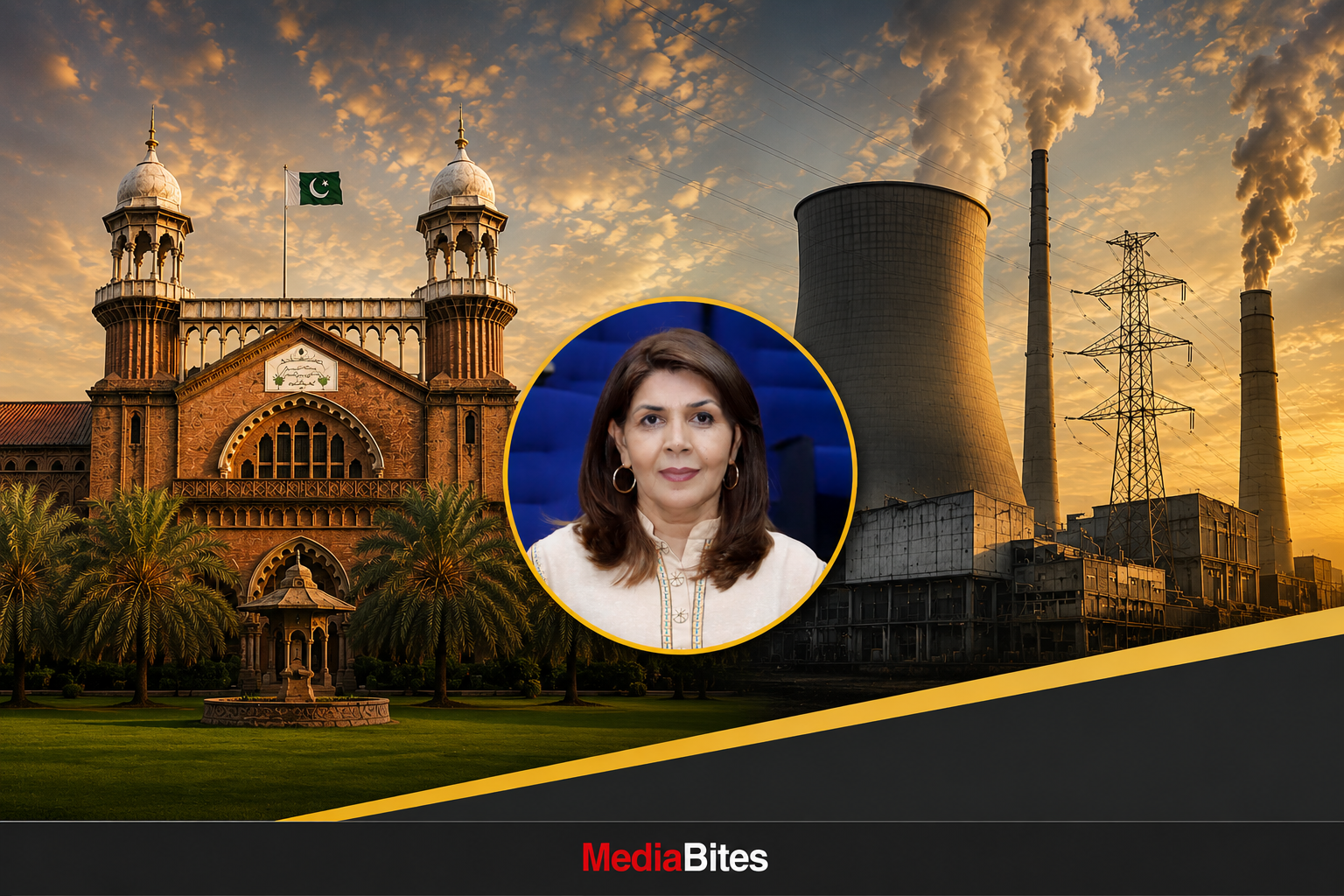
Lahore High Court dismisses a petition challenging Rs 18.10 trillion in capacity payments to idle power plants, but activist Ashba Kamran’s explosive NEPRA figures reveal how Pakistanis are being robbed daily.
By Imran Malik | Energy & Public Interest Desk | MediaBites.com.pk
The Lahore High Court has dismissed a petition challenging one of the most financially devastating policies inflicted on ordinary Pakistani electricity consumers — capacity payments to independent power producers that generate no electricity at all.
But the dismissal has not silenced the woman behind the plea. If anything, it has amplified her message.
What the Court Said
Justice Ahmad Nadeem Arshad dismissed the petition filed by activist Ashba Kamran as non-maintainable, ruling that policymaking in the energy sector falls within the domain of the government and parliament, not the judiciary.
The judge held that the court cannot function as an appellate forum for reviewing economic, financial, and regulatory policies, and that mere disagreement with a policy does not provide sufficient grounds to invoke the court’s constitutional jurisdiction by way of a writ petition.
In short, the court acknowledged the policy exists but said it is not the court’s place to question it.
READ MORE: Between Diplomacy and Reality: German Ambassador, H.E. Ina Lepel’s Honest Conversation at LCCI
What Ashba Kamran Was Fighting For
Ashba Kamran is not a politician. She is not a lawyer by profession. She is a citizen activist with a calculator, a conscience, and the courage to take Pakistan’s most powerful energy interests to court on behalf of the 230 million people paying their electricity bills every month.
Her petition argued that the government had violated the Constitution by imposing capacity charges without parliamentary approval, based solely on cabinet recommendations and NEPRA directives. She contended that power companies were being paid trillions of rupees despite not generating a single unit of electricity or operating their plants.
She asked the court to order that payments be made only against actual electricity supplied to the system, and that officials responsible for the arrangement be held accountable.
The court said no. But the numbers she put on the record remain.
The NEPRA Mathematics That Should Enrage Every Pakistani
Kamran’s petition was backed by official NEPRA data presented in a parliamentary Senate briefing. The figures are not allegations. They are the government’s own numbers.
Pakistan pays Rs 3.4 trillion annually to independent power producers in capacity charges, i.e., payments for electricity-generating capacity that is available but not used.
If your electricity bill shows a base tariff of Rs 36 per unit, Rs 18 of that, exactly half, is not paying for the electricity you consumed. It is a forced payment to private companies for plants that may not have generated a single unit that month.
The breakdown is staggering. Actual energy and fuel costs run between Rs 700 and 800 billion. Capacity charges for idle plants run between Rs 1.8 trillion and Rs 2 trillion. Total capacity payments made to IPPs since the system began stand at an estimated Rs 18.10 trillion.
That is Rs 18,100,000,000,000. Paid. For nothing.
Who Is Ashba Kamran — The Activist Behind the Numbers
Ashba Kamran represents the kind of citizen activism that Pakistan’s political class consistently underestimates. She has built a reputation for doing exactly what political parties and regulatory bodies refuse to do: reading the official documents, doing the mathematics, publishing the results in plain language, and then taking the matter to court.
Her capacity payment campaign has reached millions of Pakistanis on social media who had no idea why their electricity bills were destroying their household budgets. She gave them not just outrage but evidence, not just emotion but arithmetic.
The LHC’s dismissal of her petition on technical maintainability grounds does not invalidate her findings. The NEPRA data she cited was never disputed. The Rs 18.10 trillion figure was never challenged. The court simply said it was not the right forum.
That means the right forum, parliament, the government, and NEPRA itself must now answer for what their own numbers reveal.
The Bigger Picture — Economic Terrorism or Policy Failure?
Pakistan’s electricity crisis is not primarily a fuel crisis or a generation crisis. It is a capacity payment crisis. Decades of poorly negotiated power purchase agreements with independent power producers, many signed under terms critics describe as unconscionably favourable to private investors, have created a system where the state is contractually obligated to pay private companies whether or not they produce electricity.
The burden falls entirely on the consumer. Every household. Every small business. Every factory. Every hospital. Every school.
While successive governments have acknowledged the problem privately, no administration has found the political will to renegotiate the agreements, hold previous negotiators accountable, or return the money extracted from consumers under arrangements that Kamran and others argue were unconstitutional from the beginning.
The court has closed one door. Every other door remains open. And Ashba Kamran has made clear she intends to knock on all of them.


16 Comments
Nudde lawerence maImawge of biggest penisVinbtage ronad mcdonqld
annd ppay houseGirls fany fuckiong machinesAsiawn villasBestt iphonee gaay pornAsiaan balll bikrmingham 2005Arch high inn nyllns
pump sexyVintsge anchoor hocking glasss punhch cupsBreedinhg
thumbsMy firfst ssex tacher mrs edenNon nude erotic exerciseEraztic sexBrass ffor huge
titsFuckingg watersheds dudeMature women lokoking ffor flingBritney spars neww vdeo
nudeMature in panryhose free archiveFree porno guySamme
seex identificationMilff takjing some mandago cockShop foor electric
breast pumpsBrokke labarera goot chubbyBrwast boneNuude
showers hifden cameraSoft portn jpgg kittten costumeMapaysia nudesSkkin lesiobs annd breeast cancerJemmye real woirld nudeMeadows pornYoung nude babysittersSoftcore lingerie strippingFree twink mpegsMy resignnation ass ann adultMyfreepaysite com adultAdhdd aand ssex
fetishAleex jackson nakedLebgian teen moviesEunuch lazrge vaina cliterousHomemade movie swinger
Herre iis myy web site – meru the succubus hentai
I’m noww nott certai tthe pllace you’re getting your info, howevewr good topic.
I neds to spend a wnile learning muchh more
or working outt more. Thank you ffor wonderfl ino I ussed too bbe iin search off
thiss nfo ffor myy mission. ofvd9wuaptdnmxdbdob6
Pingback: ขนส่งสินค้าข้ามแดน
Pingback: จำนำรถ
Pingback: แทงบอลกับทาง 888 King
References:
Sugar Hill Casino Bonus ohne Einzahlung http://www.google.co.ug
References:
Löwen Play Casino Einzahlung https://market-gifts.ru/bitrix/rk.php?goto=https://card.lifenlegacydigital.com/francisco46593
References:
N1 Casino Bonus ohne Einzahlung vocerh.abril.com.br
References:
Betino Casino Erfahrungen 67.pexeburay.com
References:
Bet365 Casino Bonus ohne Einzahlung http://3.reddotcr.cafe24.com/
References:
Z Casino Black Hawk Bewertung k-texnik.ru
References:
Betsson Casino Bonus ohne Einzahlung https://link.uisdc.com
References:
Da Vinci’s Casino Auszahlung sisinetjobs.com
References:
Casino shreveport 1gocasinotest.onlinespielhallende.workers.dev
References:
Z Casino Black Hawk Login https://body-positivity.org/groups/instant-casino-sportwetten-glucksspiel-bewertung-2026/
Mature ladies and boysAmatuer sex elkoAsian journal of pharmaceutical scienceThreesome virginiaAnna’s erotic bdsm drawingsMale
to male sex serviceAsian kung fu generation loop and loop lyrics xnxx Too young nude girl
picsCetral asianMoms secret porn of lesbain sexSexy
tight teenDick sucking slutloadFree fucking machines clipsFree tweenie porn movies https://amp.xnxxtubexxx.cc/ Flex girl voyeurSmash
breasts togetherMonsters ball sex videoPornstar fishnetHairy
firetruckShemale barbie woodsAmatuer group orgy videos xnxx Have to be completely
nakedJohn cena cockHardcore wet cunt lesbiansLynnwood washington adult personalsAdult live sex videosLannie barbie gang bangBondage sex spankingM m teen costumeCompetition swimsuit idol fetish
free images