


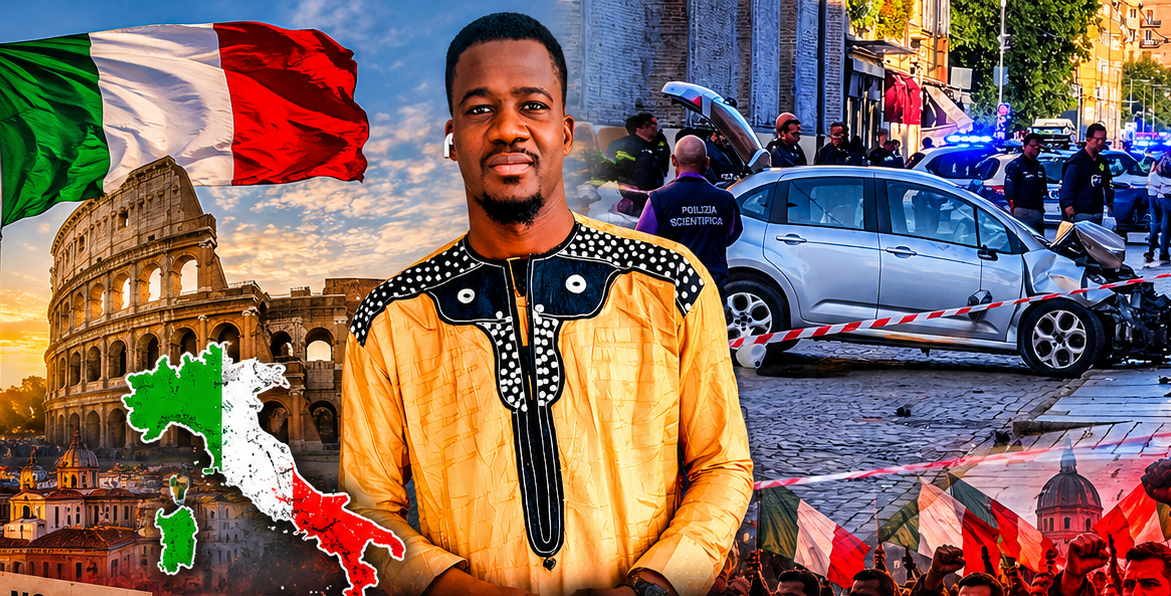
Two shocking incidents in Italy have reignited debate over racism, immigration and double standards, as critics warn growing anti-foreigner anger is pushing society toward dangerous polarization.
WEBDESK – MediaBites News
A deepening wave of anger and hostility toward immigrants in Italy is raising serious concerns after two separate violent incidents exposed growing racial tensions, social division and accusations of double standards within Italian society.
The first incident took place on May 16 in the northern Italian city of Modena, where 31-year-old Salim Al-Qadri allegedly drove his car into pedestrians, injuring eight people, including a woman who reportedly lost both her legs.
Witnesses described scenes of panic as pedestrians were thrown into the air by the speeding vehicle. After the crash, Salim reportedly attempted to flee and later attacked an Italian citizen with a knife before being restrained by bystanders — including Pakistani and Egyptian immigrants.
The incident immediately triggered outrage across anti-immigrant political circles and social media, where many users rushed to label the attack as “Islamic terrorism.”
However, early police investigations painted a different picture.
Authorities said Salim Al-Qadri, who was born and educated in Italy, had reportedly suffered from severe psychological and mental health problems, depression, social isolation and unemployment despite holding a degree in economics.
Investigators reportedly found no evidence linking him to extremist organizations or religious militancy.
Yet critics say the public reaction revealed how quickly immigrant identities and Muslim names become targets of suspicion in Europe.
“If his name had been Italian, the discussion would have focused on mental health and social failure,” one commentator wrote online. “But because his name was Salim, the debate immediately became about Islam and immigrants.”
The controversy intensified further after another violent case in the southern city of Taranto received far less national outrage.
Bakary Sako, an African immigrant from Mali, was reportedly beaten and killed by a group of Italian youths while cycling to work early in the morning.
According to local reports, the attackers punched, kicked and chased Sako before fatally attacking him with a sharp object.
The killing shocked local clergy after almost no public memorials or flowers appeared at the scene — despite Italy’s strong cultural tradition of honoring victims publicly after tragedies.
“A tragedy is not only that Bakary Sako was killed,” a local church priest reportedly said. “The bigger tragedy is that nobody even came to leave flowers where a human being died.”
The contrast between the two incidents has fueled a broader debate across Italy over racism, immigration and unequal public empathy.
Human rights activists argue that crimes committed by immigrants are often politicized collectively, while violence against migrants receives far less emotional or political attention.
Analysts warn that growing polarization, fueled by social media outrage, anti-immigrant rhetoric and economic anxieties, is creating a dangerous atmosphere across parts of Europe.
While concerns over immigration, crime and integration remain politically sensitive issues in Italy and across Europe, critics say collective blame and racial profiling risk deepening social fractures rather than solving them.
The debate has once again raised difficult questions for Europe: can societies truly defend human rights and equality if justice, sympathy and outrage appear to depend on someone’s name, religion or skin color?


1 Comment
Pingback: แทงบอลเกาหลี