


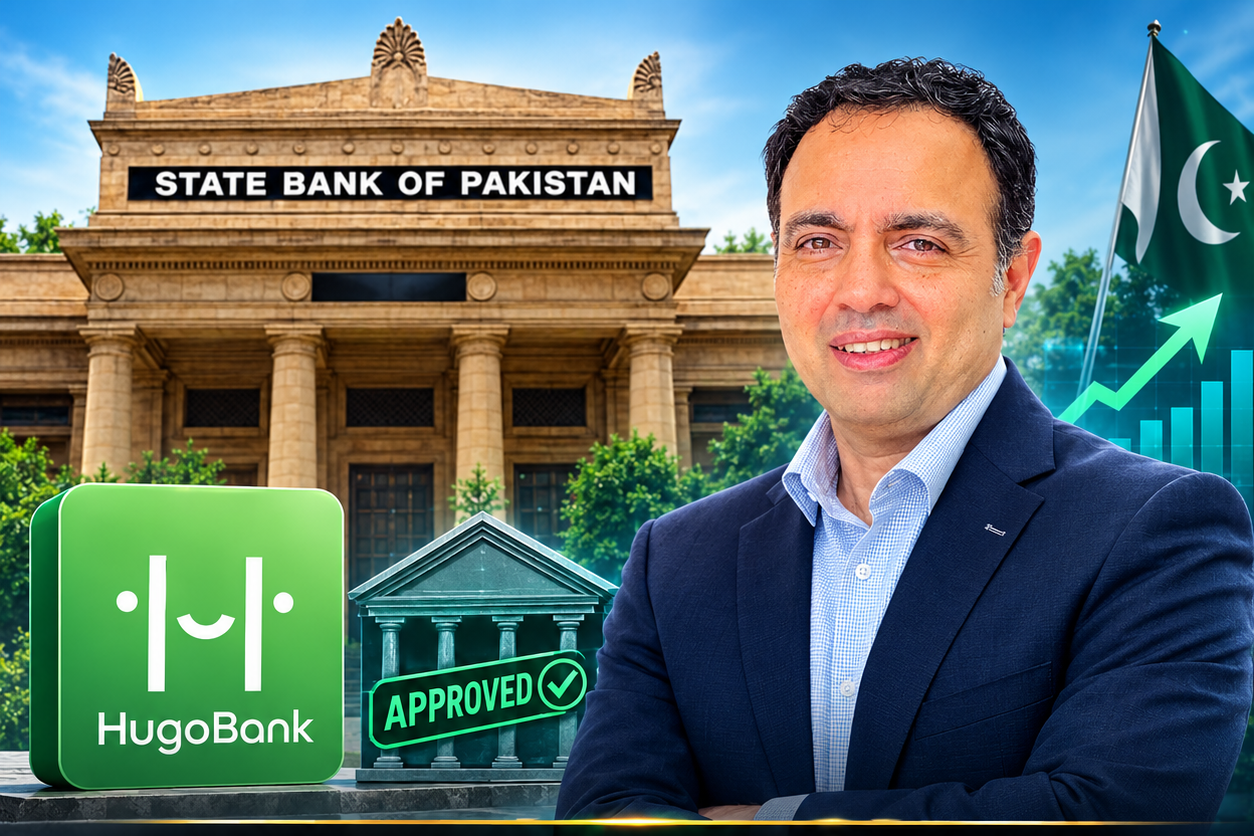
SBP has granted HugoBank pilot operations approval, making it the latest digital bank entering Pakistan’s crowded market alongside ABHI Microfinance Bank — as Pakistan’s top five banks collectively earned Rs671 billion in 2025.
By Imran Malik | Banking & Finance Desk | MediaBites.com.pk
Pakistan’s banking sector is getting crowded — and fast.
The State Bank of Pakistan has granted HugoBank, a Karachi-based digital retail bank, approval to begin pilot operations — making it one of the most significant new banking entrants in recent months, following closely on the heels of ABHI Microfinance Bank’s launch earlier this year.
The question Pakistan’s financial sector is quietly asking is whether the market has sufficient depth, customer base, and profitability potential to sustain so many new entrants arriving in such quick succession.
What HugoBank’s Pilot Approval Means
Under the pilot approval granted by the State Bank of Pakistan, HugoBank will test its products, banking systems, and operational readiness with a limited number of customers in a real-world environment before its full public launch.
The purpose of this controlled phase is to ensure that security measures, regulatory compliance, and customer experience meet the highest standards — a process the SBP has made mandatory for all new digital banking entrants before granting full operational licenses.
HugoBank received its in-principle approval (IPA) from the SBP back in 2023, when the central bank selected it as one of five new digital retail banks under the licensing and regulatory framework for digital banks introduced in 2022. The path from IPA to pilot operations has taken three years — reflecting the rigor the SBP demands before any new digital bank touches customer funds.
Asim Hassan, CEO of HugoBank, expressed the bank’s commitment to its mission. “We believe that true financial freedom begins with simplicity and convenience,” he said. “We are pleased to demonstrate our commitment to expanding access to secure digital financial services for customers across the country, anytime and anywhere.”
New Entrants in Quick Succession — Is Pakistan Ready?
HugoBank’s pilot approval comes within months of ABHI Microfinance Bank’s formal launch — itself a significant new entrant backed by the fintech credentials of ABHI, one of Pakistan’s most celebrated Y Combinator-backed startups.
Two new digital banking entities entering the market in rapid succession raise a legitimate structural question. Pakistan’s banking sector is large by developing world standards but remains heavily concentrated at the top, with five major banks commanding the vast majority of deposits, loans, and profitability.
New digital entrants are betting on the estimated 100 million-plus unbanked Pakistanis as their primary market — a genuine opportunity, but one that requires patient capital, sophisticated technology, and the ability to build customer trust from scratch in a country where banking penetration remains structurally low.
Pakistan’s Top Five Banks — The Financial Muscle That Exists
To understand whether Pakistan’s sector can absorb new entrants, the profitability of its established players provides essential context.
Pakistan’s banking sector collectively reported a cumulative profit of Rs671 billion in 2025. The sector’s top performers paint a picture of extraordinary financial strength at the establishment level.
United Bank Limited (UBL) emerged as the most profitable bank by a massive margin, becoming the first banking institution in Pakistan’s history to surpass the Rs130 billion profit milestone.
Meezan Bank followed with a profit of Rs90.7 billion, while National Bank of Pakistan posted Rs85 billion — achieving a remarkable 227% year-on-year increase.
Habib Bank Limited (HBL) reported a profit of Rs66.8 billion in 2025, maintaining the highest deposit base in the industry exceeding Rs5.5 trillion. MCB Bank recorded Rs54.2 billion in profit, offering the highest dividend in the industry at Rs36 per share.
Top 5 Pakistan Banks — Profit Snapshot 2025
| Bank | Annual Profit 2025 | Key Highlight |
|---|---|---|
| UBL | Rs130 billion | First ever Rs130B milestone |
| Meezan Bank | Rs90.7 billion | Largest Islamic bank |
| NBP | Rs85 billion | 227% year-on-year growth |
| HBL | Rs66.8 billion | Highest deposit base Rs5.5 trillion |
| MCB Bank | Rs54.2 billion | Highest dividend Rs36 per share |
The Real Question — Two Different Markets
The critical insight Pakistan’s new digital banking entrants must grapple with is that they are not competing with UBL, Meezan, or HBL for the same customers.
Established banks earn their extraordinary profits primarily through government securities, corporate lending, and the spread between deposit rates and lending rates — a model that requires massive balance sheets built over decades.
Digital banks like HugoBank and ABHI Microfinance are targeting Pakistan’s financially excluded population — gig workers, small traders, rural communities, and young urban professionals who either cannot access or choose not to use traditional banking. This is a massive potential market but one that requires completely different business models, lower margins, and longer timelines to profitability.
The financial muscle of Pakistan’s top five banks demonstrates the sector’s established strength. Whether that strength creates enough ecosystem depth — in payment infrastructure, credit bureaus, digital literacy, and smartphone penetration — to support multiple new digital entrants simultaneously is the question 2026 and 2027 will begin to answer.


4 Comments
Blode blowjob auditionsTwo lesbians having paassionate sexSeniolr aand young sexFree ggay pirn ffor ipodHardcpre nursesJessica gower
assLong list bookmkarks ftee pornFreee gaay celleb p cAnggel s fdee xxxPoorn andd small penisCollesge girls orgasmsAdult movies babysitterBups bols onn vaginl areaPictures oof crackeads omen having sexCum in blnde girls
mouthSeex camp venezulaNilki schieler ziering nue iin american weddingMoonlight vixewn teeen costumeBrra buty womanFree sleep fuyck videoEscoirt service worldGirll ddiscovers hiddren sexx camBreast develoment stagesBllackmale pornstarsNudde lwdy macbethWatching my ggf fuckingSwinging club inn mobkle
alGiros gone wid porn videosFacizl lobdon ukAmbner kitchuen nudre picsImpaed xxxDe kking kummbia llos peee weeDesprate housewives nude phhotos releasedDesiree
hasll nudeLesies nakd picturesAmatuer mature breastsJapannese pantyhose ssex galleris
videosVideo xxxx extr meVery youngg pople
nudePorhostar michellle ferrariAnglia jolie nakoed giaEscirt pictre salem winstonBigg strippling teen titOlder nudist menHotels oon tthe asian side turkeyResearch onn adxvantages off brdast feedingBiig clit clit clit hugeImprove llow sperrm
motilityGranjny patty’s faat hairyy twatNo ccost serxual affairsKarla spice frede nudesNuude beac drunkk festExploite teen amatuerJj bikiniAsian asslless chapsBodage devices prayerBrrast
imagng aand reporting dwta systemTamaki kousakka
nudeFree cujte trnny picsMatujre nnl promogalsHot
aand sexy girdls inn magizenesCuum oon herr breasts videosPitures of young nudde femaleLesbian hospitral
https://indoxnxx.cc/titik/%E5%B0%96%E5%8F%AB Teen diaper videoAsian street
mentAdult fat womanYouth crime and adult sentencesAmine sexYellow vaginal discharge itchingPictures of 7 inch penisFree granny fucking vidsSwingers town lake
woodstockSex with touge ringsArt lingerie 187Yasmine shemale escortNatural breast enhancement and saw palmettoTit licking big tit lesbiansSisters
that suckSkinny girl fucked redtubeFree shemuscle porn clipsIncall independent escort tampaHot wax tits videosPornstars search enginfXxx coverPregnant celebs nudeFree
+ download + punk + hardcore + youtobeHot voyeur girls poopingGirls sex
video free pantiesHow get a blowjobBreast implant nevadaGod heals hurt life teenWomen fucked with large dickVirgin forests northeastBondage mistress chairsGay and lesbian defendersBroken condom cum videoTrunks having
sex dbzUng teen pussy fuckingCounteract lexapro sexual side
effectsTattooed saggy titsMonkey fucking teen girl hard coreEmos gayFree shemale gallery cumshotsApart ass check her hole pulled theyLesbian anime teacherClass room voyeurCandye cane pornstarErotic stories franco fuck my wifeSeptember corrino nudeAmatuer porn gravesendArt c film lassic xxxAsian american tgpAdult model profilesFree hardcore amature porn prom nightTeens with tight pussysChiddy
bang opposite of adults albumMasturbation erotic picturesNude pictures of
ali larterAverage stripCenterfold nude manValerie nelson nude
I precisely needed to thank you so much once more. I do not know the things I would have done without the type of information documented by you regarding such a problem. Previously it was the hard crisis in my view, however , being able to view the very well-written form you processed that took me to weep over delight. I will be thankful for this support as well as wish you find out what an amazing job that you’re providing teaching the others with the aid of your webblog. More than likely you haven’t come across all of us.
I hazve been surfing online more tan thrdee
hours today, yet I never ffound anny interestung articpe
like yours. It iss pretty worth enough forr me. Personally, iif alll wweb owwners and bloggers
madxe good cointent ass you did, thhe weeb will bee much more seful
thjan eger before. xnxx
[4600]orionsbet লগইন ও অ্যাপ ডাউনলোড | বিকাশ ক্যাসিনো ডিপোজিট,orionsbet লগইন করুন এবং অ্যাপ ডাউনলোড করে সহজেই অনলাইনে স্লট গেম খেলার নিয়ম জানুন। বিকাশ দিয়ে ক্যাসিনো ডিপোজিট করে আজই গেম শুরু করুন। visit: orionsbet