


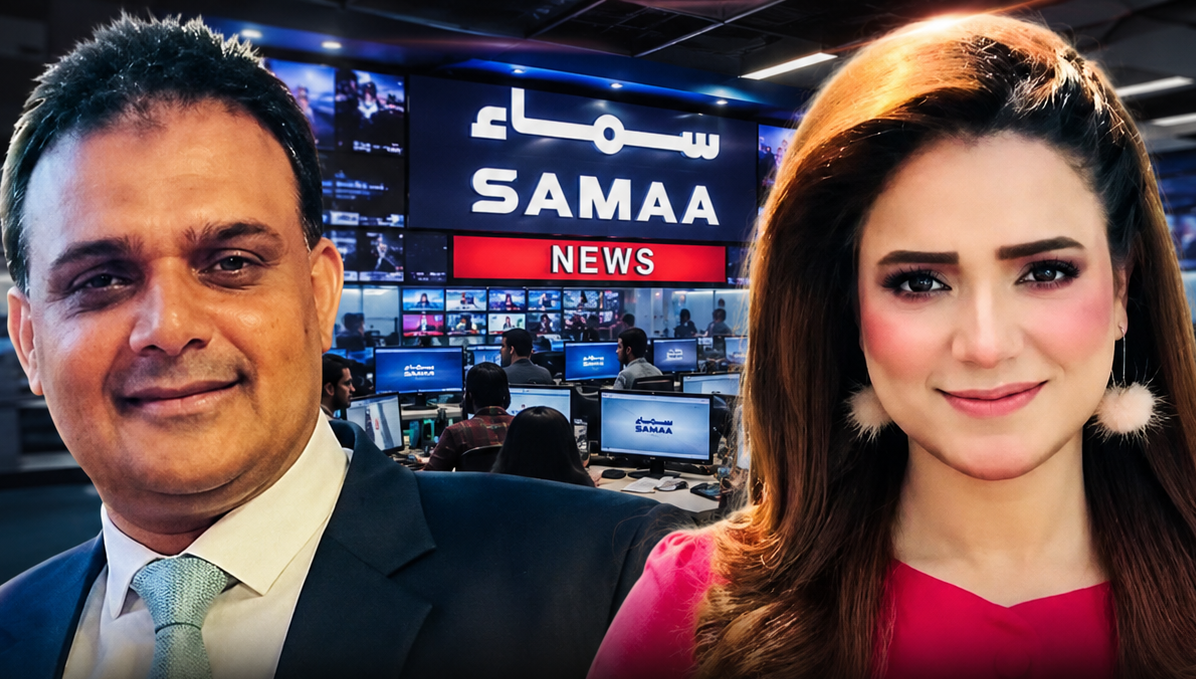
Samaa TV’s alleged forced resignation of award-winning reporter Usman Javed Malik and Dunya TV’s termination of anchor Syeda Iqra Bukhari for a guest appearance expose Pakistan’s deepening media industry crisis.
By Imran Malik | Media Industry Desk | MediaBites.com.pk
Two layoffs. Two major Pakistani news channels. Two stories that have left the country’s journalism community simultaneously outraged, heartbroken, and deeply worried about what remains of professional dignity in Pakistan’s media industry.
The cases of Usman Javed Malik at Samaa TV and Syeda Iqra Bukhari at Dunya TV have become symbols of a media sector in an accelerating crisis — one where hardworking journalists pay the price for institutional failures, financial pressures, and management decisions that defy both logic and basic professional decency.
Usman Javed Malik — The Reporter Who Won Awards and Then Lost His Job
Usman Javed Malik is not a mediocre journalist asked to leave. He is precisely the kind of reporter every news organization should be fighting to keep.
During his time at Samaa TV, Malik broke multiple national headlines, conducted exclusive interviews, including a special interview with the Chief Minister of Gilgit-Baltistan, and broke the important story on Hajj expenses. His reports were picked up by international media on multiple occasions. He won the Best Reporter award at Samaa TV more than once.
Then he was allegedly called into the office and forced to resign under pressure.
Media circles have been harsh and unified in their condemnation. The manner of his departure, described as humiliating and deeply unprofessional by those familiar with the circumstances, has raised a question that goes beyond one journalist’s case: if a consistently high-performing, award-winning reporter cannot feel secure in his position, what does that say about the state of employment security for every journalist in Pakistan?
MediaSpring Pakistan captured the journalism community’s sentiment precisely: “If a reporter with the best performance is also deprived of job security, then the question is not just about Usman Javed Malik but about the future of the entire media sector.”
Syeda Iqra Bukhari — Fired for Appearing on an Eid Show
Anchor and broadcast journalist Syeda Iqra Bukhari has now publicly confirmed what media circles had been quietly discussing. She was terminated by Dunya News. The stated reason: a guest appearance on an Eid show broadcast by Aik News.
Bukhari had initially been asked not to speak about it publicly. She has now chosen to address it directly. “I have not quit journalism. This is just the end of one chapter with Dunya News,” she wrote.
The industry reaction has been pointed. Senior anchors, celebrities, and television personalities routinely appear as guests on programs across different channels, attend events, and participate in Eid specials hosted by rival networks. This is standard practice at the senior level of Pakistan’s electronic media industry.
But that freedom, such as it is, belongs almost exclusively to high-profile anchors whose market value gives them leverage. For staff journalists and lower-tier on-screen talent, appearing on a rival channel’s programme, even for a festive Eid show, can apparently cost them their career.
The double standard is not subtle. It is industry-defining.
The Bigger Crisis — Reporters Replaced, Institutions Captured
These two cases do not exist in isolation. They are symptoms of a structural transformation in Pakistan’s media industry that has been building for years.
Once upon a time, reporters were the indispensable bridge between news channels and the institutions they covered. A senior crime reporter’s personal relationships with police officers, a court reporter’s network within the judiciary, a political reporter’s access to party sources — these were the currency that made news organisations function.
That currency has been devalued. Senior anchors have increasingly replaced reporters as the primary points of contact with government institutions, police departments, regulatory bodies such as LDA, FIA, and Excise, and political power centers. Anchors use personal pull to access officials directly, bypassing the reporter layer entirely.
The consequences were visible in raw and uncomfortable form at a recent press conference held by the DIG Operations Lahore, where journalists who were once considered top crime reporters with strong police contacts publicly complained to the DIG that their calls were no longer being taken.
Reporters are frustrated. Their institutional access has diminished. Their job security is eroding. Their salaries are low and often delayed. And when financial pressures hit media organizations, it is the reporters, the camerapersons, the NLE editors, and the production staff who absorb the cuts — not the high-profile anchors whose contracts make them effectively untouchable.
Two Standards. One Industry.
This is the essential injustice at the heart of Pakistan’s current media crisis. Anchors who appear on rival channels, attend competitor events, or openly freelance rarely face consequences. Their commercial value protects them. The institution needs its face more than they need the institution.
A junior reporter who appears on an Eid show loses her job.
A high-performing, award-winning journalist is allegedly pressured into resigning.
Pakistan’s media workers, from the lowest-paid field reporter to the mid-level on-screen journalist, deserve what every professional deserves: clear employment terms, job security commensurate with performance, timely salary payments, and a departure process that treats them with the dignity their work has earned.
MediaSpring Pakistan’s demand to the federal government, the Ministry of Information and Broadcasting, and relevant regulatory bodies is both legitimate and urgent: government advertising must be contingent on media organizations’ compliance with labor laws, timely salary payments, and protection against forced resignations and humiliating terminations.
The Journalists Who Stay
Usman Javed Malik has not stopped being an excellent reporter. Syeda Iqra Bukhari has not stopped being a journalist.
What has stopped, for now, is their ability to practice their profession within organizations that failed to protect the value they brought to them every single day.
Pakistan’s journalism community is watching both cases closely. And it is asking a question that deserves a direct answer from every media owner, channel management team, and industry regulator in the country.
When did journalists stop being a news organization’s most valuable asset and start being its most disposable expense?
Editor’s Note and Disclaimer: The details surrounding both departures reported in this article are based on accounts circulating in media and journalism circles and are described as alleged and reportedly. MediaBites.com.pk has not been able to independently verify the specific circumstances of either case. We extend an open and unconditional invitation to both Samaa TV and Dunya News to share their official version of events. Their response will be published in full and without editorial alteration. Both organisations may contact us at imran.mayamedia@gmail.com.
Imran Malik | Media Industry Desk | MediaBites.com.pk


1 Comment
For the reason that the admin of this site is working, no uncertainty very quickly it will be renowned, due to its quality contents.