


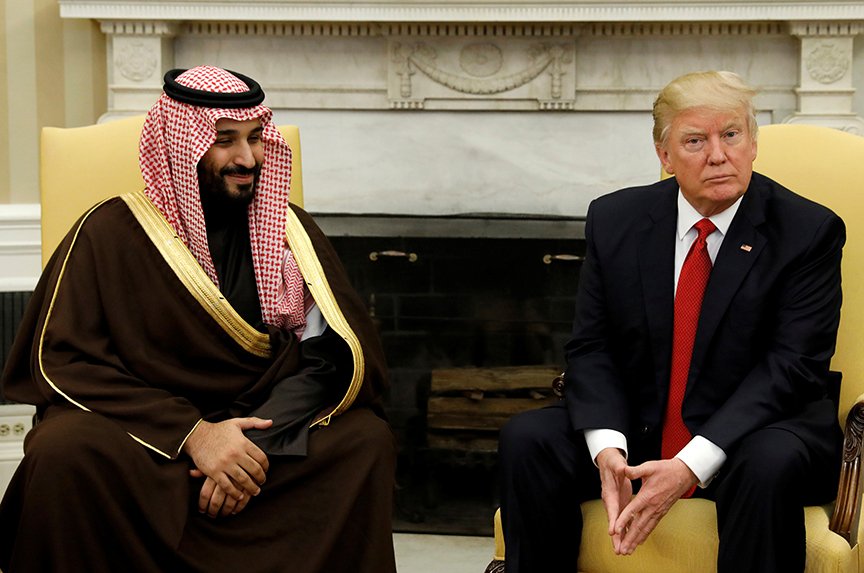
President Trump spoke with Saudi Crown Prince Mohammed bin Salman on Saturday as Pakistani and Qatari officials urgently worked back channels to prevent new US strikes on Iran amid growing regional alarm.
By Imran Malik | World Affairs & Diplomacy Desk | MediaBites.com.pk
As the United States prepared potential fresh strikes on Iran over the weekend, a frantic diplomatic effort involving Saudi Arabia, Pakistan, Qatar, Turkey, and Oman was simultaneously racing to pull the region back from the brink of wider war.
At the center of that effort was a direct call between President Donald Trump and Saudi Crown Prince Mohammed bin Salman — a conversation that multiple sources familiar with the matter say proved consequential in shaping Saturday’s decision to pause the planned strikes.
Saudi Arabia’s Urgent Message
Prince Mohammed bin Salman used the call to reinforce Saudi Arabia’s strong desire for de-escalation, raising explicit concerns about the plans for potential new strikes on Iran, according to multiple people familiar with the call.
Saudi Arabia’s position reflects a complex calculation. While the Kingdom has been directly targeted by Iran-backed Houthi drones and has itself participated in strikes against Iranian-backed militia positions in Iraq alongside US forces, Riyadh has also consistently sought to avoid a full-scale Iran-US war that would bring devastating regional consequences — including threats to Saudi Arabia’s own economic infrastructure and Vision 2030 ambitions.
Pakistan’s Critical Back-Channel Role
Officials from Pakistan have been among the most active mediating parties in the urgent diplomatic effort to prevent escalation, fielding calls with officials from both Iran and the United States, including Trump’s envoy Steve Witkoff, according to three people familiar with the matter.
Iranian Foreign Minister Abbas Araghchi held a direct call with Pakistani Field Marshal Asim Munir on Saturday, according to posts on Araghchi’s official Telegram channel. Iran used the call to communicate its position on potential US action while Pakistan relayed messages through its established channel to American officials.
Pakistan’s mediating role stems from its unique diplomatic positioning — a Muslim-majority nuclear state with deep ties to Saudi Arabia and the Gulf, an established back-channel relationship with Iran, and a direct line to Washington that few other regional actors can replicate.
Oman — The Hormuz Key
A specific and immediate diplomatic objective centered on Oman — working out an arrangement between Iran and Oman to allow commercial traffic to resume flowing through the Strait of Hormuz.
Oman, which shares the Strait of Hormuz’s southern coast with Iran, has historically served as the most reliable backchannel between Iran and the West. Its involvement in the Hormuz arrangements reflects both its geographic position and its long-standing diplomatic role as a trusted intermediary.
Qatar and Turkey Complete the Mediation Picture
Alongside Pakistan, Qatar has been actively fielding calls with Iranian and American officials. Turkish Foreign Minister Hakan Fidan also spoke directly with Iranian Foreign Minister Araghchi on Saturday, noting that the two officials discussed “the latest status of the ongoing negotiation process.”
The breadth of the diplomatic effort — involving Saudi Arabia, Pakistan, Qatar, Turkey, Oman, and multiple direct channels to both Washington and Tehran simultaneously — reflects how seriously regional powers are taking the risk of uncontrolled escalation.

