


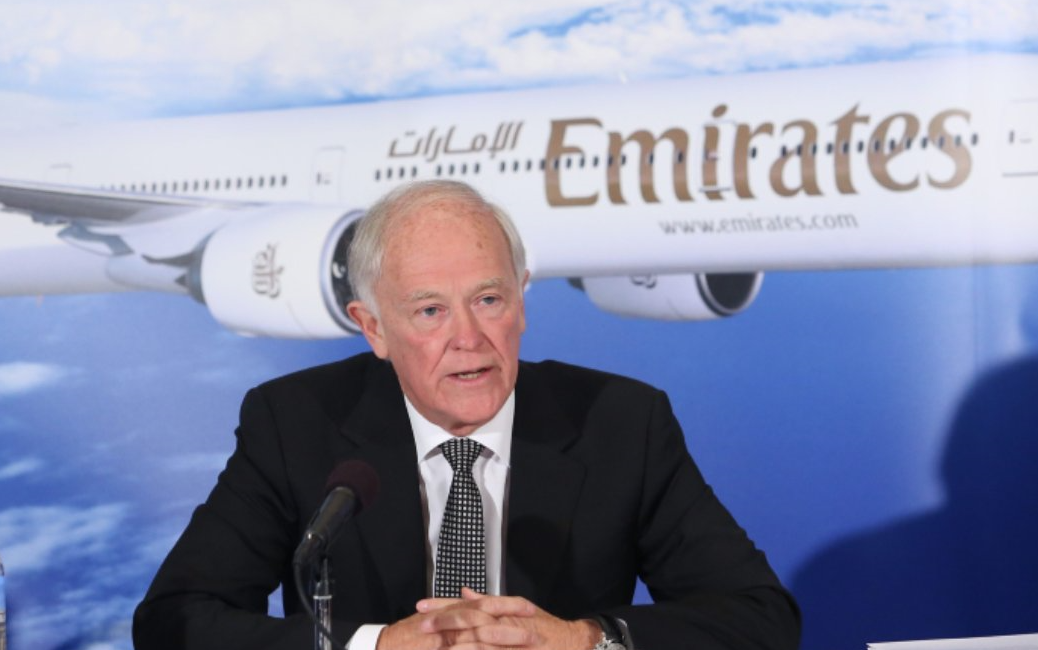
Emirates says it will continue full operations despite rising tensions in the Middle East, warning that a prolonged conflict could financially damage weaker airlines, particularly budget carriers struggling with soaring operational costs.
WEBDESK – MEDIABITES NEWS
Emirates President Tim Clark has said the Dubai-based airline has no plans to reduce flights or cut capacity despite growing regional instability linked to the ongoing Iran conflict and rising operational costs.
Speaking ahead of the Berlin Air Show on Tuesday, Clark warned that prolonged geopolitical tensions in the Middle East could seriously hurt financially weaker airlines, especially low-cost carriers.
“If this crisis goes on for too long, there will be some casualties, likely in the budget airline sector first,” Clark said, echoing recent concerns raised by International Air Transport Association (IATA) chief Willie Walsh.
Despite mounting pressure from rising fuel costs, disrupted air routes, and regional uncertainty, Clark stressed that Emirates would continue operating its global network normally.
“We have no intention of cutting back, reducing,” he told reporters, adding that the state-backed carrier was not worried about additional operating expenses caused by the conflict.
Clark said Emirates was continuing to route passengers through Dubai to major destinations, including India and Australia, while taking additional safety precautions, such as carrying extra fuel on flights.
The Emirates chief also revealed that the airline is rapidly expanding free Starlink internet connectivity across its fleet, a move he said had already boosted passenger demand and customer satisfaction.
At the same time, Clark renewed Emirates’ long-running campaign to expand operations in Germany, particularly in Berlin. Although the airline has secured airport slots in the German capital, it still lacks full regulatory approval to operate there.
Clark also strongly pushed back against criticism from German airline Lufthansa, which has repeatedly accused Gulf carriers of benefiting from unfair government support.
Responding directly, Clark argued that Lufthansa itself had previously received substantial state aid and should compete independently rather than relying on political protection.
“It is a listed company, and it needs to fight its own corner without going to the government and hiding behind its skirts,” Clark remarked.
The comments come as airlines worldwide continue monitoring the impact of escalating military tensions in the Middle East, particularly around the Strait of Hormuz — one of the world’s most strategically important aviation and energy corridors.
While some carriers have already adjusted routes or reduced operations in sensitive airspaces, Emirates appears determined to maintain its aggressive expansion strategy despite growing geopolitical risks.


1 Comment
Pingback: LeoVegas