


A devastating Himalayan flood has killed at least 469 people in Nepal, with nearly 1,000 missing, as rescuers search debris and authorities warn unstable lakes could trigger fresh flooding.
WEBDESK – MEDIABITES
Rescue teams dug through mud and debris across flood-ravaged northern Nepal on Friday, racing to find survivors as the death toll climbed to 469 and fears grew that unstable, debris-dammed lakes could unleash another wave of flooding.
Almost 1,000 people remained missing in Nepal and neighboring Tibet after a torrent of water, rock, ice and mud tore through Himalayan river systems on Wednesday. At least 540 of those reported missing are foreigners, according to figures cited by Reuters.
The disaster devastated villages and valleys, destroying roads, bridges, and power stations along a major route connecting Nepal’s capital, Kathmandu, with Lhasa in Tibet. The region is also a popular destination for trekkers and pilgrims.
Nepalese authorities have deployed helicopters to search isolated communities and deliver emergency supplies. Ground teams equipped with heavy machinery and sniffer dogs have been clearing debris and recovering bodies carried downstream into the plains.
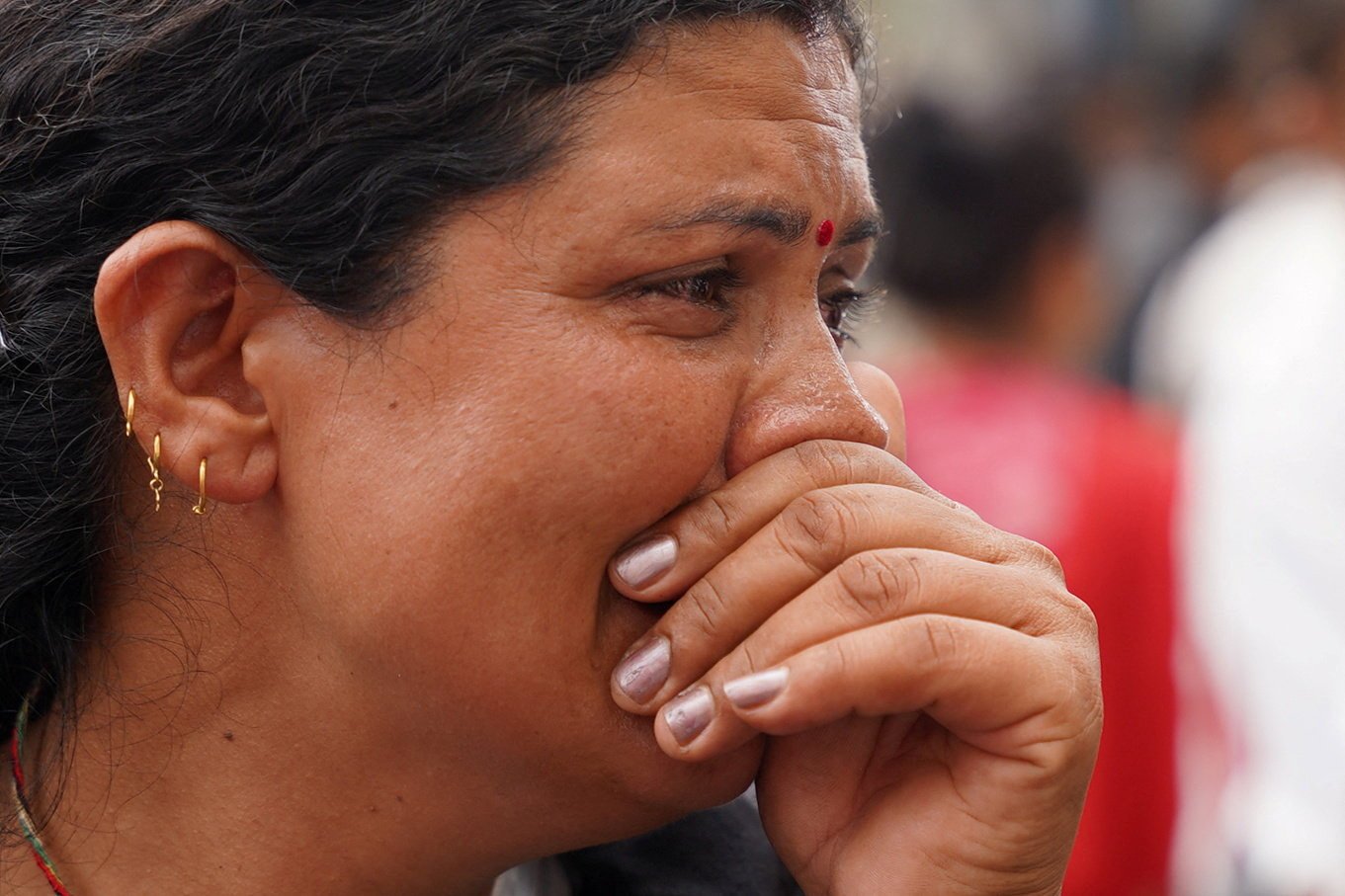
For survivors, the scale of destruction has been overwhelming.
Dibga Tamang, rescued from the hard-hit town of Rasuwa on Thursday and flown to an army camp in Nuwakot, described losing his community.
“All of our people have gone. They are dead,” Tamang said.
Fresh flood threat
The rescue effort is being conducted under the shadow of another potential disaster.
Nepal’s disaster management authority warned that a lake formed after debris blocked the Bhotekoshi River was rising and could burst. In China, officials warned that about 3 million cubic meters of water — equivalent to roughly 1,200 Olympic-sized swimming pools — could flow into another already-dammed lake over the next three days.
Chinese state media, citing the country’s water resources ministry, said the lake faced a high risk of breaching, with peak flow expected around Sept. 1.
Beijing has deployed an eight-member engineering team to conduct aerial surveys and three-dimensional modeling of the barrier lake. Engineers said a drainage channel could reduce pressure, but its size would need to be calculated based on the water flow rate and how quickly the lake fills.
Authorities are also monitoring weather conditions and gathering information from the lake floor as they assess the threat.
Hundreds still missing
The disaster has triggered an international search for missing relatives and travelers.
On the Chinese side, 558 people were reported missing in Gyirong County, including 260 foreign nationals, while three deaths had been confirmed there. Chinese rescuers were still working to reach the worst-hit Gyirong border crossing as crews cleared debris from the main access road.
Among those missing are dozens of Americans who had traveled from northern Virginia to Nepal before setting out toward Tibet’s Mount Kailash. Relatives have appealed to officials in the United States and India for information.
U.S. President Donald Trump said Washington had offered support to Nepal, described the destruction as unprecedented, and said the United States was prepared to provide assistance.
Nepal’s Prime Minister Balendra Shah said state agencies were operating at full capacity, with saving lives, searching for missing people, treating the injured, and providing immediate relief as the government’s priorities.
The disaster poses a major test for Shah’s five-month-old government as rescue teams confront not only the enormous destruction left by the initial flood but also the possibility of another catastrophic release of water from the mountains.

