


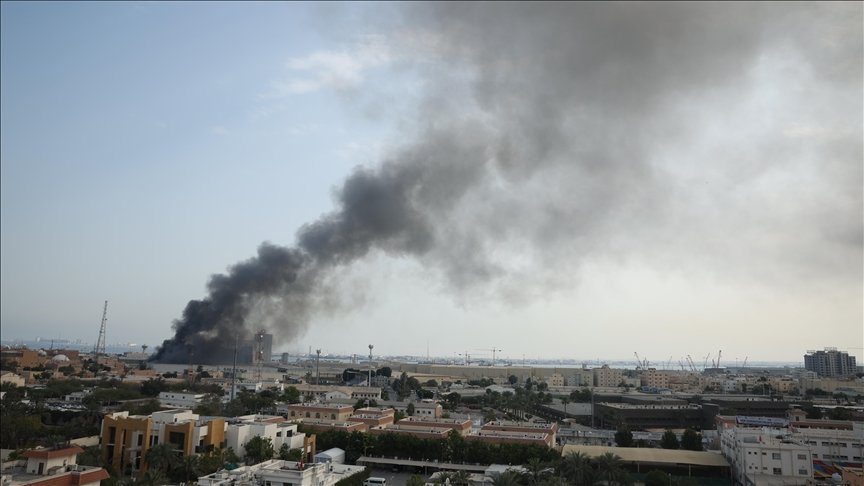
Iran launched retaliatory strikes targeting US-linked military assets in Bahrain, Jordan and Kuwait, triggering global condemnation and fears of a wider Middle East conflict escalation.
The Middle East moved closer to a dangerous regional confrontation after Iran launched retaliatory military strikes targeting US-linked military facilities in Bahrain, Jordan, and Kuwait following American attacks on Iranian positions near the Strait of Hormuz.
The escalation triggered swift international condemnation from Gulf states, Western governments, and global diplomatic organisations, all warning that the growing conflict could destabilise the wider region and threaten global energy security.
According to regional reports and coverage from Al Jazeera, Iranian military actions were aimed at American military assets and strategic installations connected to US operations in the Gulf. Iranian officials described the attacks as retaliation for recent US airstrikes targeting Iranian radar systems, air defence positions, and military infrastructure near the Strait of Hormuz.
Iran’s Islamic Revolutionary Guard Corps (IRGC) said the strikes were a response to what it called “American aggression” and warned that Tehran would not allow attacks on its territory to go unanswered.
Authorities in Bahrain and Kuwait confirmed air defence systems were activated after missiles and drones entered regional airspace. Kuwait’s military stated that several incoming threats were intercepted before reaching sensitive locations, while Bahrain reportedly issued air raid alerts and temporarily heightened national security measures.
Jordanian officials also confirmed increased military readiness amid reports that US-linked facilities in the country were among the intended targets.
So far, there have been no confirmed casualties or major infrastructure damage reported from the Iranian strikes. However, US military forces across the Gulf remain on high alert amid fears of further retaliation and possible escalation involving additional regional actors.
The latest confrontation unfolded while ceasefire negotiations and diplomatic contacts were reportedly underway between multiple regional and international stakeholders attempting to prevent a broader Middle East war.
Global leaders and international organisations quickly reacted with concern.
READ MORE: Red Alert: 10,000 Pakistanis misused UK Student Visas, 7,000 vanished in Azerbaijan — Is Pakistan losing its global Travel Credibility?
Several Gulf countries condemned the attacks as a violation of regional sovereignty and warned against turning the region into a battlefield for external military confrontations. Western governments also called for immediate restraint from all sides.
Analysts say the strikes highlight the increasingly fragile security environment in the Gulf, where tensions involving Iran, the United States, Israel, and regional allies continue to intensify simultaneously.
The Strait of Hormuz — located near the centre of the crisis — remains one of the world’s most strategically important shipping corridors through which a significant percentage of global oil supplies pass daily.
Any prolonged military escalation in the area risks severe economic consequences for global energy markets, international trade routes, and regional stability.
According to Al Jazeera’s regional analysis, the latest developments reflect Iran’s attempt to demonstrate that it can respond beyond its borders while also signalling that American military presence across the Gulf remains vulnerable during periods of heightened confrontation.
Diplomatic observers warn that despite ongoing negotiations, the rapidly evolving situation now carries the risk of miscalculation, accidental escalation, and a wider regional conflict involving multiple countries.
WEBDESK – MDIABITES NEWS


15 Comments
References:
Lollybet Casino Treueprogramm https://liquidmaps.org/users_fichas_items/index/626/440?return=https://lollybet.com.de
References:
Lollybet Casino 10 Euro Bonus https://myesc.escardio.org
References:
Hexabet Casino Bonus ohne Einzahlung https://s3.amazonaws.com/new-casino/Flagman-Casino-Erfahrungen.html
References:
Ggbet Casino Auszahlung s3.amazonaws.com
References:
%random_anchor_text% https://cyprusjobs.com.cy/
References:
Nino Casino Test https://toyhou.se/
References:
Candy96 Casino download https://kigalilife.co.rw/
References:
Bwin Casino Erfahrungen https://talenthubsol.com/
References:
Candy96 support https://punbb.skynettechnologies.us
References:
Candy96 Casino blackjack https://lookingforjob.co/
References:
Candy96 Casino $100 no deposit http://resume.mastersacademy.in
References:
Wettformat Casino App images.google.com.ag
References:
Bizzo Casino Login https://mail.yandex.ru/host-root2/s.jsx?url=https://nfccardmaker.com/percyjarvis287
References:
Goldstrike Casino App https://depts.washington.edu/fulab/fulab-wiki/api.php?action=https://profilewala.in/isiscoane80874
References:
Quickwin Casino Bewertung http://optimize.viglink.com/