


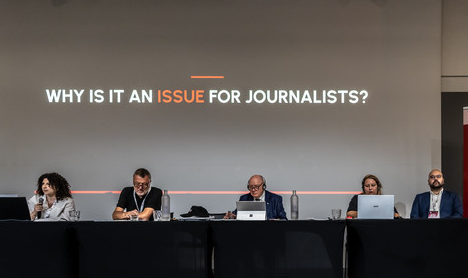
Hundreds of journalists from around the world have called for urgent global action against spyware abuse and unlawful surveillance, warning that unchecked monitoring threatens press freedom, democratic accountability, and journalists’ safety.
Webdesk – IFJ – MediaBites News
The demand was unanimously endorsed by delegates at the International Federation of Journalists (IFJ) Congress held in Paris from May 4 to 7, following the release of a landmark report examining the growing impact of surveillance on journalists, media organizations, and confidential sources.
The report, titled Global Surveillance of Journalists: A Technical Mapping of Tools, Tactics, and Threats, was presented by researcher Samar Al Halal as part of the EU-funded Brave Media project.
Addressing delegates, Al Halal warned that surveillance has become a major threat to investigative journalism and free expression worldwide.
“When journalists are monitored, self-censorship becomes normal,” she said, adding that even the fear of surveillance can alter behavior and discourage critical reporting.
She stressed that the issue extends beyond technology and has become a political challenge directly affecting press freedom and democratic systems.
“In conflict zones, surveillance data can contribute to increased physical risks for those seeking to hold power to account,” Al Halal said during a panel discussion on strategies to combat surveillance abuse.
She called for stricter international laws clearly defining how surveillance tools can be used, who can use them, and under what circumstances. She also urged sanctions against those who misuse spyware technologies, as well as stronger oversight of the spyware industry and government procurement processes.
Al Halal further highlighted the need for greater awareness and safety training within newsrooms to help journalists protect themselves and their sources from digital threats.
Representatives from journalists’ unions in the United Kingdom, Ireland, and Brazil also shared concerns over surveillance abuses in their regions, describing how unlawful spying had undermined media freedom and intimidated reporters.
Delegates at the Congress called on the IFJ to lead a global campaign focused on stronger regulation of the spyware industry, greater transparency in spyware exports and government contracts, protection of encryption and anonymity rights, increased accountability for telecom providers, and expanded forensic and safety training for journalists.
IFJ General Secretary Anthony Bellanger said journalists worldwide were facing “abusive, unlawful and unregulated spying” that fuels self-censorship and exposes reporters to threats and attacks.
“It is time governments, telecoms companies and regulators acted to protect media freedom,” Bellanger said.
He added that the IFJ would prioritize exposing unlawful surveillance, equipping journalists with tools to protect themselves, and launching advocacy campaigns demanding tougher laws and stronger safeguards for journalism globally.


2 Comments
Pingback: หวย24
Pingback: https://ignition-poker-au-review.com