


By Imran Malik | National Affairs & Accountability Desk | MediaBites.com.pk
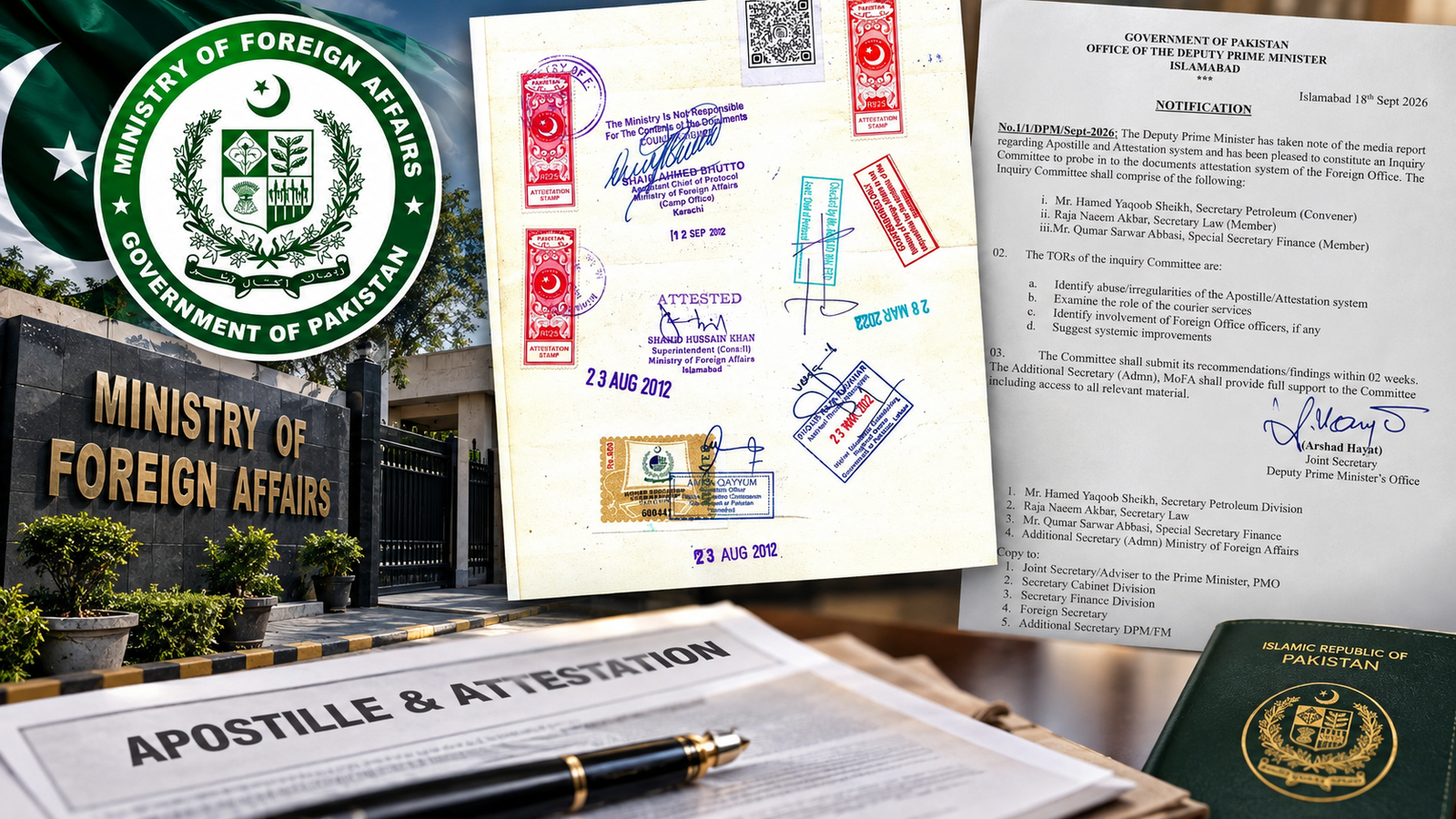
Pakistan’s Foreign Office faces a Rs 12 billion corruption scandal in degree attestation as the DG Audit who prepared the inquiry report has been removed and posted as OSD.
What began as widespread public complaints about a corrupt and pointless degree attestation system has escalated into a full-blown institutional crisis — with a senior government auditor removed from his post after his report, allegedly exposing Rs 12 billion in irregularities, was leaked to the media.
Pakistan’s Ministry of Foreign Affairs is at the center of a scandal that is as alarming for what has been alleged as it is for how the government has responded to those allegations.
The Auditor Who Found Rs 12 Billion — Then Lost His Job
The Director General of Audit has been removed from his position and posted as an Officer on Special Duty following the emergence of a report regarding alleged irregularities in the attestation of documents at the Foreign Office.
According to sources, the official was removed after the report was leaked. They claimed the document had pointed to irregularities involving Rs 12 billion. An internal inquiry into the Foreign Office’s document attestation process had also reportedly found that Rs 12 billion was collected through illegal means over a year.
Read that again. An auditor prepares a report. The report exposes Rs 12 billion in alleged corruption. The report gets leaked. The auditor loses his job.
In a functioning accountability system, the auditor would be protected, and the corrupt officials would be removed. Pakistan’s Foreign Office has demonstrated which direction its instincts point.
The Ministry’s Denial — and Why It Raises More Questions
Pakistan’s Foreign Office on Thursday rejected as “unverified and baseless” reports that an internal inquiry had uncovered alleged irregularities involving Rs 12 billion collected from citizens through unofficial channels for document attestation.
Foreign Office spokesperson Sajjad Haider Khan told reporters at a weekly briefing: “The Foreign Office has no information or record pertaining to the so-called inquiry that you are referring to. While the Ministry believes in transparency and accountability, we strongly reject such unverified and baseless claims.”
The Foreign Office says it has no information or record of an inquiry that its own DG Audit reportedly prepared and submitted to the Foreign Secretary’s office in July. The same DG Audit has now been removed and posted as OSD.
Either the Foreign Secretary’s office received a report it has now conveniently forgotten about, or the DG Audit was removed for preparing a report that never existed. Neither explanation is satisfactory.
The Scale of the Operation
The Foreign Office processes between 17,000 and 18,000 documents every day at the ministry and its four camp offices.
The spokesperson said the Foreign Office had generated Rs 3.4 billion through the system over the past two years and that documentation and payments were processed electronically rather than in cash.
The official figure is Rs 3.4 billion in two years. The alleged corruption figure from the leaked inquiry is Rs 12 billion in one year. The gap between those two numbers is the story that Pakistan’s accountability institutions must now investigate.
Questions about the reported inquiry came alongside complaints from journalists at Thursday’s briefing about technical problems with online and apostille attestation and allegations that agents operating outside the ministry were charging applicants to expedite the process.
The Wolves Guarding the Chickens
Pakistan’s Foreign Office exists to serve more than 10 million Pakistani citizens living abroad — workers in the UAE, Oman, Saudi Arabia, the UK, the US and beyond who need their documents authenticated to work, study, seek residency and build lives outside Pakistan.
The Foreign Office authenticates Pakistani documents for recognition and use abroad, including educational qualifications, birth and marriage certificates, powers of attorney and commercial documents.
The process a Pakistani graduate must navigate is a study in institutional extortion. Four years of university education. An HEC-accredited degree. HEC attestation with its own fees and queues. Then the Foreign Office — no database, no verification capability, no value addition — just another costly stop where an alleged Rs 12 billion in unofficial payments was collected in a single year from citizens who had no alternative.
The spokesperson acknowledged that applicants could still face difficulties due to the volume of requests, but said the ministry was working to improve the system.
Working to improve a system that allegedly collected Rs 12 billion illegally in one year is not a reassurance. It is an indictment.
The Digital Solution Nobody Wants to Build
HEC maintains a complete database of all accredited universities and all graduates. An online verification portal accessible to any foreign employer, embassy or government agency worldwide would allow degree verification in under two minutes at a nominal fee.
The Foreign Office becomes completely unnecessary. The agent economy collapses. The Rs 12 billion annual corruption machine stops.
The Foreign Office has introduced QR codes and courier services to facilitate applicants, digitized the verification of powers of attorney, and integrated its database with the Higher Education Commission and Inter Boards Coordination Commission.
These improvements are welcome. They are also insufficient. Integration with HEC is not the same as making HEC’s database directly accessible to foreign employers and governments — which would eliminate the Foreign Office as an intermediary entirely.
What Must Happen Now
The removal of the DG Audit for preparing and submitting a report on alleged corruption must itself be investigated by the Federal Investigation Agency and the National Accountability Bureau.
The four-member inquiry committee that reportedly identified the Rs 12 billion irregularity network must be reconstituted with full independence, and its findings made public.
Every Pakistani worker in UAE, Oman, Saudi Arabia and across the Gulf who paid unofficial fees to expedite their document attestation deserves an accounting of where that money went.
The Foreign Office says it has no record of an inquiry its own auditor conducted. The auditor who conducted it has been removed. Pakistan deserves to know which of those two facts it should believe.
— Imran Malik | National Affairs and Accountability Desk | MediaBites.com.pk | SharjahNews.ae


2 Comments
The smooth controls in soccer skills world cup 2 make executing bicycle kicks feel incredibly slick.
Really impressed with the variety of options available here. It feels professional and secure, which is exactly what I need. bar222plataforma is definitely top-tier.