


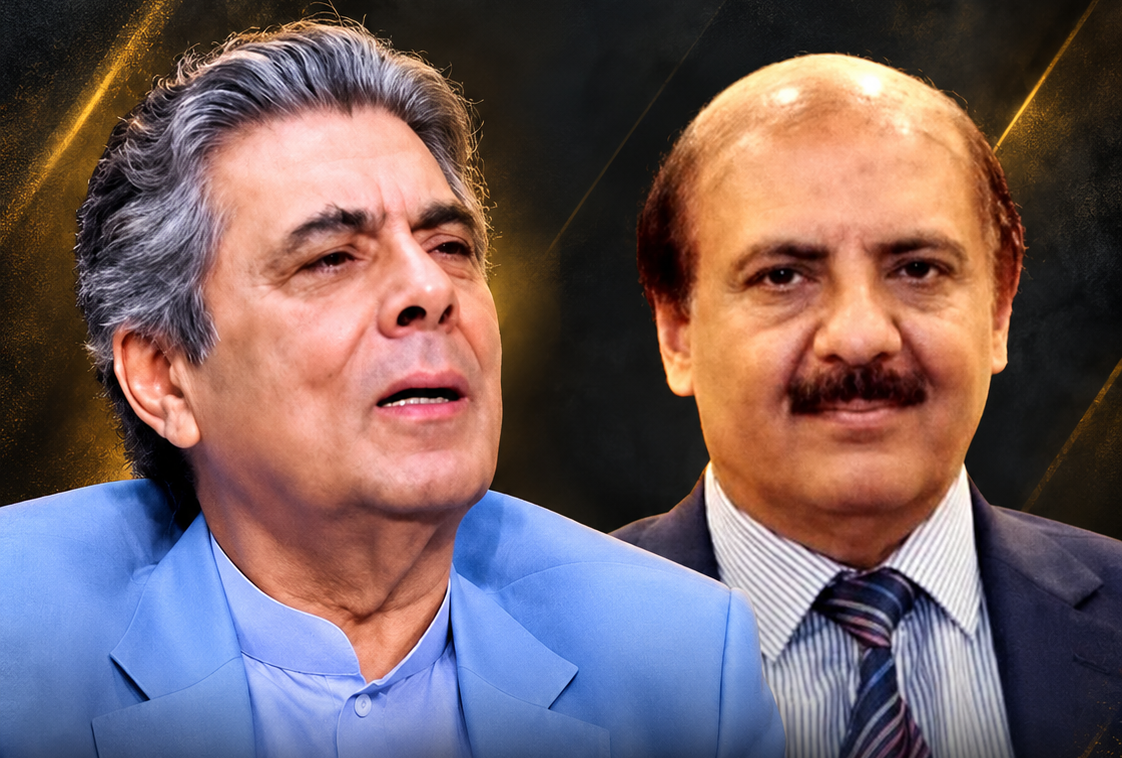
A senior analyst, Hafeez Ullah Niazi, named the owner of a glass company in an embezzlement dispute without verifying the facts. An audio recording later proved the accused employee had confessed to the theft.
A cautionary tale for journalists and analysts who take sides before checking facts
Imran Malik – Editor-in-Chief, MediaBites.com.pk
In the age of viral outrage, a single unverified claim can destroy a businessman’s reputation before the truth ever gets a hearing. A recent episode involving senior analyst Hafeez Ullah Niazi — and an audio recording that turned everything upside down — is a case study every journalist in Pakistan needs to sit with.
What Was Reported
Days ago, a news item circulated about an alleged altercation between Lahore Press Club president Arshad Ansari and senior analyst Hafeez Ullah Niazi. In that story, Niazi was quoted as saying that a former employee of a glass company had been wronged, that after joining a competitor firm, Ahmad Glass Industries, the employee’s former employers filed a false FIR against him. He also accused Arshad Ansari of playing a key role in registering the FIR, calling it blackmail. Niazi also named the company’s owner, Ijaz sahib, the company Ahmad Glass, and also mentioned Tahir Ashrafi as an associated figure.
The story spread. The businessmen named were implicated. Reputations took a hit.
What the Facts Actually Show
When a small measure of investigation was done — the kind that should have preceded publication — the picture changed completely.
Tahir Ashrafi had already stated publicly that he had no connection to the incident whatsoever. That alone should have been a pause point.
Then an audio recording surfaced, later shared by journalist Arshad Ansari in one of his vlogs—that changes the entire narrative. In it, the voice of the very person described as a victim of a “false FIR” can be heard. He admits that during his employment at Ahmad Glass, funds worth millions of rupees went missing — and that this was the first such incident.
He says he wants to apologize to Ahmad Glass owner Ijaz sahib. He says he is willing to sell his personal assets to return the money. He pleads to be kept out of police proceedings. He mentions his young daughters. Critically, he acknowledges that when matters were being negotiated and Hafeez Niazi got involved, he gave Niazi false information.
In other words: the “victim” was the accused. The “FIR” was filed over a real embezzlement. And the analyst who spoke up for him did so based on a fabricated account.
The Real Issue
None of this is about Hafeez Ullah Niazi’s character. Analysts and journalists try to help people — that impulse is not wrong. What is wrong is taking a public stand against a named businessman before verifying the facts. Ijaz sahib and Ahmad Glass suffered reputational and financial damage based on one side of a story that turned out to be false.
Tahir Ashrafi — a public figure with his own standing — was dragged into an incident he had nothing to do with.
The person at the center of it admitted, in his own voice, that he misled the analyst who went to bat for him.
The Standard That Must Apply
Journalism and analysis carry authority. That authority is borrowed from the public. When it is used to amplify unverified allegations against businesspeople, people whose livelihoods depend on their credibility, the damage is real, measurable, and often irreversible.
Helping the vulnerable is a core function of public media. But helping someone without knowing whether they are actually vulnerable, and naming others as perpetrators in the process, is not journalism. It is harm.
The Ahmad Glass case reminds us that the obligation to verify does not shrink when the story feels urgent. It grows.
Corrections and accountability matter in both directions: for the wrongly accused, and for the analyst who got it wrong.

