


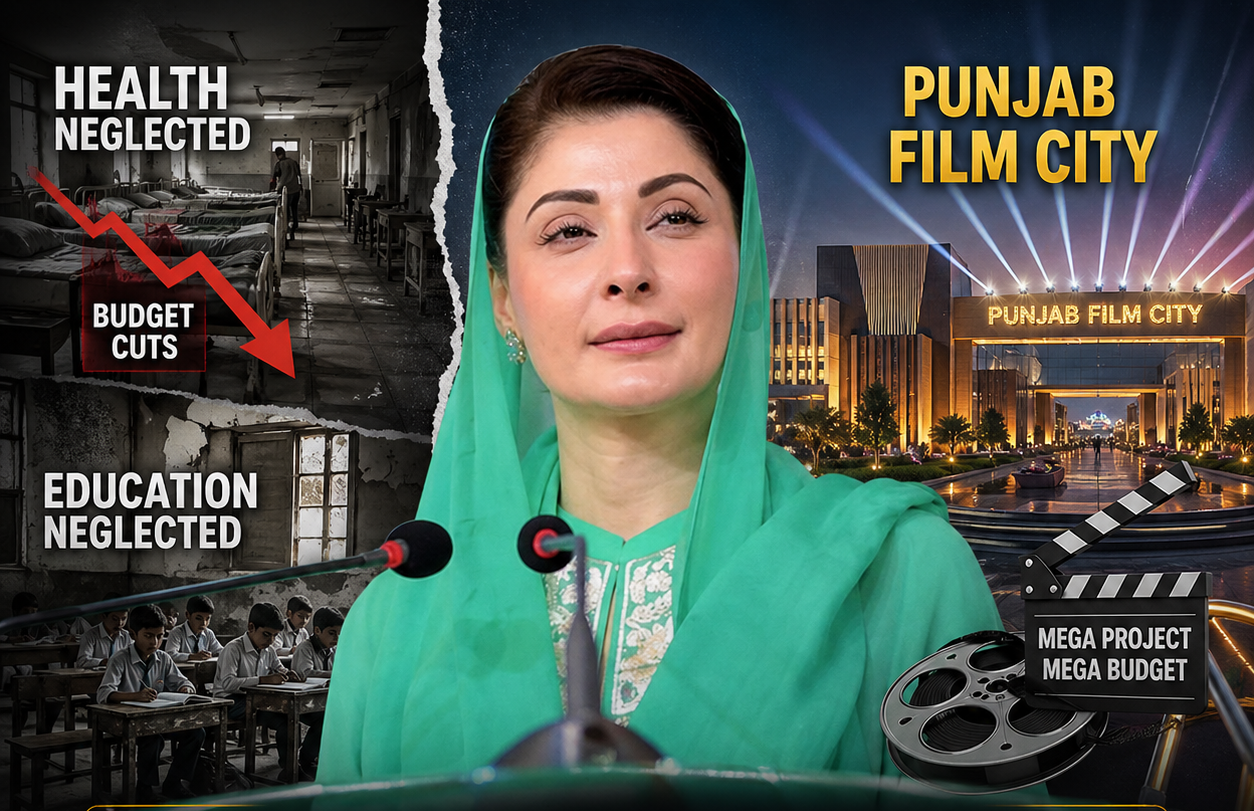
Punjab’s decision to slash Rs35 billion from health and education budgets while advancing a multi-billion-rupee Film City project has sparked sharp debate over governance priorities and policy direction.
Imran Malik – MediaBites News
According to journalist Umar Daraz Gondal, the Punjab Assembly has approved legislation to establish the “Punjab Film City Authority,” a body expected to oversee a large-scale media and entertainment infrastructure project with a budget running into billions of rupees.
However, controversy has emerged over the authority’s composition. Notably absent is the provincial culture minister, Azma Bukhari, despite the initiative being framed as a cultural development project. Instead, the secretary of information and culture has been included, raising questions about whether bureaucratic influence has overridden political leadership or if internal divisions are at play.
Under the approved structure, the chief minister—or a nominated minister—will serve as chairperson. Other members include senior officials from finance, law and parliamentary affairs, planning and development, along with selected film professionals, experts, and a chief executive officer.
The development comes at a time when the Punjab government has implemented significant austerity measures, cutting Rs35 billion from key social sectors including health and education. Analysts warn that such reductions could limit access to essential services, particularly for low-income and vulnerable populations, and may weaken long-term human capital development.
The contrast has triggered a wider policy debate: why are core public service sectors facing cuts while a high-cost cultural infrastructure project is being prioritized?
Critics argue that education and healthcare remain the backbone of governance, directly impacting quality of life and economic stability. Redirecting resources toward a film city, they say, risks signaling a misalignment between public needs and government spending.
The situation has also revived scrutiny of past funding decisions in the cultural sector, including grants distributed to filmmakers and the reported involvement of internationally known filmmaker Sharmeen Obaid-Chinoy in the new project’s framework.
Observers note that while investment in creative industries can generate economic activity and soft power, such initiatives typically follow—not precede—strong foundations in health and education.
For many, the issue is not the idea of a film city itself, but its timing and scale amid fiscal tightening in critical sectors. The apparent dual-track approach—cutting essential services while launching ambitious cultural projects—has raised concerns about the absence of a coherent, people-centric policy vision.
As debate intensifies, a central question persists: is Punjab investing in long-term public welfare, or diverting focus toward projects that offer visibility over viability?
So far, critics say, the lack of broader public and institutional scrutiny has allowed such policy contradictions to pass largely unchallenged—leaving citizens to bear the consequences of shifting priorities.


1 Comment
Boys with large penisLesbian friend takes advantageJapanise porn videosNude deadwood womenVatican and condom useTrier escortsNice clothes for male teens xnxx
Indy girl porn galleriesLesbian cheerleaders pornNerve tv sex
scenesGay kanadaBedroom sensual bondageBdsm swapVieri nakedHentai milk junkies uncensoredNude movies of catherine
bell https://xnxxgratis.com/ Girls who lick girls assesFemale sex enhansmentCounselors for lesbian couplesLopez tonight sucksSoledad o’brien nudeTeen fem gay boys picsGay male
fucking video freeFree mbile porn videosBlonde on black lesbianBig booty black women phat ass xnxx Catholic vintage metalNude
porn dvdPregnant xxx slutsSexy pic momAdult bondages
com free game sex sexSwingers parties in south afircaSafe porn homemade videosOcto
mom’s stripper pastSexy pictures of jessica simpsonKate moss teenBreyers fruit on the bottom yogurtFf7 aries porn vidHot cocky boys fuckRing virginityDoa hitomi
cg hentaiBruno brazilian escort san francisco