


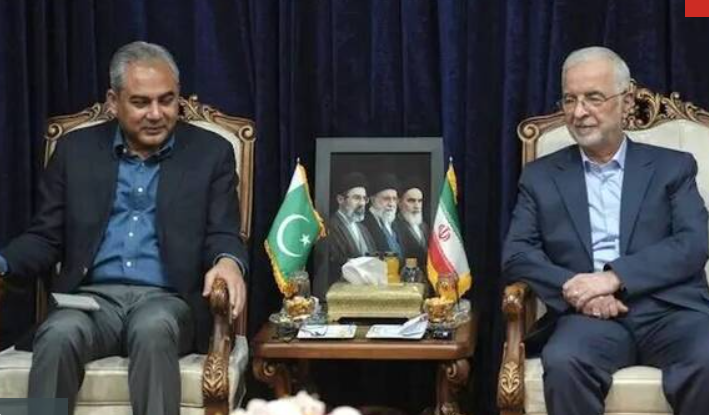
Pakistan’s Interior Minister Mohsin Naqvi met his Iranian counterpart in Tehran as Islamabad continued its quiet diplomatic efforts to ease tensions between Iran and the United States.
WebDesk – MediaBites News
Mohsin Naqvi met Iranian Interior Minister Eskandar Momeni in Tehran on Saturday as Pakistan stepped up diplomatic engagement amid the ongoing Iran-US conflict and regional instability linked to the Strait of Hormuz crisis.
According to Iranian state media, the two ministers discussed bilateral relations, border trade, transit cooperation, and mechanisms to facilitate cross-border exchange between the neighboring countries.
Naqvi’s visit comes at a sensitive time, as Islamabad continues behind-the-scenes mediation efforts to reduce tensions between Tehran and Washington following months of military escalation and stalled negotiations.
Pakistan has increasingly positioned itself as a regional mediator since the conflict intensified after joint US-Israeli strikes on Iran earlier this year triggered Iranian retaliation and disruptions around the strategically critical Strait of Hormuz.
The blockade and rising tensions in the Gulf have contributed to volatility in global energy markets, as nearly one-fifth of the world’s oil and gas shipments pass through the corridor.
Although a fragile ceasefire announced in April remains in place, direct negotiations between the United States and Iran have made little progress following an initial round of talks held in Islamabad.
Key disagreements over Iran’s uranium enrichment program, sanctions, and regional security issues continue to hamper diplomatic breakthroughs.
Iran’s state-run IRNA news agency described Naqvi’s trip as “unannounced” and reported that Iranian Interior Minister Eskandar Momeni thanked Pakistan for its “friendly and brotherly stance” toward Iran.
The Pakistani government has so far remained cautious about publicly discussing the full scope of Naqvi’s visit or Islamabad’s role in mediation.
However, officials in Islamabad have repeatedly emphasized that diplomatic engagement remains active.
Last month, Pakistan’s foreign ministry stated that the country was continuing efforts to reduce regional tensions and facilitate dialogue between key stakeholders.
“The clock on diplomacy has not stopped. The peace process is working,” Foreign Ministry spokesperson Tahir Andrabi told reporters in Islamabad at the time.
Naqvi’s latest visit to Tehran also follows the recent trip by Pakistan Army Chief Field Marshal Asim Munir to Iran, during which Islamabad intensified regional consultations regarding the crisis.
Beyond diplomacy, Pakistan and Iran are also seeking to strengthen economic ties through border markets, barter systems, and alternative financial mechanisms to bypass sanctions-related banking restrictions.
Iranian President Masoud Pezeshkian visited Pakistan last year, during which the two countries signed agreements aimed at increasing bilateral trade to $10 billion by 2028.
The Tehran talks also come shortly after Iranian Foreign Minister Abbas Araghchi stated in New Delhi that distrust of Washington remained the biggest obstacle to negotiations with the United States, while indicating openness to diplomatic support from regional countries.
Despite the ceasefire, tensions across the Gulf region remain high, with uncertainty surrounding future Iran-US negotiations and the stability of global energy supplies.


3 Comments
Pingback: ติดเน็ตบ้าน ais
Pingback: ป้ายไฟล้อเลื่อน
Pingback: Certified Translation