


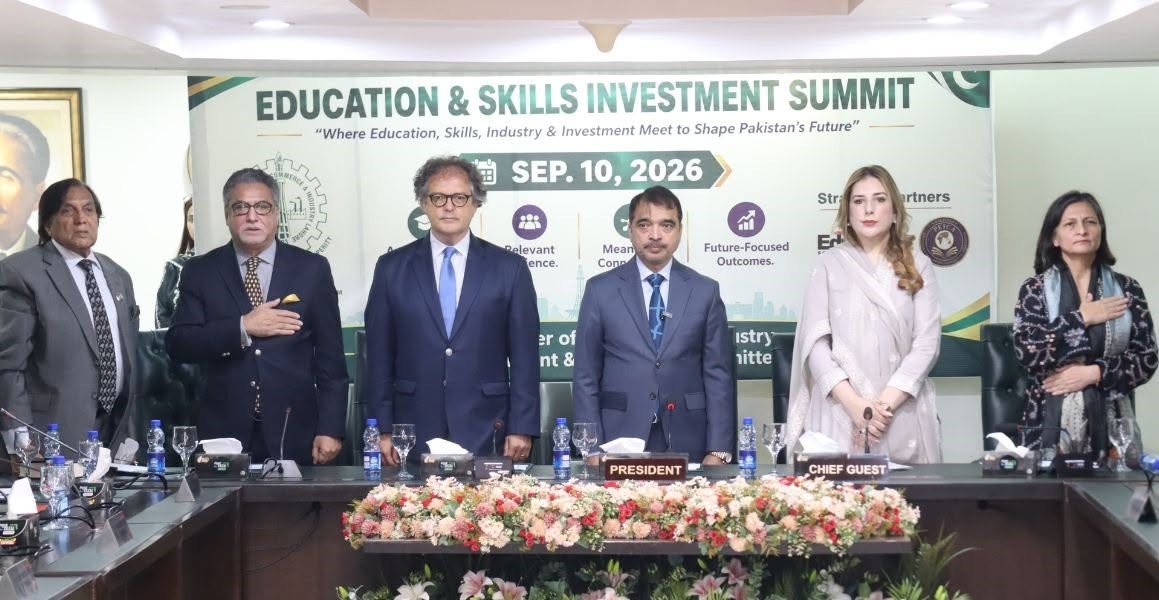
Pakistan Global Education and Skills Investment Summit organised by LCCI’s Global Investment and Facilitation Committee brought together education leaders but was marked by early departures and Tanveer Nandla’s standout commitment.
By Imran Malik | Education & Events Desk | MediaBites.com.pk | SharjahNews.ae | Digital PR
The Pakistan Global Education and Skills Investment Summit 2026, organized under the visionary platform of the Global Investment and Facilitation Committee of the Lahore Chamber of Commerce and Industry, brought together Pakistan’s education, skills, and policy community at Ameen Hall on September 10. The summit reflects LCCI’s commitment to connecting the business community with knowledge, investment, innovation, skills, and global opportunities.
All the right ingredients were present. The right topic. The right venue. Some of the right people. What it needed more of was commitment from the speakers who came, spoke, and left.
LCCI President Faheem ur Rehman Saigol opened with a short, crisp, and well-delivered speech that set a professional tone. The program started on time, which, in Pakistani event culture, is worth acknowledging in itself. Sami Ullah, soft-spoken and genuinely passionate, served as both moderator and organizer simultaneously, a dual role that created occasional gaps but reflected the genuine effort behind the event.
Nishat Riaz — The Speech That Stood Out
Nishat Riaz, Chief Executive of Malala Fund Pakistan, delivered one of the summit’s most compelling addresses. Her speech on girls’ education in Pakistan and specifically on the Malala Fund’s work in the Northern Areas was commendable in both its substance and its delivery.
The Northern Areas of Pakistan represent one of the country’s most complex and most urgent education challenges, where geography, poverty, tradition, and infrastructure all converge to limit access to education for girls who deserve every opportunity their urban counterparts receive. Nishat Riaz spoke to that reality with authority, data, and genuine advocacy.
Her presence at the summit and the work she represents deserved more time and more follow-up questions from the floor than the program structure allowed.
The Turkish Surprise — Good and Bad
A surprise guest elevated and complicated the event in equal measure. The Consul General of the Republic of Türkiye in Lahore attended in person, adding diplomatic weight to the proceedings. His presence also shifted all speeches to English, which was appropriate for the guest but created some distance with parts of the audience more comfortable in Urdu.
More significantly, several key participants spent considerable energy seeking personal introductions rather than engaging with the summit’s substance. Diplomatic networking is valuable. But it should not compete with the program itself.
The Walkout Problem

This is the honest critique that organizers of Pakistani events rarely hear publicly.
Faheem Saigol left after his speech, possibly due to LCCI election commitments, but professionally, it sent the wrong message to attendees who came specifically to hear from LCCI leadership and to participate in the Q&A.
PEMRA Punjab Head Ayesha Manzoor Wattoo delivered a strong speech with practical content but left before the Q&A session.
Imran Masood, the former Provincial Minister representing the University of South Asia, also left before the critical audience-interaction segment.
Several confirmed speakers, including the NetSol Chief, did not attend, citing personal commitments.
When speakers leave immediately after their prepared remarks, they send a damaging message: that the audience’s questions matter less than their own schedules. In an era when every person’s time is precious, this is unprofessional and undermines the entire purpose of bringing a business and education community together in one room.
The Best Part — Tanveer Nandla
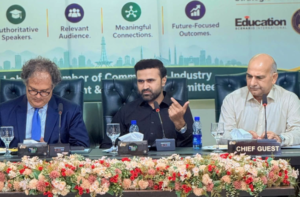
Tanveer Nandla, founder of iSkills and Workar, delivered the summit’s most impactful performance. His speech ran slightly long but carried genuine substance and audience engagement.
More importantly, he stayed. Every question from the floor. Every opinion shared by the business community. Nandla received it all with openness and responded substantively.
In a room where others rushed for the exit, Nandla’s presence until the very end was a statement about what serious engagement with Pakistan’s education crisis actually looks like.
Prof. Dr. Mohammad Nizamuddin also deserves specific recognition for remaining present throughout the entire summit. Abid Sherwani from UMT contributed an impactful narrative on the quality of education. Ayesha Manzoor Wattoo’s speech, despite her early departure, contained genuinely valuable content.
The strongest discussions emerged around teacher quality and student outcomes, precisely the debates Pakistan’s education community needs to have continuously and publicly.
Suggestions for Future Summits
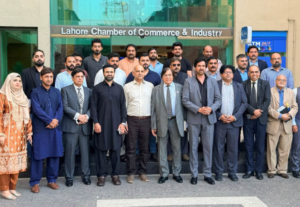
Sami Ullah deserves genuine credit for organizing this summit and for keeping the Q&A session open and inclusive until the very end. For future editions, three specific suggestions:
First: Two to three deeply committed specialist speakers are more valuable than ten who leave after their slot.
Second: Fifteen to twenty minutes per speaker, strictly enforced.
Third: Any LCCI office bearer must commit in writing to remain for the full session before being listed on the program. No exceptions.
Congratulations to Sami Ullah for the effort and the intent. Special thanks to Prof. Dr. Mohammad Nizamuddin for his presence throughout. And to Tanveer Nandla for his speech and his time.
Pakistan needs more of these conversations. It needs them to run tighter, stay fuller, and go deeper.
— Imran Malik | Education and Events Desk | MediaBites.com.pk | SharjahNews.ae


2 Comments
Selecting appropriate tools for vehicle access requires knowledge of air wedges and long-reach rods. Mechanics often access free car door tool overview to evaluate standard equipment specifications and basic operational features.
Getting familiar with a platform before exploring it can make the overall navigation easier. 91 Club is searched by people looking for general details about the platform and its account-related features. Users can check the available information and understand the basic registration and login process beforehand. Personal account information should always be handled carefully. Anyone looking into 91 Club can start with the basic details and explore the different sections once they have a clearer understanding of the platform.