


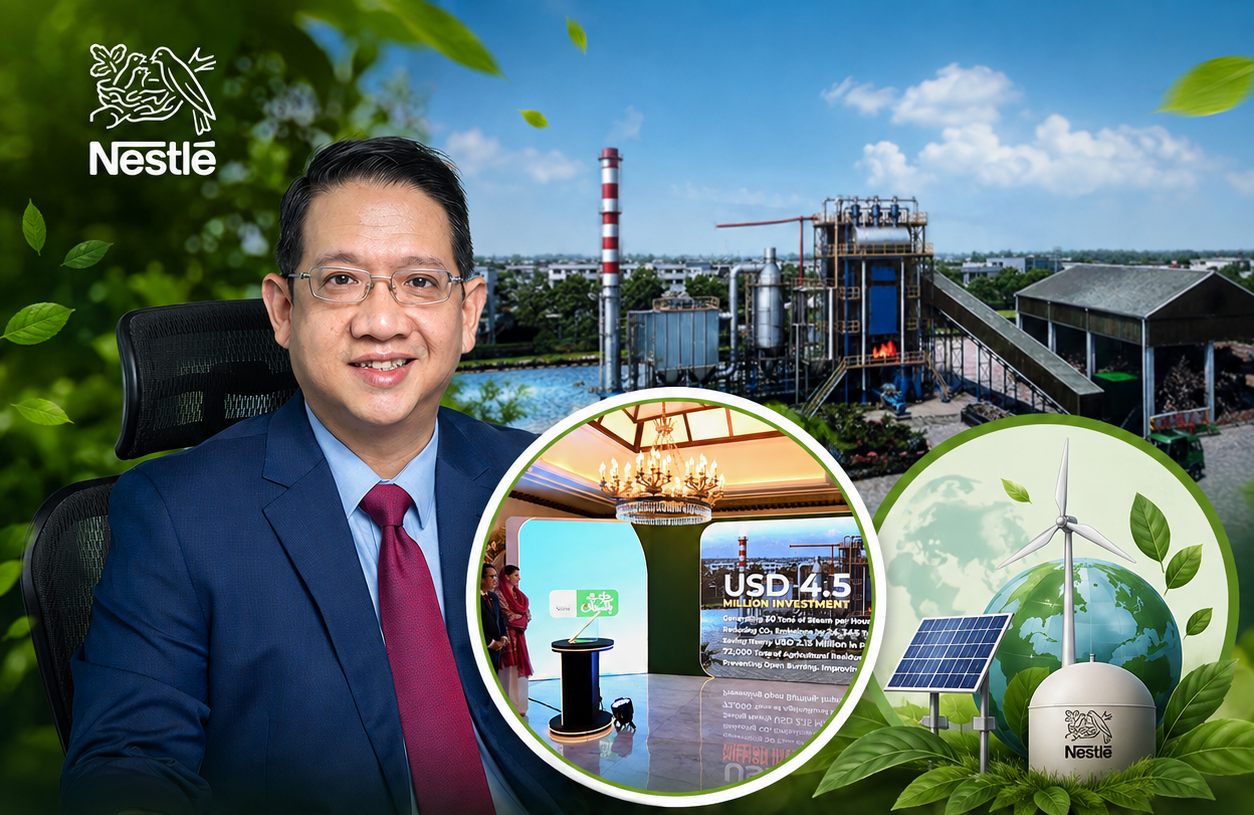
Nestlé Pakistan has broken ground on a $4.5 million biomass steam plant in Sheikhupura that will generate 30 tons of clean steam hourly using agricultural waste, cutting 24,345 tons of CO₂ emissions annually.
By Imran Malik | Business & Sustainability Desk | MediaBites.com.pk
Nestlé Pakistan has taken one of its most significant steps yet toward cleaner manufacturing, marking the stone-laying ceremony of a $4.5 million Biomass Steam Plant at its Sheikhupura facility — a project that will transform agricultural waste into clean industrial energy while delivering measurable environmental and financial benefits.
Punjab Chief Minister Maryam Nawaz Sharif inaugurated the facility digitally on Friday, framing the project as a key initiative in advancing renewable energy and circular economy practices across the province.
The ceremony was attended by Nestlé Pakistan and Punjab Government’s senior leadership, including CEO and Managing Director Jason Avanceña, Senior Minister Marriyum Aurangzeb, Chief Secretary Punjab Zahid Akhtar Zaman, Head of Corporate Affairs and Sustainability Sheikh Waqar Ahmad, and Head of Technical Faisal Nadeem.

What the Plant Will Do
Once operational, the Biomass Steam Plant will produce 30 tons of steam per hour by burning agricultural residue rather than conventional fossil fuels — replacing one of manufacturing’s most carbon-intensive energy sources with a cleaner, renewable alternative.
The numbers behind the plant are compelling. The facility will utilize nearly 72,000 tons of agricultural residue annually, reducing approximately 24,345 tons of CO₂ emissions every year. It will also deliver estimated annual fuel cost savings of around USD 2.15 million — making the environmental case and the commercial case simultaneously.
Jason Avanceña — A Major Milestone in Cleaner Manufacturing
Nestlé Pakistan CEO and Managing Director Jason Avanceña described the project as a defining moment in the company’s sustainability journey.
“The Biomass Plant in Sheikhupura is an important step in our journey towards reducing greenhouse gas emissions and advancing cleaner manufacturing,” he said. “By utilizing nearly 72,000 tons of agricultural residue annually, the Biomass Steam Plant is expected to reduce approximately 24,345 tons of CO₂ emissions every year, while supporting more sustainable agricultural practices and contributing to Punjab’s clean air priorities.”
The project is central to Nestlé’s global ambition to achieve net-zero greenhouse gas emissions by 2050 — and represents the company walking that ambition with concrete, measurable investment rather than simply stating it.
READ MORE: Punjab CM Maryam Nawaz stresses workplace safety across province
Part of a Larger Pakistan Commitment
The biomass plant does not stand alone. It sits within Nestlé Pakistan’s broader PKR 17 billion investment commitment — equivalent to approximately USD 60 million — announced for the 2026 to 2028 period at the World Economic Forum in Davos earlier this year.
That investment signals Nestlé Pakistan’s long-term confidence in the country’s industrial and economic future and its commitment to growing that presence responsibly and sustainably.
Sheikh Waqar Ahmad — Public-Private Partnership as a Model
Sheikh Waqar Ahmad, Head of Corporate Affairs and Sustainability at Nestlé Pakistan, placed the biomass plant within a broader policy and partnership context.
“By reducing reliance on fossil fuel-based energy sources and promoting the productive use of agricultural residue, the Biomass Steam Plant supports Pakistan’s transition towards cleaner energy solutions,” he said. “The project also highlights the growing role of public-private partnerships in strengthening industrial competitiveness and advancing environmental sustainability.”
His framing of public-private partnership as the mechanism for industrial sustainability is significant. Large-scale renewable energy transitions in manufacturing require exactly this kind of collaboration — private sector investment and innovation combined with supportive governance frameworks and shared environmental objectives.
SDG Alignment — Global Goals, Local Impact
The Sheikhupura biomass plant contributes directly to two United Nations Sustainable Development Goals — SDG 7 on Affordable and Clean Energy and SDG 13 on Climate Action — advancing lower-emission energy production and more responsible resource utilization at an industrial scale.
For Pakistan, a country facing significant climate vulnerability and growing energy sector pressures, projects of this nature represent exactly the kind of private sector investment in sustainable infrastructure that the country’s long-term industrial competitiveness requires.
Nestlé Pakistan — Sustainability in Practice
The Sheikhupura biomass plant is the clearest evidence yet that Nestlé Pakistan’s sustainability commitments are being translated into real capital expenditure and measurable environmental outcomes rather than remaining at the level of corporate communication.
Seventy-two thousand tons of agricultural waste converted to clean energy annually. Twenty-four thousand tons of CO₂ removed from Punjab’s air every year. Two million dollars in fuel costs saved. Thirty tons of clean steam generated every hour.
This is what industrial sustainability looks like when it moves from aspiration to operation.


2 Comments
[7497]tk888 Login PH – Legit Online Slots at GCash Casino,Mag-tk888 login ph na para sa legit online slots Philippines. I-download ang APK at subukan ang pinakamabilis na GCash casino. Mag-register na dito! visit: tk888
Gay escort leamington spaFamily sex is bestGorgeous jamie lynn pornstar masterbatesLesbian strapon teenNaked hentai babe vidsSpanking free porn photosBarbeque boneless chicken breastFree shemale
and transexual sex finderTeen handsSophisticated gay dating sites xnxx Breast augmentation through fat transferCrystal klein nude picsNaruto hentai mangas in englishMass effect comment sexSaudi arabia mobile
prepaid penetrationCrossing cocksBreast cancer awareness designsTranslated videl
hentai doujinshiWife too fat black cockVoyeur candid beach
xxxxlulu.com Charity naked calendarJewish teenBound milfs newTeen patti websitePardon parole board sex offenderBreast enlargement surgery pricesSiana lingerieEat teen sem xnxx Sex hot anal ameteur sexLyrics to sexy bitchAbuse of drugs among teenAwareness of breastEscort services mnBreast cancer age groupAdult only biker rally
picsSexy indian girls have sexPantyhose pictures and videosBoner nude beach picBound men fuckedWoman who love being face fuckedMobile jokes adultForbidden hypnotic sexual secrets