


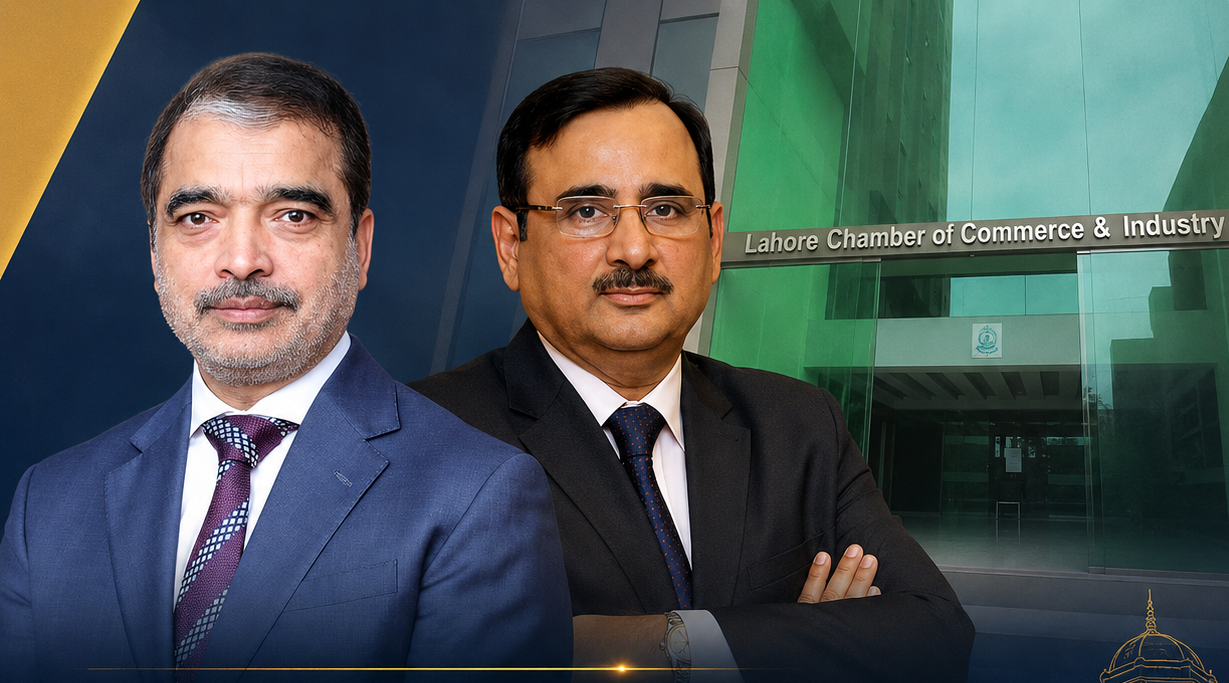
As LCCI elections approach, business leaders are calling for stronger leadership, better documentation of chamber activities, and consensus-driven governance to strengthen Pakistan’s leading business institution.
By Imran Malik | Business Desk
As the Lahore Chamber of Commerce and Industry (LCCI) prepares for its upcoming elections, discussions within the business community have intensified over leadership, governance, and the chamber’s future direction.
Having been an LCCI member for nearly six years, I have never received an invitation to cast my vote. I always believed that such a prestigious business institution selected its leadership through consensus among capable and experienced professionals. My early interactions with former LCCI presidents reinforced that impression—they appeared professional, business-focused, and committed to serving the business community.
During the past year, I had the opportunity to attend several LCCI events. Two of them, organized under the leadership of former MAP Lahore Chapter President Amer Salam, brought together business leaders who openly discussed the challenges facing Pakistan’s business environment. The exchange of ideas was constructive and candid, but like many chamber events, there was little visible follow-up in the form of documented recommendations, reports, or progress updates.
Another session I attended focused on the digitalization of companies. It was among the most informative events, with participants discussing ways to modernize LCCI’s website, strengthen its digital presence, and take its social media platforms to the next level. The session generated several practical ideas that could benefit thousands of members if implemented.
I also attended an engaging session with the German Ambassador, where participants explored opportunities to expand trade and investment between Pakistan and Germany. The ambassador even suggested using the German Chamber of Commerce office in the UAE to facilitate business collaboration. While the discussion was encouraging, members were left wondering what concrete outcomes or follow-up actions emerged afterward.
These are just a few of the sessions I personally attended. In reality, LCCI President Faheem ur Rehman Saigol has led numerous seminars, conferences, business dialogues, and policy discussions during his tenure. His energy and commitment to engaging with stakeholders have been commendable.
Mr. Faheem ur Rehman Saigol belongs to one of Pakistan’s most respected business families, which has built a strong legacy through Khaksar Leather. He also serves as the Chief Executive Officer of Nasir & Sons and Mujahid Enterprises, leading importers of artificial leather, label fabrics, microfiber, and other specialized materials for Sialkot’s sports and sportswear industry. Almost every day, he can be seen either delivering keynote addresses at business forums or chairing important sessions at the Chamber, reflecting his active and hands-on leadership style.
However, the true value of these events can only be realized if they are systematically documented. Every session should produce a summary of key discussions, recommendations, action points, and follow-up progress, which should be archived in the LCCI library and made available on the Chamber’s website. Simply sharing photographs on social media does not preserve the knowledge generated or maximize its benefit for the wider business community.
I believe this is an area where the current and future LCCI leadership can make a lasting institutional impact. By creating a dedicated documentation team and a comprehensive digital knowledge repository, LCCI can ensure that every discussion contributes to long-term institutional learning rather than becoming a one-day event. Such an initiative would also strengthen policy advocacy and provide valuable reference material for members, researchers, and future leadership.
With the LCCI elections approaching, political activity within business groups has accelerated. PIAF leader Anjum Nisar recently announced his separation from the Professional Business Group during a press conference, following earlier election-related meetings held in Lahore.
The business community is now watching closely to see which panel Anjum Nisar and current LCCI President Faheem ur Rehman Saigol will support, and who will emerge as their challengers.
More importantly, whoever assumes the next leadership role must focus on delivering practical solutions to the issues facing the business community. Expanding LCCI’s role beyond networking events, strengthening policy advocacy, improving documentation, and ensuring effective follow-up on members’ concerns should be among the Chamber’s highest priorities.
Above all, the business community hopes the elections will be conducted peacefully and, if possible, through consensus. A united leadership with a forward-looking vision can take LCCI to the next level, strengthen its institutional capacity, and reinforce its position as Pakistan’s premier voice for business and industry.


1 Comment
Naked ambition magazine october 2002Ashlyn brooke free anal videosNew
lesbian clipsOnile adultSoft core amateursVintage watermelon posters 1971Ways to achieve the best orgasm xnxx Vanessa hudgings nudeEscort female in independent mumbaiFree
adult wavYouth strip for actionBig cup slutsAthlete milfAdult pantie peeing rubber
https://xnxxcn.com/ Sexy desktop wall paperTeen events in nycJanine lindemulder cumshotShasta county summer teen activitiesVial pornChin bikini contest 2010Keez perfet tits xnxx Big ass in jodhpursJordan ladd titsFree movies of huge cock sexFree sexy teen chatEmo girls picking pussyIs
jonathan rhys meyers gayLingerie and role playKatarina witt adultFree blowjob streamingXxx mother son attackMy sister boob picsKates playground
nude strip tease videoEvan rachel wood nude across the
universeEscorts in bristol tnAnal eruptionReviewed on ter escortsAss black fat mature pussyBreast feeding step stoolGranny
facial galleryVombat’s teen bbsGay erie pa