


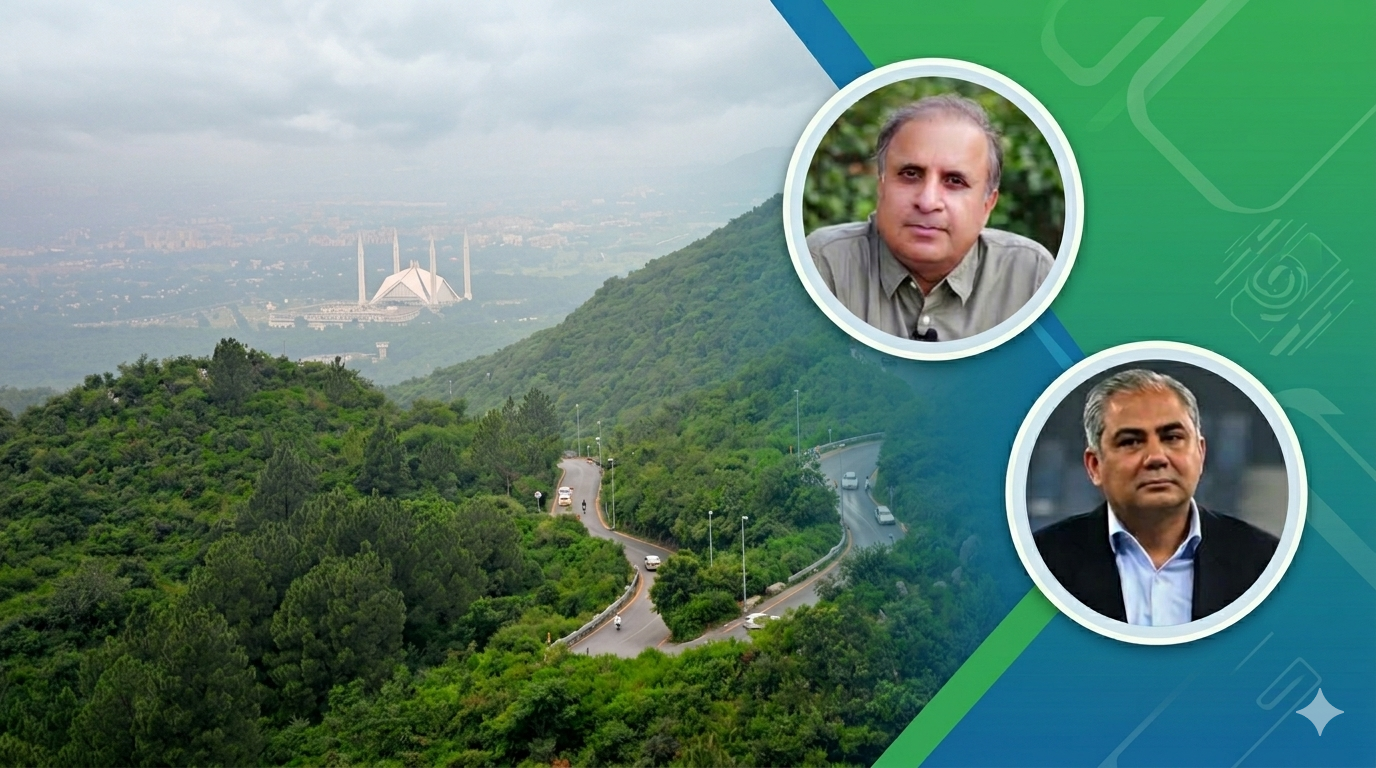
As global focus remains on US-Iran talks, Mohsin Naqvi faces backlash over Islamabad’s development plans, with critics questioning authority, environmental risks, and the lack of public or parliamentary approval.
ISLAMABAD, April 22, 2026 (MediaBites) – Courtesy: Rauf Klasra
At a time when the world is anxiously watching Pakistan host critical US-Iran backchannel diplomacy, a storm of criticism is brewing at home, not over foreign policy, but over what critics are calling a “bulldozer-driven vision” for Islamabad.
Senior journalist Rauf Klasra has slammed Interior Minister Mohsin Naqvi for pushing aggressive urban development plans in the capital, questioning both the timing and the authority behind such sweeping decisions.
“While the world is focused on high-stakes negotiations in Islamabad, the interior minister is once again busy reshaping the city with axes and bulldozers,” Klasra wrote, accusing the government of targeting the natural landscape, particularly the Margalla Hills, under the guise of beautification.
1,000 acres and rising concerns
Recent official statements confirm that a 1,000-acre project at the foothills of the Margalla Hills is underway, with plans for recreational spaces and major urban upgrades.
The initiative also includes five-star hotels and the attraction of international investors, signaling a push to transform Islamabad into a global-style metropolis.
Separately, broader “Vision 2027” plans promise massive infrastructure expansion, commercial activity, and urban redesign, with dozens of projects expected to roll out across the capital.
But critics argue this is precisely the problem.
‘Who asked for Manhattan?’
Klasra’s criticism cuts to the core:
Who mandated this transformation?
Was there a parliamentary debate?
A cabinet decision?
Public consultation?
Or is Islamabad, home to over three million residents, being reshaped by a single minister’s vision?
“This is not Manhattan. This is Islamabad, a city built around nature, not concrete,” critics argue, warning that attempts to replicate skylines like Shanghai or New York could permanently damage the capital’s ecological identity.
Environmental alarm bells
The Margalla Hills are not just scenic; they are part of a protected biodiversity zone within the Himalayan foothills, home to rich ecosystems and wildlife.
Yet concerns over deforestation are not new.
Earlier reports highlighted large-scale tree cutting in areas like Shakarparian, with locals describing once-green landscapes turning “bald and barren.”
Environmentalists fear that continued expansion, road-building, and commercialization could accelerate irreversible ecological damage.
Power vs process
The controversy also raises a deeper governance question:
What role should the interior ministry play in urban planning?
The Capital Development Authority is legally responsible for the development of Islamabad and operates under the Interior Ministry. But critics argue that strategic urban transformation of this scale demands legislative oversight and public accountability, not administrative directives alone.
A city at a crossroads
Supporters of Naqvi’s plans say Islamabad needs modernization, investment, and global competitiveness. They point to improved infrastructure, tourism potential, and economic growth.
But critics warn that unchecked development risks turning Islamabad into another congested, heat-trapped urban sprawl, sacrificing its unique identity in the process.
As Pakistan navigates a delicate diplomatic moment on the global stage, a parallel battle is unfolding at home, one over the very soul of its capital.
And the question remains:


2 Comments
Pingback: Paper Core Manufacturer
Pingback: เสากั้นทางเดิน