


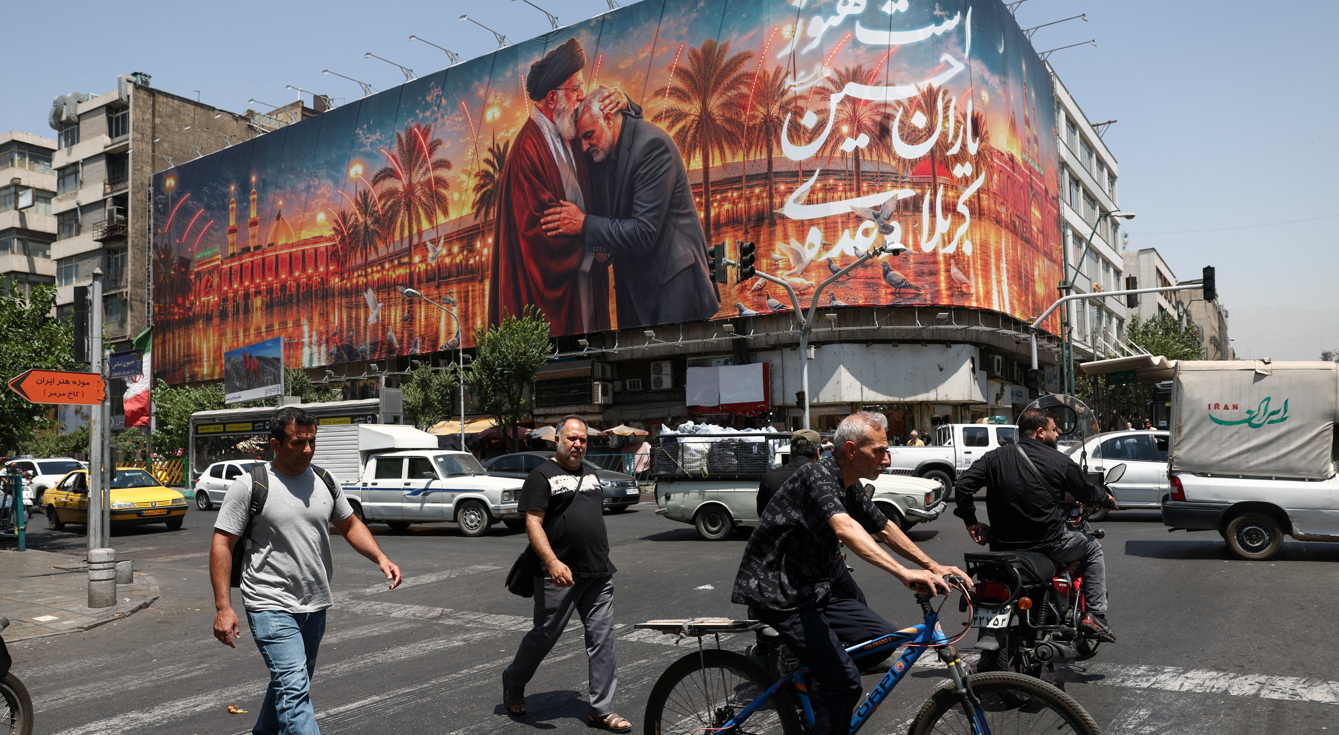
Iran rejected Donald Trump’s claim of a planned Doha meeting with US officials, while Gulf tensions escalated over Hormuz security, frozen Iranian funds, and Western naval involvement.
WEBDESK – MEDIABITES
Iran has denied United States President Donald Trump’s claim that Tehran requested a high-level meeting in Doha following last week’s exchange of strikes, adding fresh uncertainty to already fragile regional diplomacy in the Gulf.
Speaking during a media interaction, Trump said Iran had “requested a meeting” and claimed talks with US officials were expected to take place in Qatar on Tuesday. However, Iran’s Foreign Ministry swiftly rejected the statement, insisting that no bilateral meeting with Washington had been scheduled.
Despite denying Trump’s claim, Tehran confirmed that it would dispatch an expert delegation to Doha to discuss the possible release of frozen Iranian funds. Iranian officials said the delegation’s mission would focus on technical and financial matters rather than broader political negotiations with the US.
The latest developments come after days of heightened military tensions in the region following reciprocal strikes involving Iran and US-linked targets, raising fears of a wider regional conflict.
Meanwhile, tensions are also mounting around the strategically critical Strait of Hormuz, one of the world’s most important oil shipping routes. Tehran strongly opposed France’s reported plans for demining operations in the waterway, warning Paris against what it called “provocations” in an already “sensitive and complex situation.”
Iranian authorities argued that any foreign military or naval activity in the Strait of Hormuz without regional coordination could further destabilize the Gulf and threaten maritime security.
The Strait of Hormuz remains a key global energy chokepoint through which nearly a fifth of the world’s oil supply passes daily. Any escalation in the area has immediate implications for global oil prices, shipping insurance costs, and international energy markets.
Qatar has once again emerged as a critical diplomatic mediator in the crisis due to its close communication channels with both Washington and Tehran. Doha has previously played a central role in facilitating indirect negotiations between the US and Iran, including discussions related to sanctions relief, prisoner exchanges, and frozen assets.
Analysts believe the contradictory statements from Washington and Tehran highlight the ongoing mistrust between the two sides, despite behind-the-scenes diplomatic efforts to prevent another major regional escalation.
The situation is being closely monitored by global powers and energy markets amid concerns that further military confrontation in or around the Strait of Hormuz could disrupt international trade routes and intensify geopolitical instability across the Middle East.


4 Comments
gerçekten güzel bir yazı olmuş. Yanlış bildiğimiz bir çok konu varmış. Teşekkürler.
I am truly thankful to the owner of this web site who has shared this fantastic piece of writing at at this place.
Pingback: catkot.gorgu.ru
Pingback: read the full comparison