


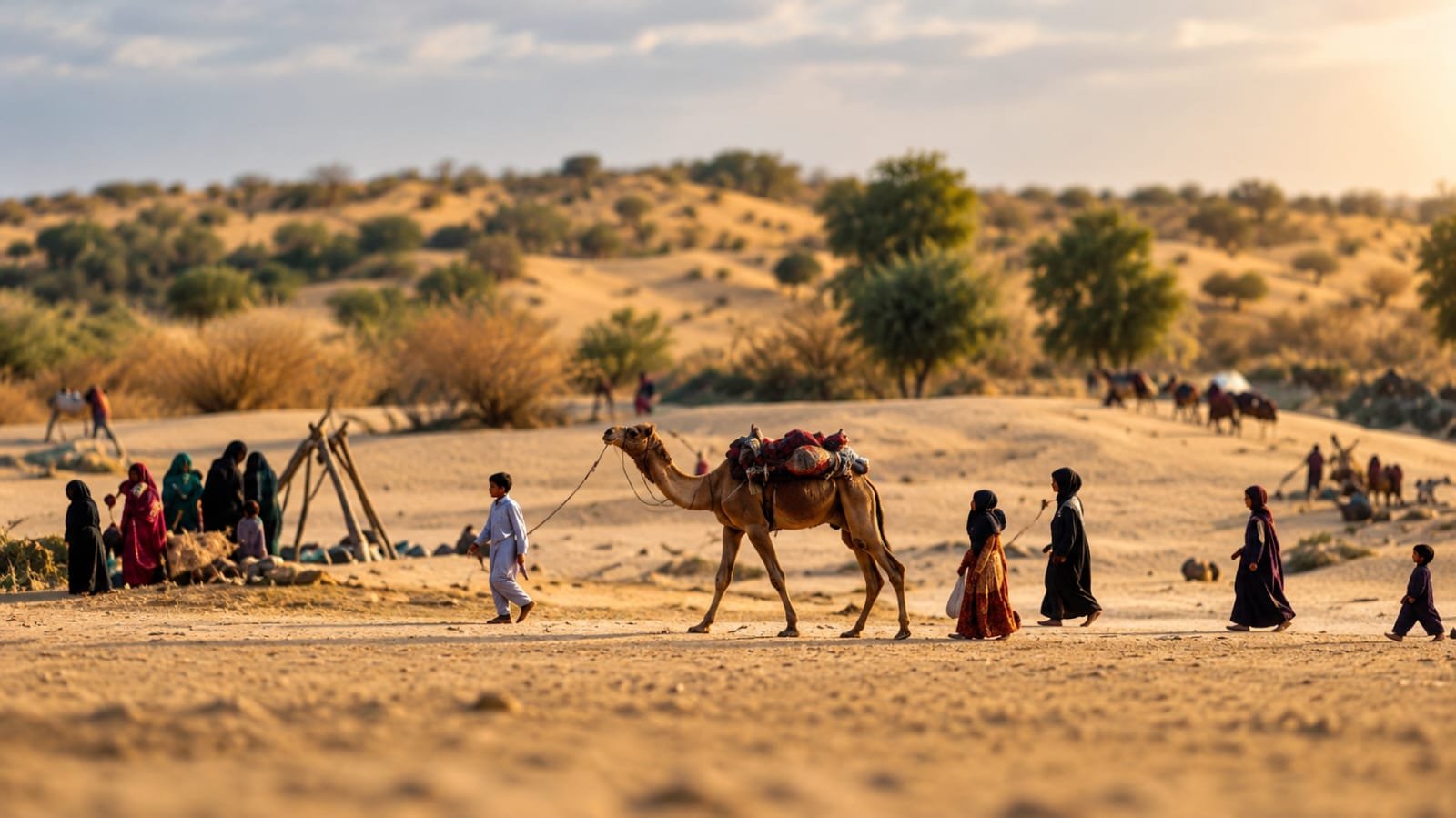
Severe drought in Pakistan’s Thar region forces families to migrate with livestock as failed rainfall, damaged crops, rising food prices and worsening hunger threaten vulnerable communities.
Webdesk Zunaira Fatima
Severe drought conditions in Sindh’s Tharparkar district are forcing families to leave their villages with livestock in search of water, food and grazing land. Failed rainfall, damaged crops and rising food prices have created serious challenges for rural communities already struggling with poverty and malnutrition.
According to The Express Tribune, farmers who planted millet, guar and other seasonal crops following initial rainfall have suffered significant losses because subsequent rains failed to arrive. Agricultural fields have dried up, while natural grazing areas have become increasingly unsuitable for livestock.
Many families are now travelling towards irrigated barrage areas, carrying limited food supplies for journeys lasting more than a week. Some survive on dry bread, jaggery and water during migration.
Khemoon Bhel, a livestock owner from Vee Hangorja village in Mithi taluka, reported losing crops planted across 20 acres of land. After returning home only two months earlier, he has been forced to migrate again because of insufficient fodder and water.
The drought has also affected household incomes and food security. Many residents depend on farming and livestock for survival, but declining agricultural production and increasing market prices have made basic food items difficult to afford.
Health concerns are particularly serious for children and pregnant women. A medical study involving 129 children treated for severe acute malnutrition at Mithi Civil Hospital between March and June 2024 found that 117 children, approximately 90.7 percent, suffered from anaemia. The findings were published in January 2026.
Meanwhile, the district administration has not declared Tharparkar a calamity-hit area, raising concerns about the availability of government relief.
Social activist and lawyer Qurban Samejo has filed a constitutional petition before the Sindh High Court’s Mirpurkhas circuit, challenging the administration’s failure to initiate the necessary drought assessment and relief procedures.
The court has reportedly sought responses from the National Disaster Management Authority and relevant provincial authorities.
Experts have highlighted the importance of rainwater harvesting, drought-resistant crops, reliable livestock fodder supplies and affordable food. Improved nutritional screening and targeted assistance for vulnerable families are also considered essential.
The worsening situation highlights the urgent need for coordinated measures to protect livelihoods and prevent further food insecurity in Tharparkar.

