


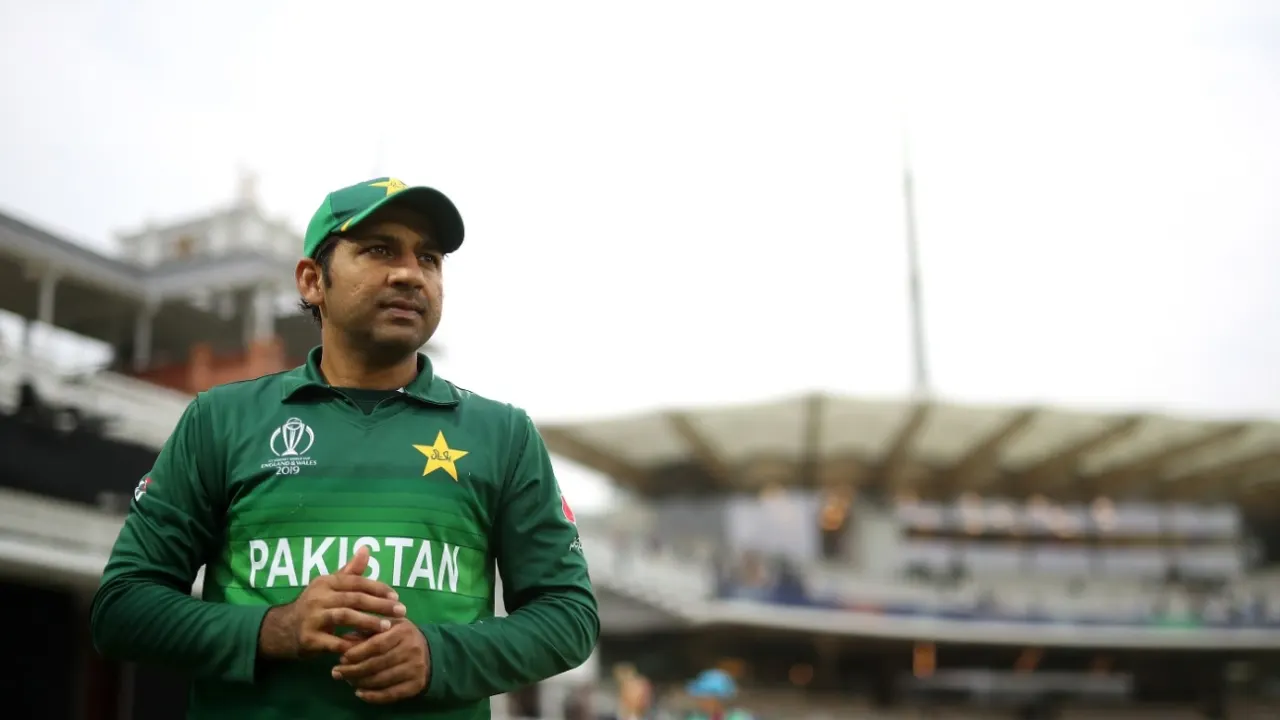
Strong bond with Shan Masood, deep tactical understanding, and proven leadership make Sarfaraz a fascinating new choice for Pakistan’s Test future
KARACHI — Just weeks after retiring from international cricket, Sarfaraz Ahmed has returned to Pakistan cricket in a dramatically different role — as the national team’s new head coach.
For many observers, the appointment may appear surprising given Sarfaraz’s limited formal coaching experience. But within Pakistan cricket circles, the decision reflects something more important than a traditional coaching résumé: trust, leadership, dressing-room influence, and a deep understanding of the game.
Sarfaraz replaces former coach Jason Gillespie following an interim spell overseen by Aaqib Javed. His elevation continues Pakistan cricket’s long-standing tendency to fast-track former captains into senior management roles.
Perhaps the biggest factor working in Sarfaraz’s favor is his close relationship with current Pakistan Test captain Shan Masood. The two have shared a strong bond dating back to their playing days, with Sarfaraz even featuring under Masood’s captaincy during the latter stages of his international career.
That familiarity could prove crucial for a Pakistan Test side still searching for stability after inconsistent performances in recent years.
Captaincy legacy still shapes Sarfaraz’s reputation
While Sarfaraz’s batting form declined toward the end of his career, his reputation as a tactically sharp captain and strong dressing-room manager has largely endured.
He is widely credited with transforming Pakistan’s T20 side after taking over from Shahid Afridi in 2016. Under his leadership, Pakistan rose to No. 1 in the ICC T20 rankings, won 11 consecutive T20 series, and famously lifted the ICC Champions Trophy in 2017.
That triumph remains one of Pakistan cricket’s most celebrated modern achievements and made Sarfaraz only the second Pakistan captain, after Imran Khan, to win a major 50-over ICC title.
Although his stint as Test captain produced mixed results, many insiders believe Sarfaraz’s real strength has always been his cricketing brain, player management, and ability to unite teams under pressure.
A coach players may naturally relate to
Sarfaraz recently worked with Pakistan’s Under-19 setup in Zimbabwe in a mentorship role that gradually evolved into hands-on coaching responsibilities.
He also reportedly spent time mentoring Pakistan’s Under-19 girls’ team, involving himself directly in practice drills and team-building activities — an approach that earned praise for its warmth and personal connection.
Those experiences strengthened perceptions that Sarfaraz may be naturally suited to coaching, particularly in Pakistan’s emotionally charged cricket environment, where relationships and dressing-room culture often matter as much as tactics.
Challenges already waiting
Despite the optimism surrounding his appointment, Sarfaraz’s tenure is unlikely to be smooth.
His past competition with Mohammad Rizwan for the wicketkeeping role created tensions, while his relationship with Babar Azam reportedly cooled after Babar replaced him as captain and Sarfaraz gradually disappeared from the national setup.
However, with Pakistan entering another transitional phase, many believe those old rivalries may now matter less than the need for unity and direction.
A role seemingly made for him
For supporters of the move, coaching may ultimately be the perfect next chapter for Sarfaraz — a former captain whose value increasingly lay not in personal performances, but in reading situations, motivating players, and understanding Pakistan cricket’s unpredictable dynamics.
His challenge now will be converting those instincts into long-term success at the highest level.
Because in Pakistan cricket, reputations can change quickly — and few understand that reality better than Sarfaraz Ahmed himself.


3 Comments
Pingback: https://sun-of-egypt.org.kz
Pingback: ปั้มคนดูไลฟ์
Pingback: Sydney Airport Transfer