


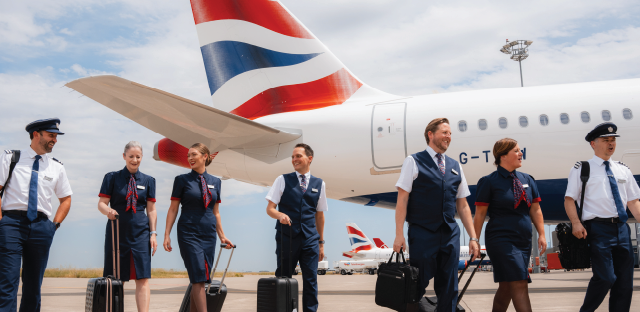
British Airways has once again postponed the resumption of its flights to Dubai, extending the suspension until October 25 amid continued uncertainty and operational risks linked to the ongoing Middle East crisis.
Aviation analysts say the move highlights how regional instability continues to disrupt global air travel months after the Iran conflict triggered widespread airspace closures and flight cancellations across the Gulf.
WEBDESK – MEDIABITES NEWS: British Airways has delayed Dubai flight operations until October 25 as airlines continue assessing security risks and passenger demand following months of Middle East aviation disruption.
The UK carrier had initially planned to restart Dubai services on July 1, but confirmed on Monday that flights to Dubai will remain suspended for nearly four more months.
“Due to the ongoing situation in the Middle East, we have made further changes to our flying schedule to provide greater clarity for our customers,” a British Airways representative told The National.
The airline said affected passengers are being contacted directly and offered multiple travel options, including rebooking and refunds.
Under the revised schedule, British Airways will also continue suspending flights to Tel Aviv, Bahrain, and Amman. At the same time, the airline is reducing flight frequencies to several Gulf destinations.
Flights to Doha and Riyadh will operate only once daily instead of twice daily beginning August 1 and August 8, respectively, reflecting continued caution among international carriers operating in the region.
The latest decision underscores the lasting impact of the Iran war on global aviation despite the relative easing of active hostilities between Iran and the United States.
The conflict, which erupted on February 28, led to major airspace closures across the Middle East, forcing airlines worldwide to reroute or suspend operations due to safety concerns.
Although flight activity in the UAE and neighboring Gulf states has gradually normalized, many international carriers remain reluctant to fully restore their schedules, as security and insurance risks continue to affect operations.
Industry experts say airlines are prioritizing passenger safety while also trying to stabilize operations after months of uncertainty, rising fuel costs, and fluctuating travel demand.
The aviation slowdown has already affected global passenger traffic.
According to the International Air Transport Association (IATA), worldwide air passenger demand dropped by 3.4 percent in April, largely due to a sharp collapse in travel demand in the Middle East.
The report revealed that demand for Middle Eastern airlines plunged by 46.6 percent during the month, making it the world’s worst-performing aviation region.
“The 46.6 percent fall in demand for carriers in the Middle East due to war in the region was so acute that it dragged overall demand down, to minus 3.4 percent,” said IATA Director General Willie Walsh.
The ongoing disruption is also affecting tourism, business travel, and cargo operations throughout the Gulf, especially in major aviation hubs such as Dubai and Doha, which depend heavily on international transit traffic.
Dubai International Airport remains one of the world’s busiest global transit hubs, and prolonged flight suspensions by major international carriers could continue affecting passenger flows during the upcoming summer and autumn travel seasons.
Travel experts advise passengers planning trips to the Middle East to regularly check airline schedules and remain prepared for further operational changes if regional tensions escalate again.
British Airways has not yet announced a definitive timeline for fully restoring all suspended routes to the Middle East, saying the situation remains under constant review.


74 Comments
555
1
555
555
555
555
555
555
555
555
555
555
555
555
1w6kpWsnj
1*1
1+377-372-5
555
555
555
(select(0)from(select(sleep(15)))v)/*’+(select(0)from(select(sleep(15)))v)+'”+(select(0)from(select(sleep(15)))v)+”*/
555*1
1-1 OR 335=(SELECT 335 FROM PG_SLEEP(15))–
1-1) OR 158=(SELECT 158 FROM PG_SLEEP(15))–
1-1)) OR 31=(SELECT 31 FROM PG_SLEEP(15))–
1yiiDwAZh’ OR 920=(SELECT 920 FROM PG_SLEEP(15))–
17yGX59ui’) OR 831=(SELECT 831 FROM PG_SLEEP(15))–
555-1; waitfor delay ‘0:0:15’ —
1
1
1
1
1
1
1
1
1
1
1
1
1
1
1
1
1
1
1
555
555
555
555
555
555
555
555
555
555
555
555
555
555
References:
Lollybet Casino Gutschein http://images.google.tt/url?q=https://lollybet.com.de/
References:
Lollybet Casino Erfahrungen http://www.google.com.vn/url?sa=t&url=https://lollybet.com.de/
References:
Casino Bit Bonus ohne Einzahlung https://www.fapcam.org/external_link/?url=https://s3.amazonaws.com/new-casino/Beau-Casino-Bewertung.html
References:
Casino Of Gold Bonus ohne Einzahlung https://cmbe-console.worldoftanks.com
References:
Milky Way Casino App https://s3.amazonaws.com/
References:
Hitnspin Casino Erfahrungen https://xbymw.com/space-uid-773283.html
References:
Candy96 https://body-positivity.org/
References:
Ggbet Casino Test http://www.hotgoo.com
References:
Candy96 Casino tournaments https://tripleoggames.com
References:
Vulkan Casino Test educacaocontinuada.sbhci.net
References:
Amunra Casino App liveinternet.ru
References:
Luna Casino Test 67.pexeburay.com
References:
Bet365 Casino Bewertung https://cm-us.wargaming.net/