


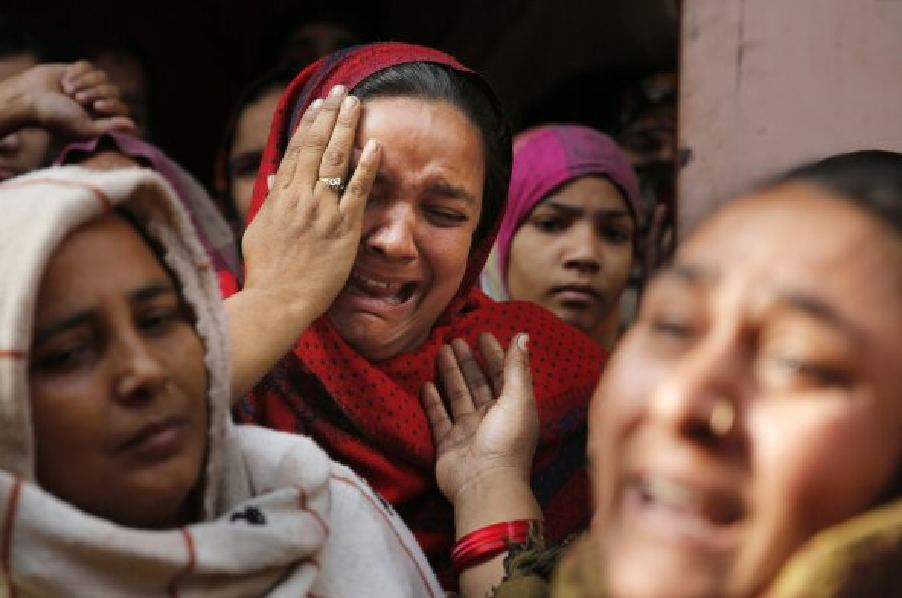
Two shocking killings in Lahore within days have reignited debate over rising violence, with experts pointing to emotional instability, social breakdown, and economic stress as possible drivers.
Webdesk – MediaBites News

LAHORE: Two brutal murder cases in Lahore—one in Mozang and the other in Nawab Town—have exposed a disturbing pattern: personal disputes escalating rapidly into deadly violence, raising serious questions about the state of society.
In Mozang, a property dealer allegedly shot a woman and her two children before taking his own life, leaving two more critically injured. Police said the suspect had a personal relationship with the victim, marked by frequent disputes.
Just days earlier in Nawab Town, a woman allegedly killed her companion inside a car using his own pistol after an argument rooted in jealousy and fear of abandonment. Investigators described the act as a result of an emotional breakdown following a long-term relationship dispute.
A pattern beyond coincidence
While the cases appear isolated, the similarities are striking—both involve:
- Close personal relationships
- Emotional triggers like betrayal or conflict
- Immediate escalation to lethal violence
Criminologists say these point to a deeper societal shift.
“Violence is becoming impulsive rather than premeditated,” said a Lahore-based analyst. “People are losing the ability to process conflict without aggression.”
Is patience running out?
Social observers argue that tolerance levels in society are declining. Everyday disagreements—once resolved through dialogue—are now increasingly turning confrontational.
“There is a visible erosion of patience,” said a sociologist. “Emotional resilience is weakening, especially in urban environments where stress levels are high.”
Financial pressure or emotional collapse?
Economic challenges may also be fueling frustration. Rising inflation, job insecurity, and financial instability often intensify domestic tensions, making individuals more prone to extreme reactions.
However, experts caution against viewing it purely as an economic issue.
“These are not just financial crimes,” said a behavioral expert. “They are emotional crimes—triggered by insecurity, possessiveness, and fear of loss.”
Role of social media?
Another emerging factor is the psychological impact of social media. Constant exposure to idealized lifestyles, relationship pressures, and instant reactions may be amplifying emotional volatility.
“People are living in a hyper-reactive environment,” an analyst noted. “Everything is instant—communication, anger, retaliation.”
Where does responsibility lie?
The back-to-back incidents have sparked a broader concern: is society failing to address mental health, conflict resolution, and emotional well-being?
Critics argue that institutions—from education to media—have not adapted to rising psychological pressures.
A deeper crisis
Beyond individual crimes, these incidents reflect a deeper crisis—one where relationships are fragile, patience is shrinking, and consequences are becoming irreversible.
The pressing question remains:
Is crime becoming easier—or are people becoming more fragile?
Until that answer is addressed, Lahore’s recent tragedies may not be the last.

