


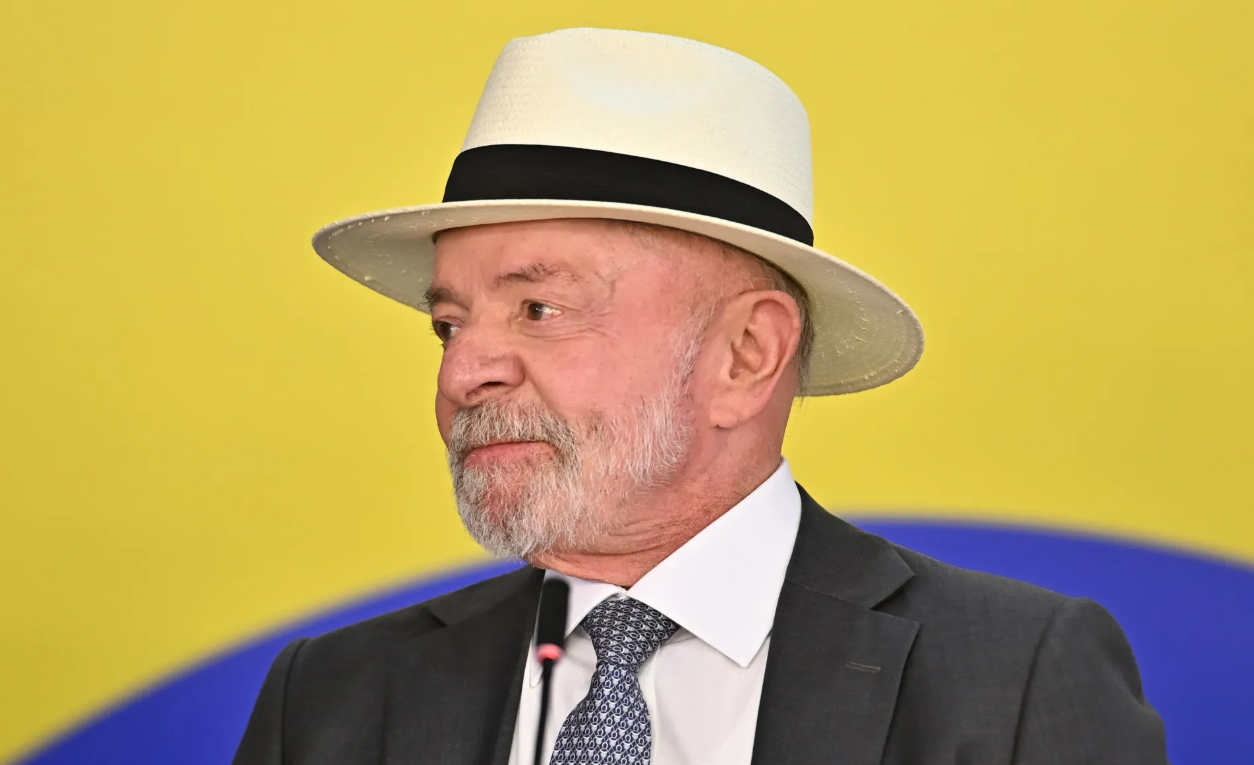
Brazil’s President Luiz Inacio Lula da Silva wins a historic fourth term, defeating Flavio Bolsonaro by more than four million votes as the opposition threatens legal action.
WEBDESK – MEDIABITES
SAO PAULO: Brazilian President Luiz Inacio Lula da Silva has won a historic fourth term, the country’s electoral court said Sunday, defeating right-wing Senator Flavio Bolsonaro in a runoff election that challenged the recent rise of conservative political movements across Latin America.
The 80-year-old leftist leader overcame Bolsonaro’s first-round lead to win by more than four million votes, according to the results. Flavio Bolsonaro, the eldest son of former President Jair Bolsonaro, said he would seek to have the result annulled, citing a Supreme Court ruling that extended voting hours by two hours on Sunday.
Analysts, however, said the scale of the defeat and the circumstances surrounding the voting extension made a reversal unlikely.
Bolsonaro threatens legal challenge
Flavio Bolsonaro’s refusal to concede defeat echoes his father’s response after losing the 2022 presidential election to Lula. Jair Bolsonaro subsequently received a 27-year prison sentence for plotting a coup to remain in power, according to the report.
Mario Braga, a Latin America analyst at risk consultancy RANE, said right-wing protests could emerge in the coming days but were unlikely to overturn the result.
The election outcome defied expectations that public frustration over corruption scandals and rising living costs would weaken Lula’s support. The president’s Workers’ Party has faced criticism over economic pressures and concerns that its traditional political approach has struggled to keep pace with Brazil’s changing economy.
Lula stages another political comeback
Lula’s victory marks another return to power in a political career spanning five decades. A former metalworker and trade union leader, he previously served as president from 2003 to 2011 before returning to office in 2023.
He was imprisoned from 2018 to 2019 on corruption charges that were later overturned, paving the way for his victory over Jair Bolsonaro in the 2022 election.
During the campaign, Lula highlighted his government’s record on poverty reduction and inequality, pointing to improvements in employment and environmental protection during his third term.
Late-campaign promises included free nationwide public transport on weekends, subject to formal submission to Congress, and a 15% increase in his flagship welfare program, which was already being implemented. He also backed a constitutional amendment that became Brazil’s biggest labour reform in decades.
Pollsters attributed his victory partly to stronger-than-expected voter turnout. Leonardo Barreto, co-founder of the consultancy Think Policy, said voters chose a familiar political path over the uncertainty of a leadership change.
Lula also warned that a Bolsonaro presidency could reduce welfare spending, reverse social gains and increase Brazil’s dependence on US President Donald Trump’s administration.
Conservative Congress presents major challenge
Despite his victory, Lula faces substantial political and economic obstacles in his fourth term.
Brazil has elected its most conservative Congress since returning to democracy in the 1980s. Bolsonaro’s Liberal Party and its allies could control more than 280 seats in the lower house and up to 50 seats in the Senate, giving the opposition considerable influence over legislation and government spending.
The balance of power could force Lula to make concessions to lawmakers over budgets, major legislation and key appointments.
Economic concerns are also expected to weigh on the administration. The government forecasts 2.3% growth next year, while high interest rates and public debt above 82% of gross domestic product have intensified concerns about the country’s fiscal outlook.
Lula’s critics have blamed government spending for the debt burden, although borrowing costs have accounted for much of its increase. Goldman Sachs expects limited progress in containing spending as the president remains committed to a state-led growth model.
Rising household debt is another concern. Lula introduced a debt-relief program during the campaign and announced measures targeting online betting as part of efforts to ease financial pressure on households.
The incoming conservative Congress is expected to pursue structural reforms favoring businesses, potentially involving spending cuts that could trigger public opposition.
Regional implications
Lula’s re-election limits the expansion of a bloc of right-wing governments in Latin America that have aligned themselves with Washington’s positions on security and migration.
Celso Amorim, Lula’s former foreign minister, described the president as an important counterweight in the region.
The result also highlights the continuing strength of Lula’s political base despite economic concerns and criticism of his party. His next term will test his ability to maintain support among lower-income voters while negotiating with a conservative legislature and addressing Brazil’s fiscal pressures.
With Bolsonaro threatening legal action and the country facing deep political divisions, the coming weeks could prove crucial for Brazil’s political stability.

