


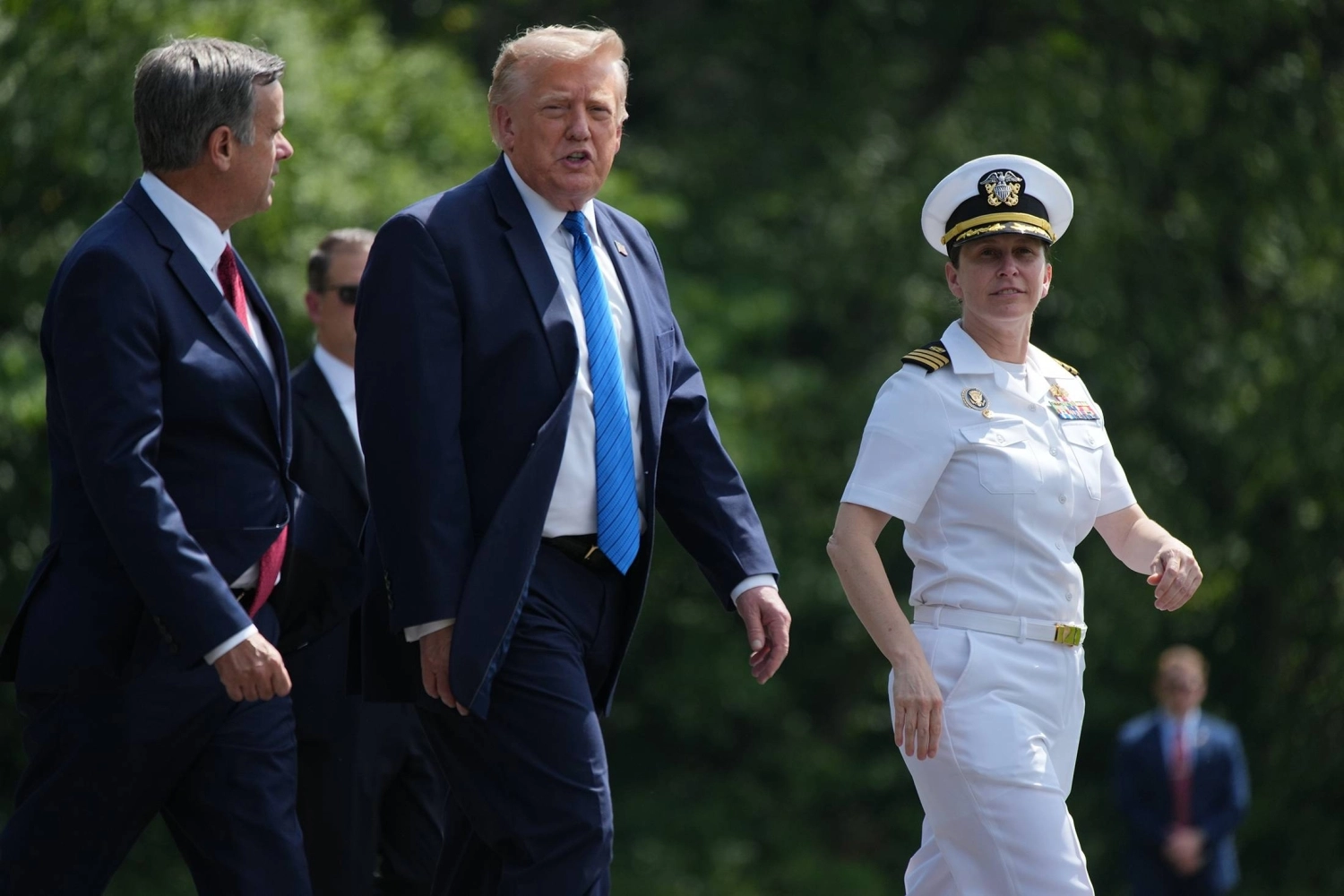
President Donald Trump says new Iran talks will begin Monday after canceling a planned military strike, raising hopes for diplomacy and easing fears of wider regional conflict.
WEBDESK – MEDIABITES
President Donald Trump said the United States will resume negotiations with Iran on Monday after scrapping a planned military attack, saying diplomacy remained the preferred option despite escalating tensions across the Middle East.
Speaking to reporters aboard Air Force One on Sunday, Trump said the planned operation would have been the largest U.S. military strike since World War II but was halted to give negotiations another opportunity.
“We’re just going to see whether or not we can make a deal,” Trump said. “I’m not looking to kill people.”
Trump revealed that Saudi Crown Prince Mohammed bin Salman had urged him to continue diplomatic efforts rather than launch military action, warning that a broader conflict could destabilize the region and trigger a humanitarian crisis.
“They said we would much prefer a deal as opposed to an attack because you don’t know where these attacks lead,” Trump said, referring to discussions with Saudi leadership.
The announcement came as global oil markets reacted positively to signs of renewed diplomacy. Brent crude for October delivery dropped as much as 7.3% in early Monday trading to $81.55 a barrel after prices had surged sharply throughout July amid fears of supply disruptions.
Hormuz negotiations offer hope
Trump also suggested progress was being made toward an agreement concerning the Strait of Hormuz, one of the world’s most critical energy shipping routes, while reaffirming his administration’s commitment to preventing Iran from developing nuclear weapons.
Iranian Foreign Minister Abbas Araghchi said negotiations involving Iran and Oman had entered their final stages. According to Iranian officials, discussions are focused on establishing a new shipping route through the Strait of Hormuz rather than determining whether the strategic waterway will remain open or closed.
Iranian government spokesperson Esmail Baghaei blamed the United States for the current disruption to shipping traffic through the strait during an interview with Iranian state television.
The Strait of Hormuz has remained at the center of regional tensions after repeated exchanges between Iran and U.S. allies disrupted maritime traffic and rattled global energy markets.
Israel watches diplomatic push
Israel, which joined the United States in military operations against Iran but was not part of an earlier Washington-Tehran peace understanding reached in June, is closely monitoring the latest diplomatic efforts.
Israeli Security Cabinet member Zev Elkin said there appeared to be “some kind of vector toward an agreement between Iran and Oman,” indicating cautious optimism over negotiations aimed at easing tensions around the Strait of Hormuz.
Meanwhile, U.S. embassies across the Middle East have continued advising American citizens to prepare for possible flight cancellations, temporary airspace closures and travel disruptions as security concerns remain high.
The latest diplomatic effort follows the collapse of a U.S.-Iran truce last month. Although both sides briefly paused military operations in late July to create space for negotiations, the ceasefire unraveled after Tehran launched ballistic missiles at a U.S. military base in Jordan, an attack Trump described as unexpected.
The renewed talks represent the latest attempt to prevent the conflict from escalating further, with regional powers hoping diplomacy can avert a wider war that could threaten global energy supplies and regional stability.


3 Comments
Nhiều người nhắc đến fly 88 khi tìm kiếm nền tảng giải trí trực tuyến.
[40]bd7777 লগইন এবং অ্যাপ ডাউনলোড – সেরা অনলাইন স্লট গেম,bd7777 লগইন করুন এবং অ্যাপ ডাউনলোড করে সেরা অনলাইন স্লট গেম উপভোগ করুন। বিকাশ দিয়ে ক্যাসিনো ডিপোজিট করে দ্রুত খেলা শুরু করতে আজই যোগ দিন। visit: bd7777
[6235]tk888 Login Philippines | Legit na Online Slots at GCash,Mag-tk888 login philippines para sa legit na online slots. I-download ang APK at subukan ang pinakamabilis na gcash casino. Mag-register na at maglaro! visit: tk888