


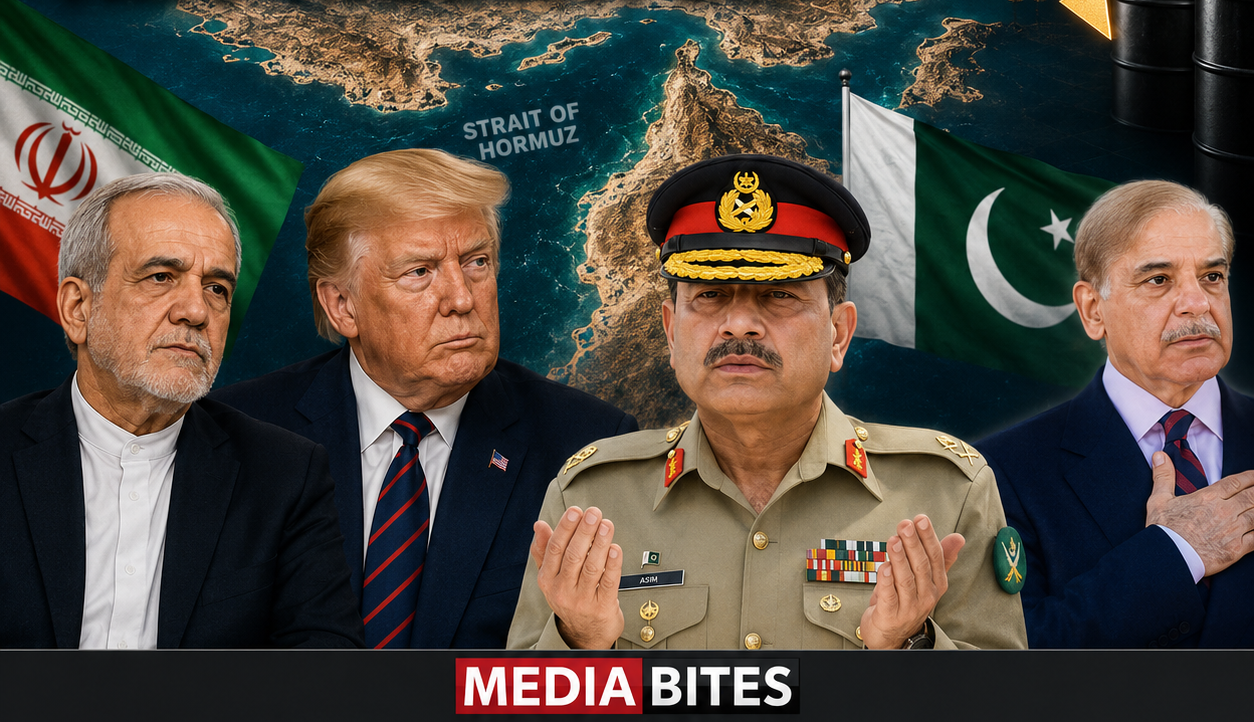
US-Iran historic peace deal eases global tensions, sends oil prices lower, draws praise from world leaders, while Pakistan’s quiet diplomatic role emerges as a key factor behind breakthrough talks.
WEBDESK – MEDIABITES NEWS
A historic peace agreement between the United States and Iran has triggered celebrations across global capitals, sent oil prices sharply lower, and placed Pakistan at the center of one of the most significant diplomatic breakthroughs in recent Middle East history.
The preliminary agreement, expected to be formally signed in Switzerland later this week, aims to halt months of conflict, reopen the strategically vital Strait of Hormuz, and begin negotiations over Iran’s nuclear program and sanctions relief.
The deal follows intense backchannel diplomacy involving Pakistan and Qatar, with multiple international media organizations reporting Islamabad played a crucial role in bridging communication between Washington and Tehran. Reuters described Pakistan as one of the key mediators behind the breakthrough negotiations.
Oil prices fall sharply after agreement
Global energy markets reacted immediately after the announcement.
Brent crude prices reportedly dropped around 4 percent as fears of a prolonged disruption in the Strait of Hormuz eased. European and Asian stock markets rallied strongly, while airline and travel shares surged on expectations of lower fuel costs and reduced geopolitical risk.
The Strait of Hormuz handles nearly one-fifth of the world’s oil shipments, making its reopening critical for global energy stability. Markets had previously witnessed historic price spikes during the conflict, with crude briefly soaring above $110 per barrel earlier this year.
World leaders welcome breakthrough
World leaders across Europe, Asia, and the Middle East welcomed the agreement, calling it a major diplomatic achievement.
According to Reuters, UN Secretary-General António Guterres praised the development as an important step toward regional peace, while leaders from the UK, France, Germany, Italy, Japan, Australia, Turkey, and New Zealand urged both sides to fully implement the agreement and avoid renewed escalation.
European leaders also emphasized the importance of ensuring uninterrupted navigation through the Strait of Hormuz to stabilize global trade and energy supplies.
Al Jazeera reported that the announcement generated cautious optimism across the region, although questions remain regarding Israel’s position, Iran’s nuclear commitments, and the future of sanctions relief.
Pakistan’s diplomatic role praised
Pakistan’s role in facilitating communication between the United States and Iran has drawn international attention.
Pakistani officials described the agreement as a “major diplomatic achievement” for Islamabad, with Defence Minister Khawaja Asif publicly welcoming the breakthrough and highlighting Pakistan’s mediation efforts.
Analysts say Pakistan’s unique relationships with both Tehran and Washington allowed it to quietly assist negotiations at a time when direct communication channels were under severe strain.
The agreement is expected to improve regional stability, reduce pressure on global fuel markets, and potentially open the door for wider diplomatic engagement in the Middle East.
However, several major issues remain unresolved, including Iran’s uranium enrichment program, sanctions removal, and long-term security arrangements involving Israel and Lebanon. Negotiators are expected to continue talks during a proposed 60-day ceasefire period.


12 Comments
Pingback: mostbetskachat.mobilax.kz
References:
Lollybet Casino Live Dealer http://cse.google.com.gh/url?sa=t&url=http://lollybet.com.de
References:
Lollybet Casino Bonus ohne Umsatzbedingungen http://el.thefreedictionary.com/_/cite.aspx?url=http://lollybet.com.de&word=ενθουσιασμένo&sources=kdict
References:
Kingmaker Casino App https://ingta.ru/go?https://s3.amazonaws.com/new-casino/Levant-Casino-Bonus-ohne-Einzahlung.html
References:
%random_anchor_text% https://becariosdigitales.com
References:
Starda Casino App werkstraat.com
References:
Candy96 Casino cashback findinall.com
References:
Candy96 pokies https://gladjobs.com/
References:
Beau Casino Auszahlung https://s3.amazonaws.com/new-casino/Milky-Way-Casino-Erfahrungen.html
References:
Instant Casino Bonus ohne Einzahlung wup.pl
References:
Candy96 Casino minimum deposit https://cleveran.com/profile/natehildreth69
Pingback: ป้องกันปลอมแปลงเอกสาร