


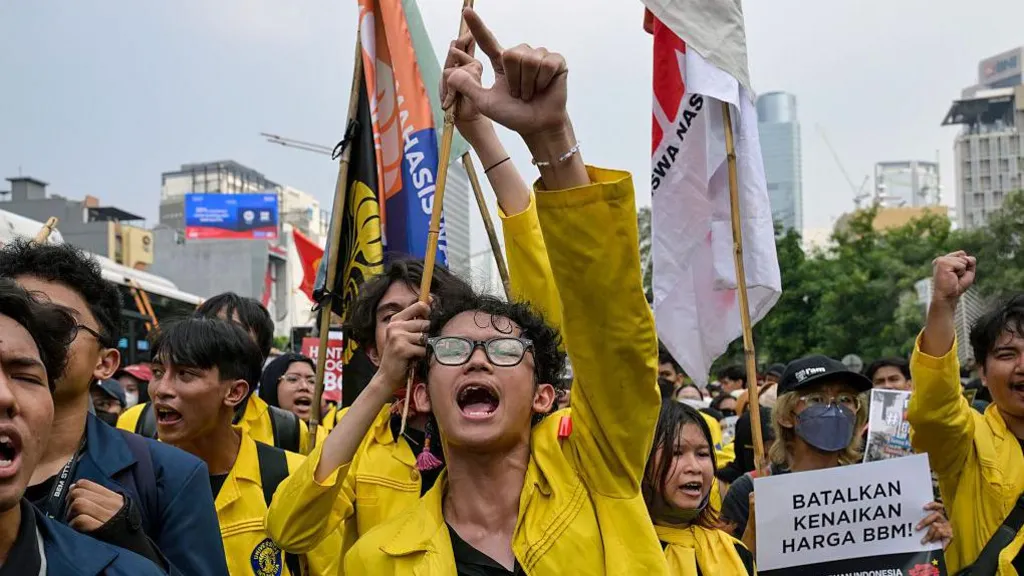
Hundreds of Indonesian students marched in Jakarta against rising fuel prices and controversial government spending, raising questions about why Pakistanis often limit their outrage to social media rather than street protests.
WEBDESK – MEDIABITES NEWS
The demonstrators accused President Prabowo Subianto’s government of pushing the country toward financial crisis through expensive populist programs and poor economic management.
Marching through central Jakarta under the hashtag “#MenujuIndonesiaBangkrut” — meaning “Towards Bankrupt Indonesia” — protesters demanded the government reverse fuel price hikes and scrap its controversial free meals programme, which has faced allegations of corruption and incidents of mass food poisoning.
Images and videos from the protest showed students confronting riot police, pushing against barricades, and chanting slogans against the government near Jakarta’s famous Hotel Indonesia roundabout.
“Fuel prices are going up, and our lives are getting harder,” one student protester shouted at police officers during the demonstration.
The protests erupted days after state-run energy company Pertamina increased prices of two major fuel categories by more than 30%, triggering anger among middle-class Indonesians already struggling with rising living costs.
The student-led demonstrations also reflected wider frustrations over economic inequality, alleged corruption, and growing concerns about state spending priorities.
At the center of criticism is Prabowo’s flagship free meals programme, a $28 billion initiative aimed at fighting child malnutrition and improving education outcomes.
However, critics say the programme has become a symbol of mismanagement after repeated food poisoning incidents and corruption allegations forced the government to dismiss the head of the agency overseeing the project.
Economists and analysts say the protests demonstrate how politically active student movements in countries like Indonesia continue to influence national debates through direct street mobilization.
READ MORE: ‘My wife and children insisted on seeing Murree’: Multan man loses wife, mother and five children in tragic van fire
The scenes from Jakarta also sparked comparisons on Pakistani social media, where citizens regularly express outrage online over inflation, electricity bills, fuel prices, taxes, and governance issues, but large-scale sustained street protests remain relatively limited outside political party movements.
Observers say several factors contribute to this difference, including fear of arrests, political polarization, economic pressures, lack of organized civil movements, and growing public distrust in whether protests can actually force policy change.
Unlike Indonesia, where student unions and civil society groups have historically played a powerful role in political change, Pakistan’s protest culture has increasingly shifted toward digital activism through platforms such as X, Facebook, TikTok, and YouTube.
Critics argue that while hashtags may trend for a few days, governments often face little real pressure unless public anger translates into organized civic action on the streets.
Indonesia itself has witnessed repeated student-led uprisings over the years, including massive anti-government demonstrations in 2025 following the death of a delivery rider that fueled accusations of elite rule and state mismanagement.
Friday’s protest in Jakarta ended without immediate reports of major injuries, though tensions remained high as police blocked demonstrators from advancing further into the city center.


3 Comments
Pingback: gama casino онлайн
Pingback: veneer
Pingback: https://dolphin-pearl.com