


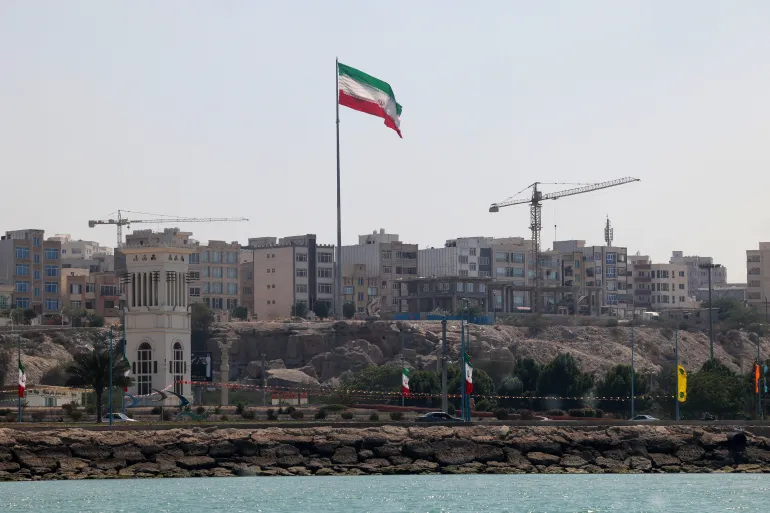
Fresh US strikes on Iran’s Qeshm Island triggered one of the most dangerous military escalations in the Gulf in recent weeks, as Tehran launched missiles and drones toward Kuwait and Bahrain overnight.
The attacks have intensified fears of a broader regional conflict and raised fresh concerns about the stability of ceasefire negotiations between Washington and Tehran.
WEBDESK – NJNEWSLINE: Iran launched missiles and drones toward Kuwait and Bahrain after new US strikes on Qeshm Island, escalating tensions and placing fragile regional ceasefire negotiations under renewed pressure.
The United States and Iran exchanged some of their heaviest attacks since the April ceasefire, sharply escalating tensions across the Gulf and threatening diplomatic efforts aimed at avoiding a wider regional war.
According to US and Iranian officials, Iran fired ballistic missiles and drones late Tuesday toward Kuwait and Bahrain after American forces struck Iranian military targets on Qeshm Island near the strategically critical Strait of Hormuz.
US Central Command (CENTCOM) said the strikes on Qeshm were carried out in “self-defense” after American forces detected attempted Iranian attacks across the region.
“Iran launched several ballistic missiles toward regional neighbors; however, all failed to hit their intended targets,” CENTCOM said in a statement posted on X.
American officials said missiles aimed at Bahrain were intercepted by US and Bahraini air defense systems, while missiles launched toward Kuwait either malfunctioned or fell short before reaching their targets.
Iran’s Islamic Revolutionary Guard Corps (IRGC) claimed responsibility for the attacks, saying the missile launches targeted “an American air and helicopter base” in Kuwait as well as the headquarters of the US Fifth Fleet in Bahrain.
The IRGC described the operation as retaliation for what it called “brazen and blatant aggression” by the United States on Qeshm Island.
Iranian state media reported that at least 10 ballistic missiles were launched toward Kuwait, while Bahrain activated emergency warning sirens and instructed residents to seek shelter.
Kuwaiti military officials also confirmed overnight interception operations against incoming missiles and drones.
Hours later, CENTCOM announced that US forces intercepted another wave of Iranian drones targeting American military facilities in Kuwait.
“No American personnel or assets were harmed,” the command stated.
The latest confrontation began earlier Tuesday when US forces disabled a Botswana-flagged oil tanker reportedly heading toward Iran’s Kharg Island port.
CENTCOM said a US aircraft fired a Hellfire missile into the tanker’s engine room after the vessel allegedly ignored repeated warnings and attempted to violate Washington’s blockade on Iranian ports.
Iran later retaliated by targeting a Liberian-flagged commercial vessel identified as Panaya, according to Iranian media reports.
The escalating maritime and missile exchanges have renewed fears of instability around the Strait of Hormuz, through which a significant portion of the world’s oil supply passes daily.
Despite the intensifying military activity, diplomatic signals from both Washington and Tehran suggest negotiations have not fully collapsed.
Iranian media reported that discussions between Tehran and Washington remain ongoing, despite earlier reports that Iran had suspended talks.
US President Donald Trump told ABC News he believes a deal to reopen the Strait of Hormuz and extend the ceasefire could be reached “over the next week.”
However, Iranian negotiators warned that additional Israeli military operations in Lebanon could derail diplomacy and trigger more retaliatory action across the region.
Meanwhile, talks between Israel and Lebanon concluded for the day at the US State Department and are expected to resume on Wednesday after renewed exchanges of fire between Israeli forces and the Iran-backed Hezbollah movement overnight.
The growing crisis has also highlighted divisions between Washington and Israel regarding military operations in Lebanon.
Israeli Prime Minister Benjamin Netanyahu insisted Israel would continue planned strikes in southern Lebanon despite Trump’s public remarks suggesting Israeli forces would avoid deeper military operations near Beirut.
Sources familiar with discussions between the two leaders said recent phone conversations became increasingly tense as the United States urged restraint.
Security analysts warn the latest attacks demonstrate how fragile the regional ceasefire remains, with ongoing missile launches, drone attacks, and maritime confrontations continuing to threaten Gulf stability and global energy markets.
The Strait of Hormuz remains under close international watch, as any prolonged disruption to shipping through the narrow waterway could significantly impact worldwide oil and gas supplies.


8 Comments
References:
Lollybet Casino Aktion toolbarqueries.google.co.in
References:
Lollybet Casino Bonus ohne Umsatzbedingungen sculptandpaint.com
References:
%random_anchor_text% code.a100-cn.com
References:
Ggbet Casino Erfahrungen http://www.google.co.nz/url?q=https://biolinksapp.com/shantaefif
References:
Candy96 Casino minimum deposit https://thehrguardians.com
References:
Candy96 referral code https://werkstraat.com/companies/top-real-money-online-casino-2026
References:
Candy96 Casino login australia winesandjobs.com
Pingback: รับสร้างบ้านไม้สักทอง