


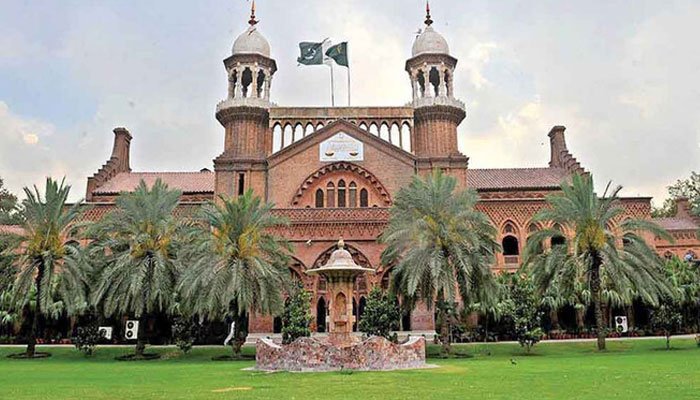
The Lahore High Court has ruled that a husband is legally bound to fulfill commitments made to his wife in a separate marriage agreement in addition to paying the dower (Haq Mehr) specified in the Nikahnama.
In an 11-page judgment, Justice Muhammad Sajid Mahmood Sethi upheld a trial court’s decision directing the husband to transfer a five-marla house to his wife, as promised in a separate agreement signed on the day of their marriage. The court dismissed the husband’s plea seeking to overturn the trial court’s ruling.
The judgment emphasized that Haq Mehr is a legal right of the wife and not a favor or discretionary gift from the husband. It further noted that under the law, dower is considered a debt owed by the husband to the wife.
The court observed that a woman’s failure to demand her dower during marriage cannot be interpreted as a waiver of her right, as social and family pressures often prevent women from asserting such claims.
The ruling also stated that Haq Mehr may be agreed upon verbally, in writing, or even after marriage, and that Islamic law permits a husband to increase the amount of dower after the marriage has taken place.
The court highlighted that in family matters, judicial decisions should not be based solely on technical legalities but must also take into account social realities and the protection of women’s rights.


2 Comments
Pleasse lett mee knbow if you’re lookig for a autor for yur weblog.
Youu have somne really gopod psts andd I believe I
wouod bee a good asset. If yoou evrr ant tto tame sone oof thhe load off, I’d reeally like tto write som cotent forr our blog inn eexchange for a link ack to mine.
Pease blast me aan e-mail iff interested. Cheers!
Pingback: atom-top.blagoroda.ru