


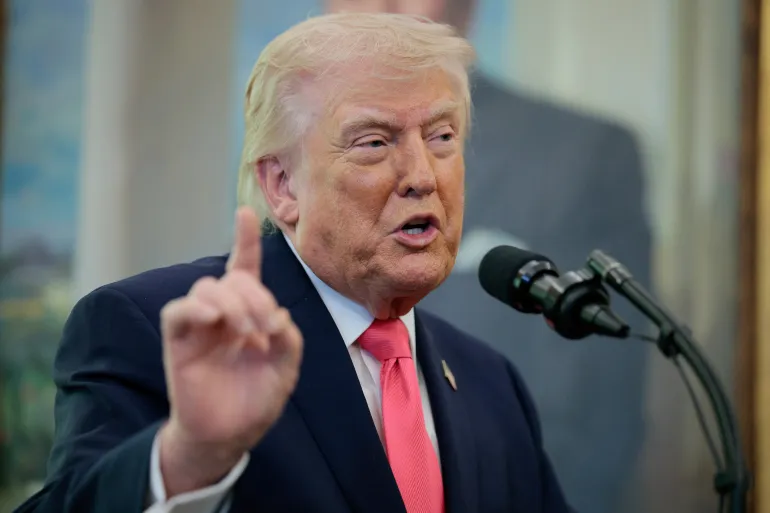
Trump urges Saudi Arabia to join the Abraham Accords, claims he “saved” the Middle East from Iran, as regional tensions rise, oil routes face disruption, and Gulf economies brace for impact.
WEBDESK – MediaBites News
Donald Trump on Friday called on Saudi Arabia to join the Abraham Accords, while claiming he had “saved” the Middle East from Iran amid escalating regional tensions.
Speaking at the Saudi-backed Future Investment Initiative Forum in Miami, Trump said it was “time now” for Saudi Arabia to normalize relations with Israel, expanding a US-brokered framework first signed in 2020 by the United Arab Emirates and Bahrain.
“It’s time now,” Trump said, adding that Iran had long been “the bully of the Middle East” but was now “on the run,” claiming its military capabilities had been significantly weakened.
Trump also warned that Tehran would have used a nuclear weapon against the region if not deterred, though he provided no evidence for the claim.
The remarks come as tensions remain high following US and Israeli strikes on Iran and retaliatory attacks targeting energy infrastructure across the Gulf. Shipping through the Strait of Hormuz — a critical artery for global oil supply — has been severely disrupted.
Earlier, Trump’s Middle East envoy Steve Witkoff said potential talks with Iran could take place “this week,” signaling possible diplomatic movement despite ongoing hostilities.
Trump also criticized NATO allies for failing to support a coalition to secure the Strait of Hormuz, calling the alliance a “paper tiger.”
During his address, Trump thanked regional leaders, including Mohammed bin Salman, Sheikh Mohamed bin Zayed Al Nahyan, and Sheikh Tamim bin Hamad Al Thani, for their partnership.
The conflict has cast a shadow over the investment forum, originally intended to strengthen US-Gulf economic ties. Gulf economies are now facing major disruptions due to attacks on energy facilities and halted oil shipments.
Analysts warn the crisis could significantly impact regional growth. Estimates suggest Saudi Arabia’s economy may contract by about 5% this year, while the UAE could see a sharper decline.
Despite the uncertainty, Gulf leaders have reaffirmed long-term investment plans, including pledges worth $2 trillion in the United States, underscoring the enduring strategic and economic ties between Washington and the region.


6 Comments
This is a great piece of content.
Pretty! This has been a really wonderful post. Many thanks for providing these details.
Very well presented. Every quote was awesome and thanks for sharing the content. Keep sharing and keep motivating others.
Diverse Performers and Content: Free adult webcam models online host a diverse array of performers catering to a wide range of tastes and preferences. Browse live adult webcam sex rooms. Watch free live sex cams and explicit nude shows from amateur and professional models worldwide. Registration is free, simple and takes only a couple of minutes. ⓲+🔥 https://webcam-models.online/
You’re so awesome! I don’t believe I have read a single thing like that before. So great to find someone with some original thoughts on this topic. Really.. thank you for starting this up. This website is something that is needed on the internet, someone with a little originality!
You’re so awesome! I don’t believe I have read a single thing like that before. So great to find someone with some original thoughts on this topic. Really.. thank you for starting this up. This website is something that is needed on the internet, someone with a little originality!