


China’s ‘air taxi’ era lifts off: eVTOL aircraft debut in Wuhan as low-altitude economy accelerates
China’s vision of flying taxis moved closer to reality this week as four electric vertical takeoff and landing (eVTOL) aircraft made a dramatic public debut in Wuhan, signaling a major push toward commercializing the nation’s low-altitude economy.
The futuristic aircraft — displayed outside the Hongshan Auditorium in central China’s Hubei Province — were showcased at a high-level provincial economic meeting, underlining Beijing’s commitment to turning airborne mobility from concept into a trillion-yuan industry.
2026 seen as make-or-break year
Industry leaders say 2026 will be a decisive year for the sector as manufacturers race to secure type certification and launch mass production.
“EVTOL has moved from concept verification into the commercial sprint phase,” said Huang Xiaofei, vice president of strategy at Volant Aerotech. Analysts describe the coming year as the moment the industry must “cross the chasm” from prototype to profitable scale.
Flying taxis for daily life?
Among the aircraft on display was a 1.2-ton eVTOL developed by E-HAWK Technology, featuring enclosed rotors designed to improve ground safety. The company outlined plans for both private ownership — with prices projected below 2 million yuan — and app-based ride-hailing models.
“In the future, you’ll use your phone to call a real flying taxi,” said Chairman Cai Xiaodong, adding that a two-seat version focused on logistics and tourism is expected later this year.
Another standout was the hybrid tilt-rotor V1000 from Wuhan Xunqi Technology, designed to overcome the limited range of fully electric rivals. With a range exceeding 1,000 kilometers, the aircraft could fly from Wuhan to Beijing, Shanghai or Guangzhou without recharging. The model has already received acceptance of its type certificate application from China’s aviation regulator, with test flights planned for 2026.
Flying ICU and affordable micro aircraft
Perhaps the most striking innovation was a prototype described as a flying “micro-ICU,” developed by Wuhan Fusheng General Aviation. Designed for emergency medical transport, the aircraft aims to slash rescue costs from nearly 10,000 yuan per hour for helicopters to about 2,200 yuan.
The cabin is equipped to handle triage, patient monitoring, and medical data synchronization, and the company plans joint testing with Zhongnan Hospital of Wuhan University.
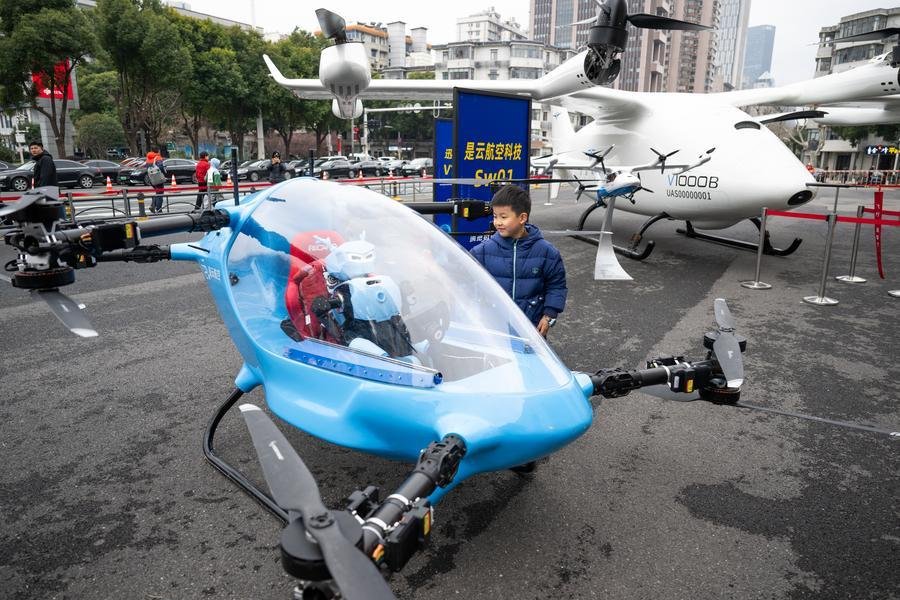
Meanwhile, a compact, clear-canopy model called SW01 stood out for its consumer-friendly design. With a steering wheel instead of traditional flight controls and a projected price under 500,000 yuan, developers envision it as an entry-level aircraft for leisure flights over parks and lakes.
Regulatory runway clearing
China’s revised civil aviation law, effective in July, will clarify airspace management below 300 meters, smoothing regulatory pathways for low-altitude aircraft. National guidelines also call for 90% coverage of low-altitude public airways by mobile communication networks by 2027.
Hubei province is aggressively positioning itself as a hub in the race, with nine eVTOL models under development — four of which have completed test flights.


4 Comments
Yo, who doesn’t love a good bonus? Gonna check out Jilibet and see what this Jilibet bonus thing is all about. Hopefully it’s decent! Check out: jilibet bonus
Just downloaded some stuff from jili7downloadfree. It was quick and easy process. I would recomend this site. Check it out here: jili7downloadfree
Trying out the slots on jili7slotdemofree. Really enjoying the free demos, great way to learn new games without risking anything! Check it out here: jili7slotdemofree
Pingback: purchase crystal meth shards Moldova