


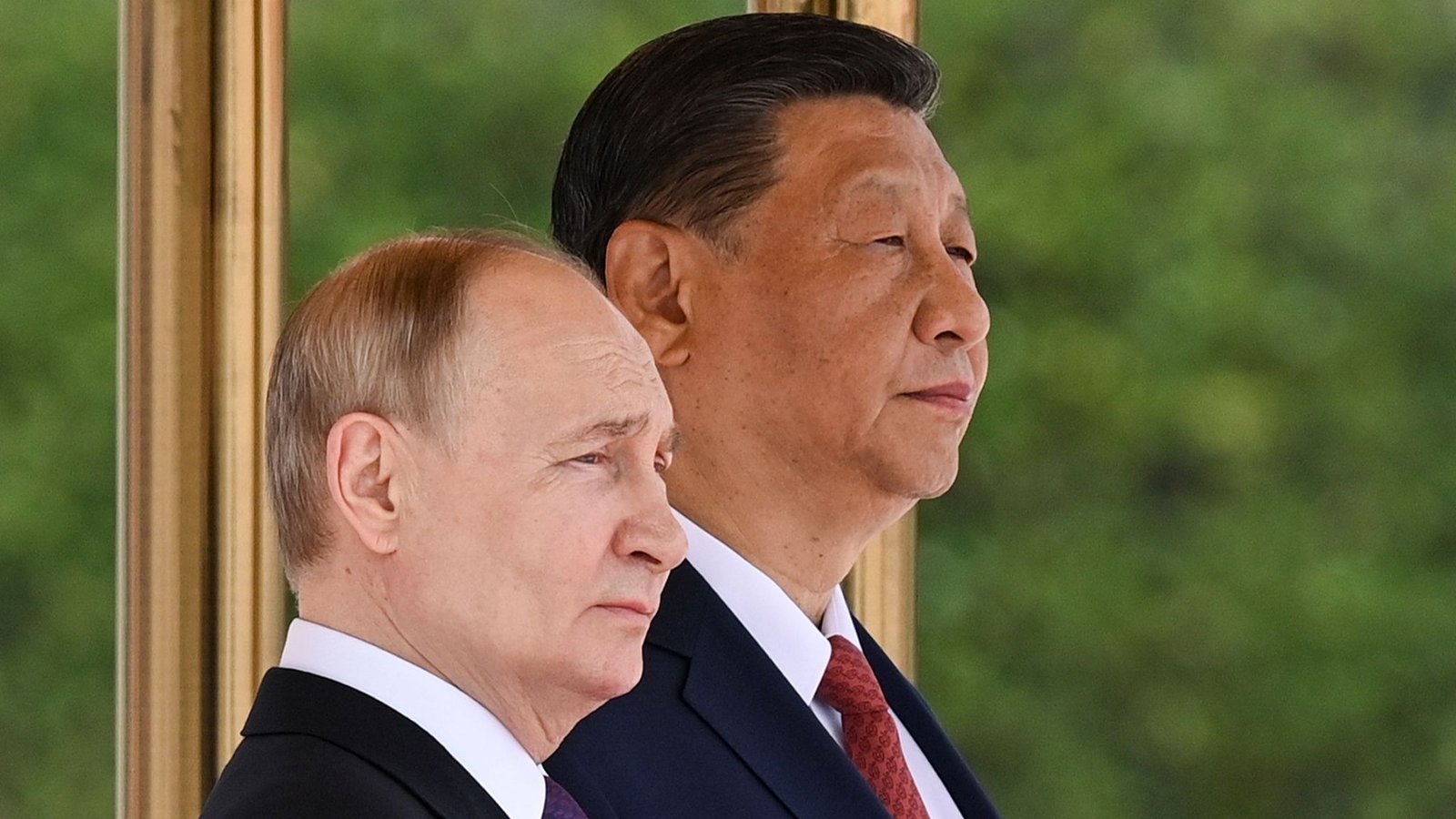
China’s decision to host Vladimir Putin just days after Donald Trump’s Beijing summit is fueling fresh global concerns about the deepening China-Russia alliance, tensions over Taiwan, and shifting global power dynamics.
WEBDESK – MediaBites News
Chinese President Xi Jinping and Russian President Vladimir Putin exchanged what Chinese state media described as “congratulatory letters” ahead of Putin’s scheduled two-day visit to Beijing beginning Tuesday.
According to Chinese media reports, Xi praised the deepening partnership between Beijing and Moscow, noting that 2026 marks the 30th anniversary of the China-Russia strategic partnership. Xi said bilateral cooperation had “continuously deepened and solidified” over the years.
Putin’s arrival comes only four days after U.S. President Donald Trump wrapped up a closely watched summit with Xi in Beijing, where the two leaders discussed trade tensions, Taiwan, and instability in the Middle East.
Chinese state-backed newspaper Global Times described the back-to-back visits by the leaders of the United States and Russia as a rare geopolitical moment that highlights Beijing’s emergence as a major diplomatic power.
“It is extremely rare in the post-Cold War era for a country to host the leaders of the U.S. and Russia back-to-back within a week,” the publication noted.
China’s expanding ties with Russia continue to alarm Western governments, especially since Moscow launched its full-scale invasion of Ukraine in 2022. Western analysts say Beijing’s economic support and large-scale purchases of Russian energy have helped sustain Russia’s wartime economy.
Trade between China and Russia has surged to record levels over the past four years, with China now buying more than a quarter of Russia’s exports. Beijing has reportedly imported more than $367 billion worth of Russian fossil fuels since the Ukraine war began, providing Moscow with significant revenue amid Western sanctions.
Energy cooperation is expected to feature prominently during the Xi-Putin talks. Analysts believe China is increasingly focused on securing stable energy supplies as tensions in the Middle East threaten global oil shipping routes, particularly through the Strait of Hormuz.
Experts also suggest Taiwan could quietly dominate discussions between the two leaders. Beijing has been seeking stronger energy and strategic coordination with Moscow in the event of a future confrontation over Taiwan, the self-governed island that China claims as its own.
During Trump’s visit to Beijing last week, Xi reportedly warned Washington about the risks of escalating tensions over Taiwan. Trump later said he had not yet decided whether to approve a proposed multi-billion-dollar U.S. weapons package for Taiwan — a move closely watched by Beijing.
Russia has also been urging China to advance the proposed “Power of Siberia 2” gas pipeline project, which would significantly expand Russia’s gas exports to China and deepen long-term energy dependence between the two neighbors.
The Xi-Putin meeting is expected to further reinforce the strategic partnership between the two powers amid growing geopolitical rivalry between China and the West.

