


Ukraine’s war-driven economic collapse is pushing vulnerable women toward commercial surrogacy, igniting fierce debate over exploitation, abandoned children, foreign clients and survival in wartime hardship.
WebDesk – BBC Urdu – MediaBites News
As Russia’s war continues to devastate Ukraine’s economy and displace millions, a growing number of women are reportedly turning to commercial surrogacy as a desperate means of survival, raising ethical concerns over poverty, exploitation and the future of the country’s fertility industry.
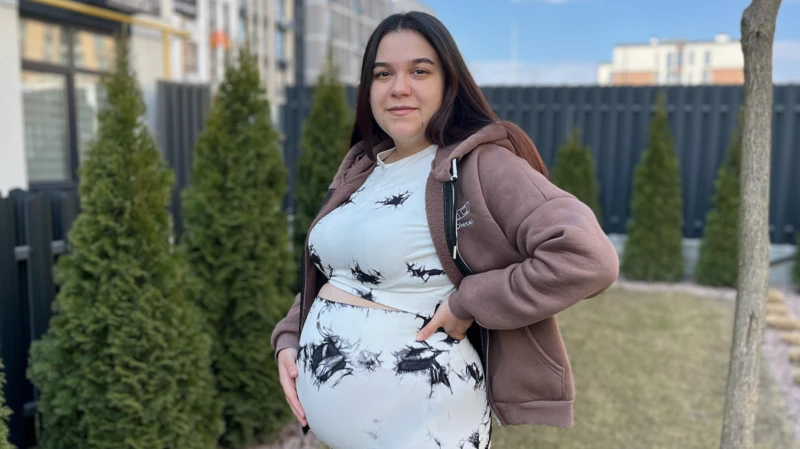
Among them is 22-year-old Karina Tarasenko from eastern Ukraine, who is six months pregnant with a baby that is not biologically hers. The embryo belongs to a Chinese couple, while Karina serves as a paid surrogate mother after losing her home in the war-torn city of Bakhmut.
Karina’s life changed dramatically in 2022 when Russian attacks reduced much of Bakhmut to rubble during the early stages of the invasion. Forced to flee to Kyiv with her partner and young daughter, she struggled to find stable work amid soaring inflation and economic collapse.
She says the decision came during a moment of desperation.
“I only had enough money to buy bread and diapers for my daughter,” Karina recalled, explaining that she would never have considered surrogacy had the war not destroyed her life.

Ukraine was once considered the world’s second-largest hub for commercial surrogacy after the United States, attracting thousands of foreign couples due to comparatively lower costs and favorable laws. Although the war initially disrupted the industry, experts say it has largely rebounded to near pre-war levels.
Under her agreement, Karina is expected to receive nearly $17,000 — around twice Ukraine’s average annual salary — though most of the payment will come after delivery. The surrogacy clinic has also provided her with housing near Kyiv.
Despite initial hesitation, Karina now plans to continue becoming a surrogate mother “as long as her body allows” in hopes of saving enough money to buy a home.
The growing trend, however, has triggered fierce debate inside Ukraine.
Lawmakers are currently reviewing legislation that would tighten regulations on surrogacy and effectively ban foreign couples from using Ukrainian surrogate mothers. According to officials, nearly 95 percent of clients in Ukraine’s surrogacy sector are foreigners.
Women’s rights activists argue the industry increasingly targets vulnerable women devastated by war and poverty.
“Desperate women are being offered surrogacy so wealthier foreign couples can have children at lower costs,” said activist Maria Dmytriieva, who believes commercial surrogacy should be banned entirely.
Critics accuse some clinics of exploiting hardship through aggressive advertising campaigns on social media. One recent AI-generated advertisement reportedly showed a woman forced to choose between buying firewood to heat her home or clothes for her children.
Ukraine’s surrogacy sector has also faced controversy over abandoned children.
In one widely discussed case, a child born through surrogacy in Kyiv was allegedly left behind after the intended foreign parents refused to take custody upon learning the baby suffered severe health complications following premature birth.
The child, now five years old, reportedly lives in a state institution for children with special needs.
Still, supporters insist the system benefits both surrogate mothers and childless couples.
London-based couple Huma Tariq and Raj Veer Bajwa, who struggled for years with infertility and failed IVF attempts, said surrogacy in Ukraine gave them “the family they never thought possible.”
The couple paid nearly $87,000 for the process through a Ukrainian clinic — far less than similar arrangements in the United States, where costs can exceed $150,000.
Karina rejects claims that women like her are being exploited.
“This is my body, my decision,” she said. “I will receive compensation in return for giving happiness to another family.”
But as Ukraine battles war, economic devastation and a falling birth rate, the debate over commercial surrogacy is becoming increasingly emotional — and deeply political.
Looking down at her growing belly, Karina admits she has already formed an emotional connection with the unborn child.
“I know this baby is not mine,” she said softly. “But I talk to her. When she kicks, I tell her that her parents are waiting for her.”


2 Comments
Pingback: free sex cam chat
Pingback: фаст пари казино регистрация