


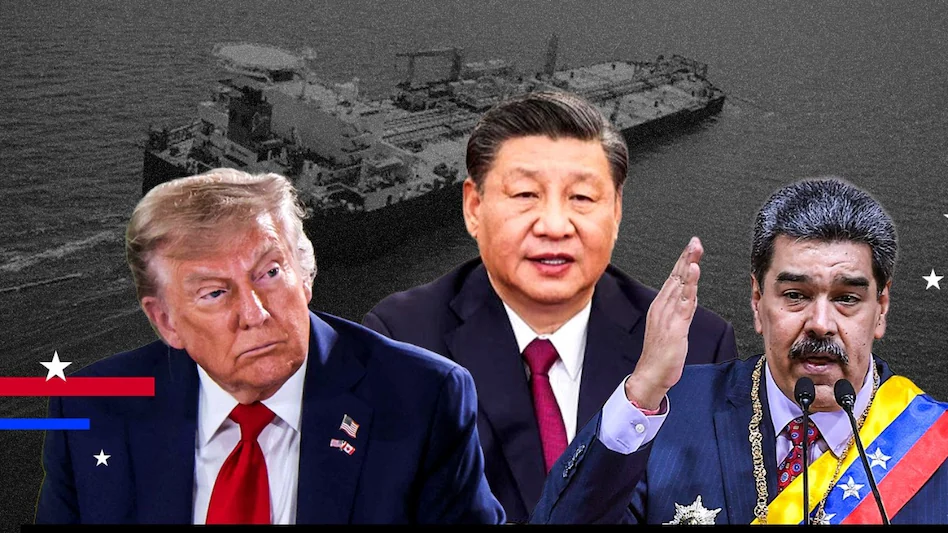
Venezuela has told China that its oil prices will be determined by global market forces, not by U.S. pressure, amid ongoing tension over U.S. control of Venezuelan oil sales after the capture of President Nicolás Maduro. Caracas also moved to reassure Chinese investors that their investments remain secure despite geopolitical uncertainty, emphasizing strong bilateral ties and independent decision-making on energy policy.
WEBDESK – MediaBites
Venezuela has told China that its oil prices will be determined by global markets, not U.S. pressure, and sought to reassure Beijing that Chinese investment in the country remains secure despite growing sanctions uncertainty.
Speaking at a press briefing, Venezuela’s ambassador to China Remigio Ceballos rejected reports that Washington could influence the price China pays for Venezuelan crude. He said Caracas would make independent decisions and would not follow arrangements set by the United States.
The comments follow a report that U.S. President Donald Trump had considered exerting control over Venezuela’s state-run oil company PDVSA and pushing prices down to $50 per barrel.
Ceballos’ remarks also come weeks after the U.S. captured Venezuelan President Nicolás Maduro in a surprise military operation and moved to assert influence over Venezuela’s oil sector through sanctions and negotiated oil sales. China has condemned the U.S. action and called for Maduro’s release.
Addressing investor concerns, the ambassador said Chinese companies operating in Venezuela would remain protected and that cooperation would continue across sectors, including energy. He described China and Venezuela as “trusted partners” whose relationship could not be swayed by third countries.
China has been a key buyer of Venezuelan crude, often at steep discounts due to U.S. sanctions. State-owned China National Petroleum Corporation has joint ventures with PDVSA, while private firm China Concord Resources Corp. has announced plans to invest more than $1 billion in a Venezuelan oil project by 2026.
Venezuela holds the world’s largest proven oil reserves, but production has remained weak after years of mismanagement, underinvestment and sanctions. The U.S. has recently signaled limited flexibility, including moves to ease sanctions and allow some oil trade, even as it seeks broader political leverage.
For Pakistan and other energy-importing countries, the standoff highlights how geopolitics continues to shape global oil prices and investment flows.


30 Comments
Hi! Someone in my Myspace group shared this website with us so I came to check it out. I’m definitely loving the information. I’m bookmarking and will be tweeting this to my followers! Wonderful blog and excellent style and design.
Hi, I think your site might be having browser compatibility issues. When I look at your website in Safari, it looks fine but when opening in Internet Explorer, it has some overlapping. I just wanted to give you a quick heads up! Other then that, fantastic blog!
I like this web site very much, Its a very nice position to read and incur info . “What happens to the hole when the cheese is gone” by Bertolt Brecht.
I like this website very much, Its a very nice post to read and obtain information.
Hi , I do believe this is an excellent blog. I stumbled upon it on Yahoo , i will come back once again. Money and freedom is the best way to change, may you be rich and help other people.
You can definitely see your skills in the work you write. The world hopes for more passionate writers like you who are not afraid to say how they believe. Always follow your heart.
I like this site so much, bookmarked. “I don’t care what is written about me so long as it isn’t true.” by Dorothy Parker.
You really make it appear really easy along with your presentation but I find this matter to be really something that I believe I’d by no means understand. It kind of feels too complex and extremely huge for me. I’m taking a look forward in your subsequent put up, I’ll try to get the dangle of it!
I’d have to examine with you here. Which isn’t something I usually do! I take pleasure in studying a put up that will make people think. Additionally, thanks for allowing me to comment!
whoah this blog is great i love reading your posts. Keep up the good work! You know, many people are searching around for this information, you can aid them greatly.
I love your blog.. very nice colors & theme. Did you create this website yourself? Plz reply back as I’m looking to create my own blog and would like to know wheere u got this from. thanks
Keep up the excellent piece of work, I read few content on this internet site and I believe that your website is rattling interesting and contains circles of superb info .
I really enjoy examining on this internet site, it contains excellent articles. “Something unpredictable but in the end it’s right, I hope you have the time of your life.” by Greenday.
Hello, you used to write wonderful, but the last several posts have been kinda boring… I miss your great writings. Past several posts are just a little out of track! come on!
I like this website so much, saved to favorites.
I don’t even know how I ended up here, but I thought this post was good. I do not know who you are but certainly you’re going to a famous blogger if you are not already 😉 Cheers!
Enjoyed looking at this, very good stuff, regards. “We swallow greedily any lie that flatters us, but we sip little by little at a truth we find bitter.” by Denis Diderot.
I really like your writing style, wonderful info, thank you for posting :D. “All words are pegs to hang ideas on.” by Henry Ward Beecher.
Incredible! This blog looks exactly like my old one! It’s on a totally different subject but it has pretty much the same page layout and design. Outstanding choice of colors!
Very informative and great body structure of content, now that’s user friendly (:.
Great, I should definitely pronounce, impressed with your website. I had no trouble navigating through all tabs as well as related info ended up being truly easy to do to access. I recently found what I hoped for before you know it at all. Quite unusual. Is likely to appreciate it for those who add forums or something, web site theme . a tones way for your customer to communicate. Nice task.
I love your writing style genuinely enjoying this internet site.
Rattling informative and superb complex body part of subject material, now that’s user pleasant (:.
I discovered your weblog website on google and examine a few of your early posts. Continue to maintain up the superb operate. I simply further up your RSS feed to my MSN News Reader. Seeking ahead to reading more from you in a while!…
Very interesting info !Perfect just what I was looking for!
I’ll right away seize your rss feed as I can’t to find your email subscription hyperlink or newsletter service. Do you have any? Kindly permit me know in order that I could subscribe. Thanks.
I like this website very much, Its a real nice berth to read and find info . “I look upon every day to be lost, in which I do not make a new acquaintance.” by Samuel Johnson.
I truly appreciate this post. I’ve been looking everywhere for this! Thank goodness I found it on Bing. You’ve made my day! Thanks again
Enjoyed reading through this, very good stuff, appreciate it. “I will do my best. That is all I can do. I ask for your help-and God’s.” by Lyndon B. Johnson.
Awsome article and straight to the point. I am not sure if this is in fact the best place to ask but do you folks have any thoughts on where to hire some professional writers? Thanks in advance 🙂