


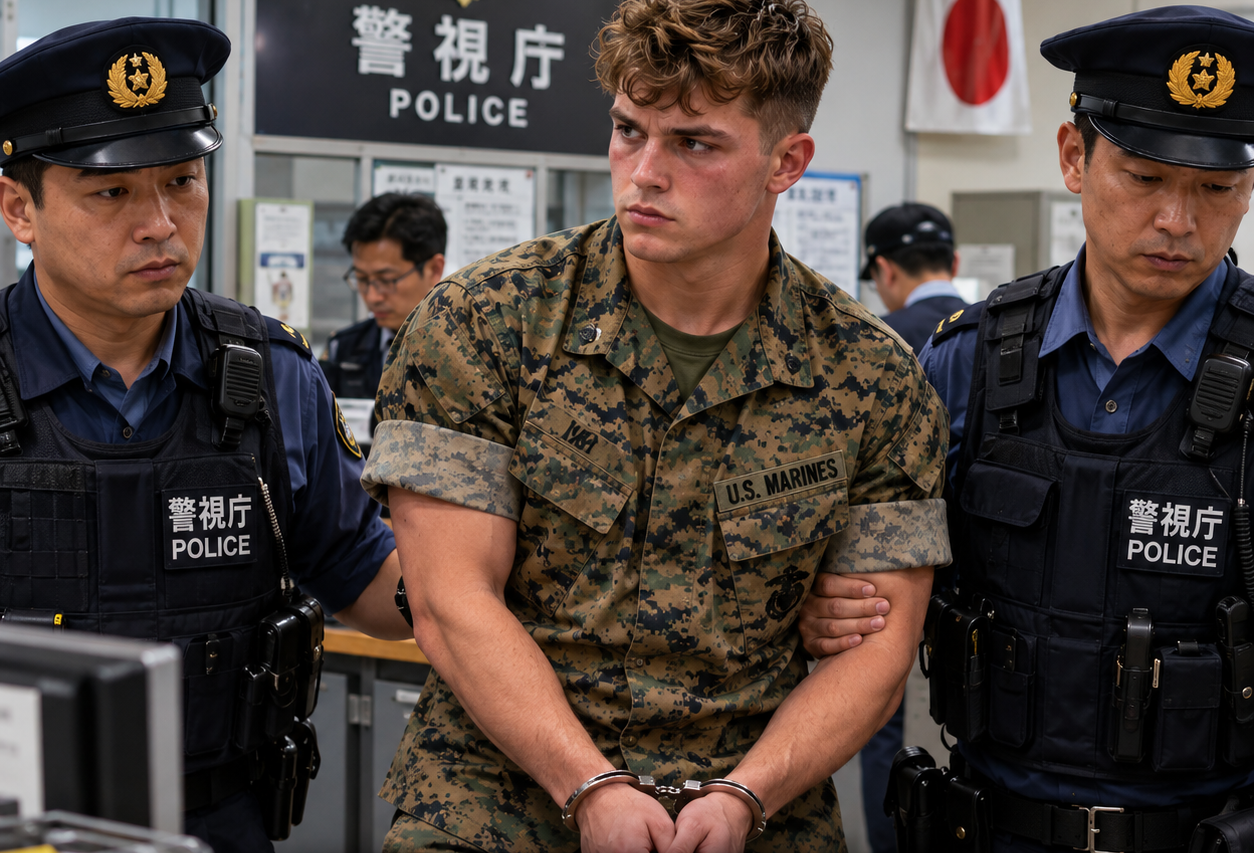
A 20-year-old US Marine stationed in Okinawa was arrested Sunday on suspicion of killing a 39-year-old Japanese woman and stealing her wallet at a Naha hotel.
WEBDESK – MEDIABITES
NAHA, OKINAWA — A 20-year-old United States Marine stationed on Japan’s southern island of Okinawa has been arrested on suspicion of murdering a 39-year-old Japanese woman at a hotel in Naha, reigniting long-standing tensions over the behavior of American military personnel in the region.
Okinawa police confirmed the arrest on Sunday, saying the suspect killed the woman at the hotel on Saturday and stole her wallet before fleeing. CCTV footage from near the scene showed a foreign man entering a room with the woman and later leaving alone with her belongings. Police identified the suspect from the footage, asked him to voluntarily accompany them to a local station, and then arrested him. He has denied the charges.
US Ambassador to Japan George Glass responded swiftly, posting on social media that he had contacted Japan’s foreign ministry and Okinawa’s governor to offer “sincere condolences and pledge full cooperation as the investigation continues.”
A Wound That Never Fully Heals
The arrest lands on already fractured ground. The United States maintains approximately 54,000 military personnel across Japan, the majority concentrated on Okinawa, a small island that carries a disproportionate share of America’s military footprint in the Pacific.
For decades, crimes committed by US service members, ranging from rapes and assaults to hit-and-run incidents and drink-driving accidents, have triggered repeated waves of public protest on Okinawa and strained what is otherwise one of Washington’s most strategically important alliances in Asia.
This latest case is expected to intensify calls from Okinawan residents and local officials to review the Status of Forces Agreement, the legal framework that governs the conduct and jurisdiction of US military personnel in Japan, and which critics argue has long shielded American service members from full accountability under Japanese law.
Why It Matters for Pakistan and the Region
For Pakistani audiences tracking US military conduct abroad, the case reflects a pattern familiar from other regions where American forces are stationed: persistent friction between host-nation communities and foreign military presence, and the diplomatic calculations that follow when crimes occur.
The incident also carries broader implications for US credibility in Asia at a moment when Washington is deepening security partnerships across the Indo-Pacific. A Marine accused of murdering a civilian woman and stealing her wallet is not the face America’s military diplomacy is designed to project.
Further investigation is underway. Japanese authorities have jurisdiction in this case, and both Tokyo and Washington will watch the outcome closely.

