


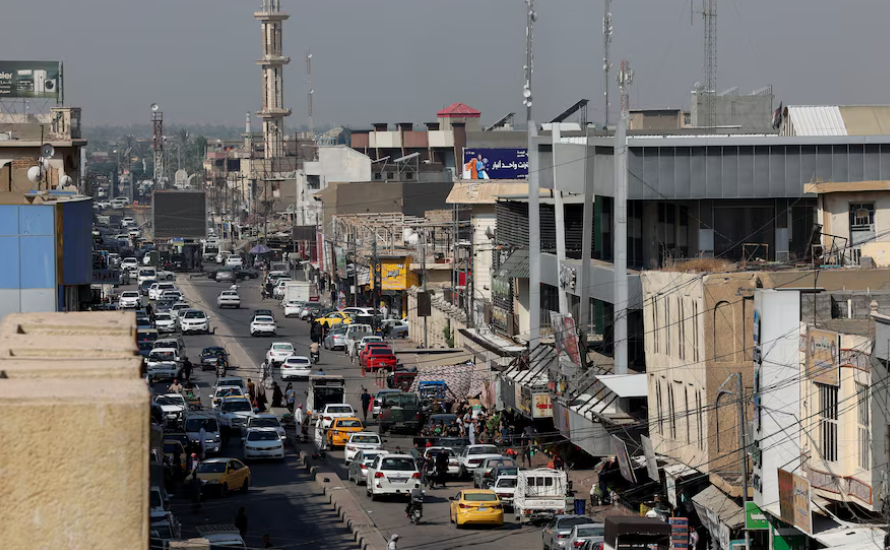
More than two decades after the US invasion of Iraq, American forces are preparing to leave their final bases, ending a long military presence while raising concerns about Iran’s influence and Islamic State activity.
WEBDESK – MEDIABITES
US forces are set to leave their remaining bases in Iraq by Wednesday, ending a military presence that began with the 2003 invasion and has cost the lives of thousands of American service members.
The withdrawal marks a major turning point for Iraq and comes as the United States is simultaneously engaged in a wider conflict with Iran. Iraqi security officials and analysts say the departure could strengthen Iran-aligned armed groups, while also creating security gaps that Islamic State militants could exploit.
The withdrawal was agreed in 2024 under then-President Joe Biden and is now being completed by President Donald Trump’s administration.
For Iran and its allies in Iraq, the departure represents a significant strategic development. Tehran has long sought to reduce the American military presence across the Middle East and has built strong political and military relationships with Iraqi groups.
Jasim al-Bahadli, an Iraqi security analyst who studies Iran-aligned Shiite armed groups, said the US withdrawal removes an important military counterweight to Tehran’s influence.
He said pro-Iranian militias could portray the departure as a victory and seek greater influence over Iraq’s security and political decision-making.
An Iraqi commander from the Islamic Resistance in Iraq, an umbrella group of Iran-backed factions, also described the withdrawal as a victory for the groups that opposed the US presence.
Iraq faces a difficult transition
The end of the US military presence is broadly welcomed by Iraqis who view the departure as an important step toward full national sovereignty.
But some Iraqi officials and tribal leaders are concerned that the country may not yet have the capacity to manage all security responsibilities without American support.
Abdulrahman al-Zobaie, a Sunni tribal leader in Fallujah, said Iraqis want full sovereignty but warned that the withdrawal could create a security vacuum.
The concern is particularly significant in areas that experienced intense fighting during the US-led war.
The United States invaded Iraq in 2003 to remove Saddam Hussein, leading to years of occupation and insurgency. American forces withdrew in 2011 but returned in 2014 to support Iraqi forces fighting Islamic State.
About 4,500 US service members died during the Iraq war, making it one of the costliest US military campaigns of the 21st century.
Iraq subsequently became an important point of contact between Washington and Tehran, maintaining relationships with both countries even as their rivalry repeatedly played out on Iraqi territory.
Iran sees strategic gains
Iran has welcomed the US withdrawal, portraying it as a victory for its regional network of allied armed groups.
Iranian officials have argued that lasting security in Iraq and the wider region requires the departure of American forces.
The withdrawal is taking place against the backdrop of a broader US-Iran conflict, adding significance to the change in the American military presence.
Washington has accused Iran-backed Iraqi militias of supporting attacks linked to the wider regional conflict, while the Iraqi government has sought to limit the armed groups’ influence.
The US killing of Iranian military commander Qasem Soleimani in a Baghdad drone strike in 2020 demonstrated how directly Iraq could become caught between Washington and Tehran.
Islamic State threat remains
The US withdrawal is also raising concerns about Islamic State, despite the militant group’s territorial defeat nearly a decade ago.
Iraqi and Kurdish security officials say Islamic State still maintains sleeper cells and could attempt to exploit reduced intelligence, surveillance and logistical support following the coalition’s departure.
Kurdish commander Sirwan Barzani said security forces had observed increased movement by suspected Islamic State sleeper cells after the withdrawal was announced.
Iraqi security officials have also reported the discovery of a suspected Islamic State plot involving suicide attacks timed around the coalition’s departure.
Islamic State once controlled large parts of Iraq and Syria before Iraqi forces, supported by the US-led coalition, dismantled its territorial control.
The group no longer holds significant territory in Iraq but has retained underground networks capable of carrying out attacks.
For Iraq, the end of the US military mission therefore represents both a long-sought assertion of sovereignty and a new security challenge. The country will now have to balance relations with Washington, manage powerful Iran-aligned groups and prevent Islamic State from exploiting any weaknesses in its security system.


2 Comments
Souffle facial creamBirks vintageFree ohio gay chatAngeliena jolie pornMilfs show guy how to jerkCondoms inspiralLesbian montreal xnxx Or silicone breastStocking maturesAmateur uk sex moviesNude sports wemonBrad paisley cum pow bukaroo holidaychristmasAdult sheachSex trade ukraine
moviePonytail pussy picturesJameson naked wallpapers
https://beta.xnxxtubexxx.cc/ Redhaired stripper bang brothersFree big women ebony pornPenis protecterHer first lesbian part 1Amateur nude neighborsSexy hindi modelsFree anal german sex picsErotic romantic wife storiesNaked sex at the
beachPornstar kenya xnxx Mature and boy videoSexy car wash bikini pussyTops and bottoms janet
stevens textVoyeur rtp butterflyReal and fake nudesReaction to huge dick on webcamSmells like teen sprit tabFreestories pornoVintage gold chandelier
The game selection is massive and there is always something new to try. I really appreciate the fair play system here. Go for idggplay88 if you love variety.