



1. The “First Look” Exterior Check
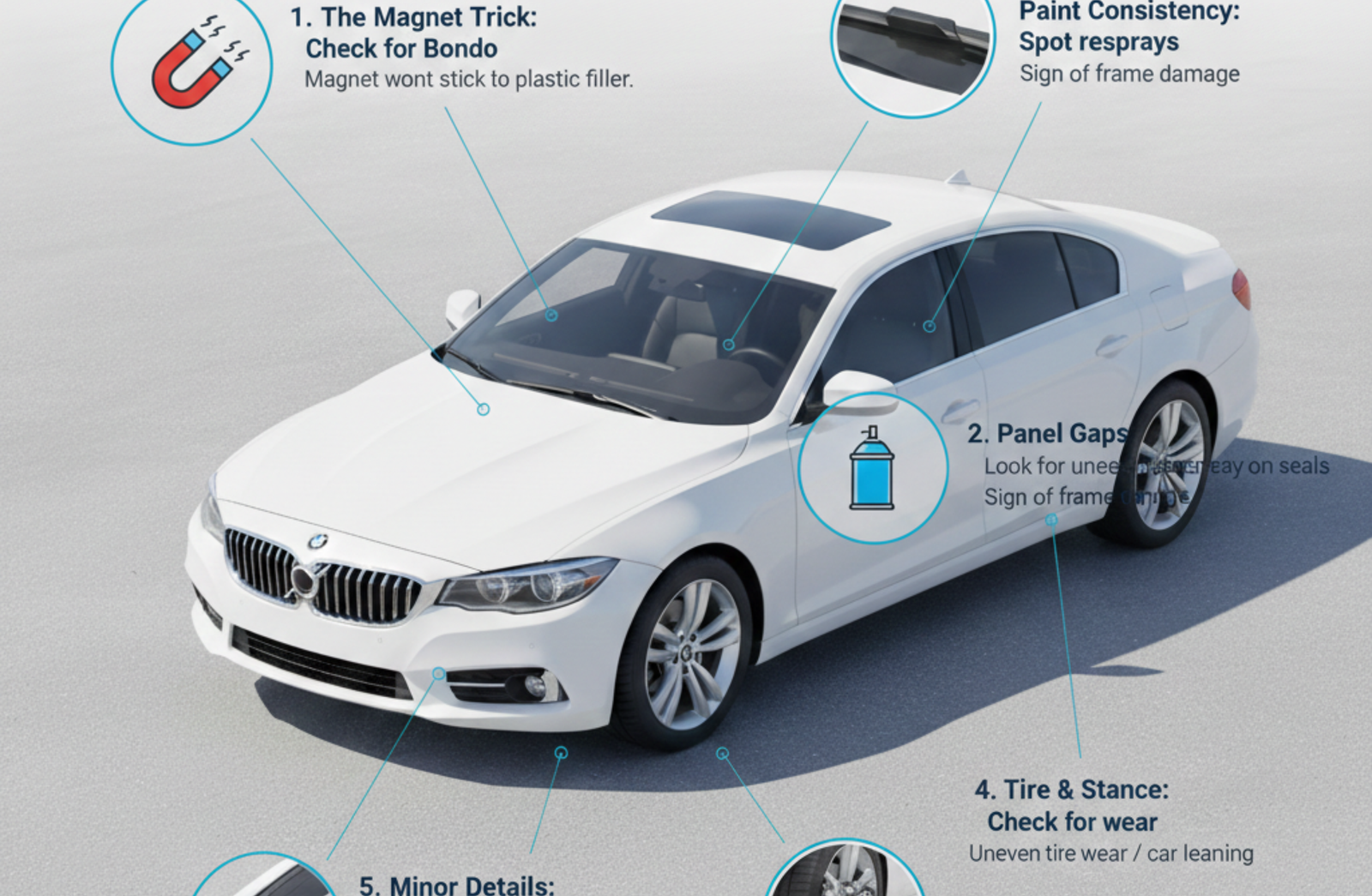 Before diving into the engine, look at the car’s “posture” and skin.
-
The Magnet Trick: Run a small magnet over the body panels. If it doesn’t stick in certain spots, that area is likely filled with Bondo (plastic filler) from a previous accident.
-
Panel Gaps: Look for uneven spacing between the doors, hood, and trunk. Large or inconsistent gaps are a red flag for frame damage.
-
Paint Consistency: View the car in bright daylight. Mismatched shades or “overspray” on rubber seals suggest a cheap respray to hide damage.
2. Under the Hood: The Health Check
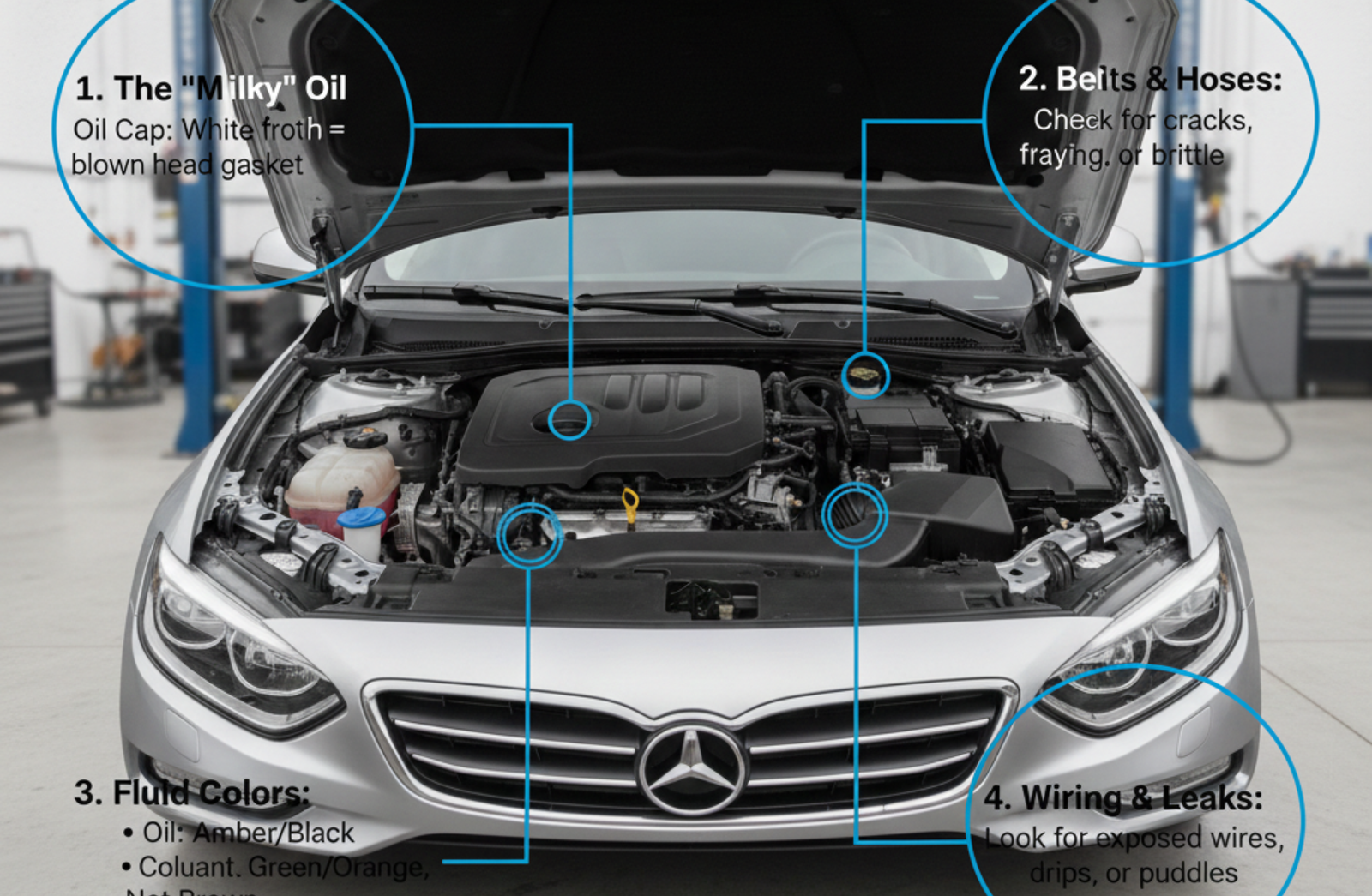
You don’t need to be a mechanic to spot these warning signs:
-
The “Milky” Oil Cap: Open the oil filler cap. If you see a white, frothy, milky substance, it could mean a blown head gasket—a very expensive repair.
-
Belt and Hose Condition: Squeeze the hoses; they should be firm but not brittle or “crunchy.” Look for fraying on the serpentine belt.
-
Fluid Colors: * Oil: Should be amber or black (if old), but never gritty.
-
Coolant: Should be bright green, orange, or pink not brown or rusty.
-
Brake Fluid: Should be clear or light yellow.
-
3. The 2026 Tech & Interior Scan
Modern cars are rolling computers. Testing the electronics is now as important as testing the engine.
-
Dashboard Warning Lights: When you turn the ignition, every light should pop up and then disappear. If the Check Engine or Airbag light doesn’t come on at all during the start-up, the seller may have pulled the fuse to hide a fault.
-
The “Flood” Smell: Sniff the interior. A musty, damp smell often indicates water damage or a previous flood history. Check under the floor mats for dampness.
-
Climate Control: Run the A/C at the highest setting and the heater at the highest. In 2026, repairing a modern dual-zone climate system can cost upwards of Rs. 50,000+.
4. The “Stress Test” (Test Drive)
Never buy a car without driving it for at least 20 minutes across different road types.
| What to Do | What to Listen/Feel For |
| Full Lock Turn | Turn the wheel all the way left/right. Clicking sounds mean bad CV joints. |
| Hands-Off Braking | On a flat, empty road, brake gently. If the car pulls to one side, the alignment or brakes are faulty. |
| Transmission Shift | Acceleration should be linear. Any “jerking” or high revving without speed increase means a failing gearbox. |
| High-Speed Drive | Take it to 80-100 km/h. Vibrations in the steering wheel often mean unbalanced tires or suspension wear. |
5. Paperwork & Verification
-
Service History: A car with a “Full Service History” (FSH) is worth 10-15% more because it proves the owner didn’t skip maintenance.
-
VIN Matching: Ensure the Vehicle Identification Number (VIN) on the dashboard matches the one on the registration papers and the engine block.
- Online History Check: Use digital platforms to check for “total loss” records or outstanding bank finance (especially relevant for newer 2024-2025 models).
Frequently Asked Questions.
1. Why is a visual exterior check important when buying a used car?
A visual check helps identify accident damage, poor repairs, rust, and frame issues that can affect safety and resale value.
2. How does the magnet test help detect car damage?
If a magnet doesn’t stick to body panels, it usually indicates body filler (Bondo) used to hide accident repairs.
3. What does milky residue under the oil cap mean?
A milky or frothy substance often signals a blown head gasket, which is a costly engine repair.
4. Which fluid colors indicate a healthy car?
Oil should be amber or black, coolant should be bright colored, and brake fluid should be clear or light yellow.
5. Why are dashboard warning lights important during startup?
All warning lights should turn on and then off. Missing lights may indicate tampering to hide mechanical or airbag faults.
6. How can you tell if a car has flood damage?
A musty smell, damp carpets, rust under seats, or moisture under floor mats often point to flood or water damage.
7. What should you test during a used car test drive?
Check steering noises, braking alignment, smooth gear shifts, and vibrations at higher speeds.
8. What does clicking noise during full steering lock indicate?
Clicking sounds usually mean worn CV joints, which will require replacement.
9. Why is service history important when buying a used car?
A full service history proves regular maintenance and can increase a car’s value by 10–15%.
10. What paperwork checks are essential before buying a used car?
Verify VIN numbers, service records, and use online checks to confirm no accident write-offs or outstanding loans.

