


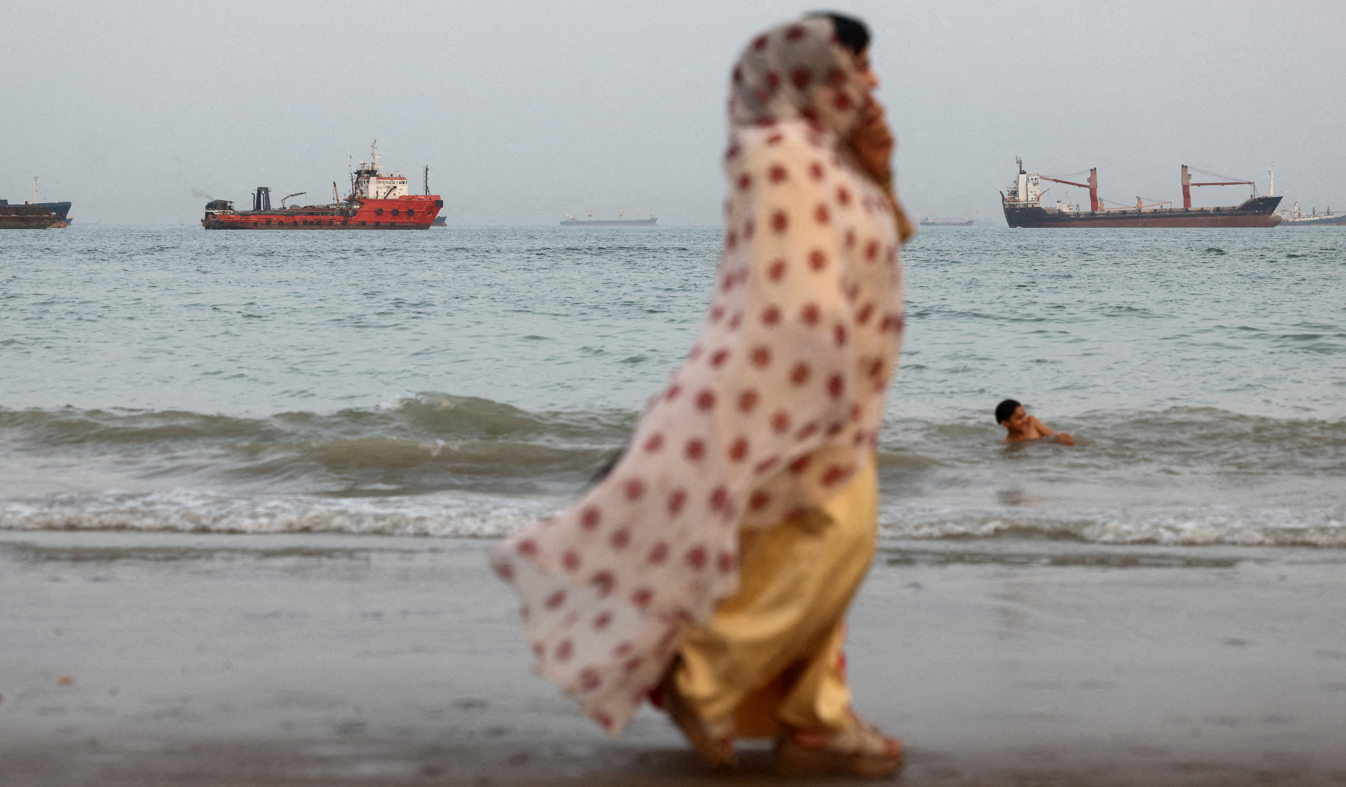
A fragile ceasefire between the US and Iran has reopened the Strait of Hormuz, but the real story is Oman’s extraordinary diplomatic coup in emerging as the indispensable broker of the world’s most critical oil chokepoint.
By Imran Malik | World Affairs & Energy Desk | MediaBites.com.pk
The guns have fallen silent. The tankers are moving again. And the world’s most strategically critical stretch of water — the Strait of Hormuz, through which approximately 20% of the world’s entire oil supply passes every single day — is open for business.
But the ceasefire that ended the most dangerous US-Iran confrontation in years has reshuffled the strategic deck in ways that will define Middle Eastern geopolitics for years to come. And at the center of that reshuffle sits a small, quietly powerful sultanate that most of the world consistently underestimates.
Oman.
What the Strait of Hormuz Actually Means
For Pakistani readers, the Strait of Hormuz is not an abstract geopolitical concept. It is the narrow waterway — just 33 kilometres at its narrowest point — that separates Iran to the north and Oman to the south, connecting the Persian Gulf to the Gulf of Oman and the broader Indian Ocean.
Every day, approximately 17 to 21 million barrels of oil pass through it. Liquefied natural gas shipments from Qatar, the world’s largest LNG exporter, transit through it. Cargo destined for South Asia, East Asia, and Europe passes through it.
When Iran threatened to close the Strait of Hormuz during the recent crisis, oil prices surged globally. Pakistan’s fuel import costs spiked. Every Pakistani family felt the ripple in their electricity bills, their transport costs, and their grocery prices.
This is why the Strait matters not just to superpowers but to every household in Pakistan.
The Ceasefire — What Was Agreed and Who Brokered It
The ceasefire between the United States and Iran was not the product of direct bilateral negotiation. It emerged from an extraordinary multi-channel diplomatic effort involving Pakistan, Qatar, Turkey, Oman, and Saudi Arabia — each playing a distinct and complementary role.
Pakistan’s Field Marshal Asim Munir held direct calls with Iranian Foreign Minister Abbas Araghchi, maintaining the back-channel communication that Islamabad has been managing between Tehran and Washington. Qatar facilitated parallel contacts with American officials including Trump’s envoy Steve Witkoff.
But the most operationally significant diplomatic role — the one that directly addressed the Strait of Hormuz’s physical reopening — belonged to Oman.
Oman’s Masterstroke — The Hormuz Deal
The specific arrangement that unlocked the Strait of Hormuz was negotiated between Iran and Oman — a deal that allowed commercial traffic to resume flowing through the waterway under a framework that gave both sides what they needed.
Iran needed the Strait reopened to relieve the economic and diplomatic pressure of its own blockade. But it needed to reopen it in a way that did not look like a humiliating capitulation to American military pressure.
Oman provided exactly that face-saving framework. As the sovereign power controlling the Strait’s southern coast, Oman’s involvement allowed Iran to present the reopening as a bilaterally negotiated arrangement rather than a unilateral retreat under US military coercion.
It was, by any diplomatic standard, a masterstroke.
Who Controls the Strait of Hormuz?
The Strait of Hormuz has two sovereign coastal nations — Iran to the north and Oman to the south. Under international law, the strait is an international waterway subject to the right of transit passage for all vessels.
But practical control is a different matter from legal right.
Iran has long used its position on the Strait’s northern coast as strategic leverage — operating naval facilities at Bandar Abbas, maintaining fast-attack boat squadrons capable of swarming tanker traffic, and deploying mine-laying capacity that gives Tehran genuine ability to disrupt shipping even if it cannot permanently close the waterway.
The recent crisis demonstrated both Iran’s leverage and its limits. Iran’s Hormuz threat was credible enough to move global oil markets and trigger immediate diplomatic intervention. But the combination of US naval forces, European Operation Aspides ships, Saudi military capability, and Omani diplomatic mediation ultimately proved sufficient to prevent Iran from translating that leverage into a sustained physical closure.
The post-ceasefire control picture is therefore complex. Iran retains its northern coast position and military capability. The United States retains its naval presence. And Oman has significantly enhanced its diplomatic authority over the Strait’s governance through its role in brokering the reopening arrangement.
Oman’s Unique Position — The Gulf’s Essential Intermediary
Oman’s role in the Hormuz ceasefire is consistent with a diplomatic tradition it has maintained for decades.
Oman is the only Gulf Cooperation Council member that has maintained uninterrupted diplomatic relations with Iran throughout the sanctions era. It served as the back-channel host for the secret US-Iran talks that led to the 2015 nuclear deal. It has consistently played the honest broker role between Tehran and Washington precisely because it maintains genuine credibility with both sides.
Sultan Haitham bin Tariq Al Said, who has continued and deepened his predecessor Sultan Qaboos’s carefully neutral foreign policy, has quietly positioned Oman as the indispensable mediator for any Gulf crisis involving Iran. The Hormuz arrangement has now cemented that positioning in the most public and consequential way possible.
What This Means for Pakistan
Pakistan’s stake in this outcome is direct and significant.
The reopening of the Strait of Hormuz removes an immediate threat to the Gulf shipping routes through which Pakistan imports approximately 80% of its energy needs. The stabilization of oil prices relieves pressure on Pakistan’s already strained import bill.
Pakistan’s own diplomatic role in the ceasefire — through Field Marshal Munir’s direct engagement with Iran — has also delivered strategic dividends. Islamabad has demonstrated to Washington, Riyadh, and Tehran simultaneously that it can play a constructive role in regional crisis management — a capability that Pakistan’s foreign policy establishment has been cultivating carefully.
The ceasefire holds for now. The Strait flows. And Oman sits quietly at the center of a new Gulf diplomatic architecture — small in size, enormous in strategic consequence.


1 Comment
helloI like your writing very so much proportion we keep up a correspondence extra approximately your post on AOL I need an expert in this space to unravel my problem May be that is you Taking a look forward to see you