


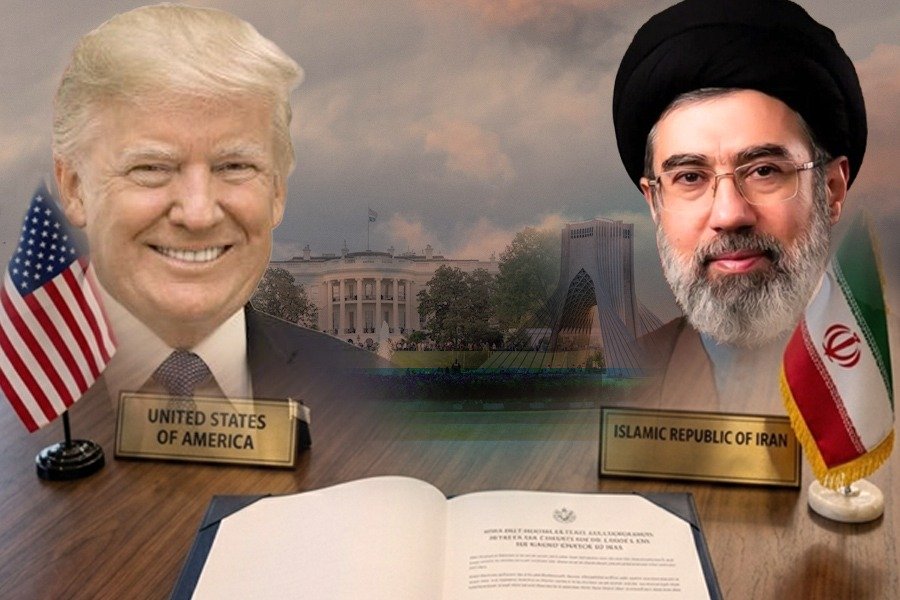
A fragile US-Iran peace understanding appears to be collapsing rapidly after fresh military exchanges in the Strait of Hormuz pushed the region back into uncertainty, raising serious questions about Gulf security, global oil supplies, and Pakistan’s diplomatic position.
MEDIABITES NEWS – IMRAN MALIK
Following weeks of escalating tensions, Washington and Tehran had reportedly moved toward a temporary peace arrangement backed by indirect diplomacy in Geneva and regional mediation efforts. However, behind the scenes, another critical issue was quietly shaping the future of the agreement: control and security of the Strait of Hormuz.
According to regional diplomatic discussions, Iranian negotiators later travelled to Muscat, Oman, to discuss maritime arrangements linked to the strategic waterway. Oman holds an important geographical position because it controls part of the safe maritime passage alongside Iran through the Strait of Hormuz, one of the world’s busiest oil shipping routes.
Sources familiar with regional discussions say Iran wanted Oman to closely coordinate any future maritime understanding regarding Hormuz and avoid independently negotiating shipping arrangements with Western powers without Tehran’s consultation.
The situation became more complicated when US Secretary of State Marco Rubio visited Gulf states to discuss regional navigation security and commercial shipping access through the Strait of Hormuz after months of instability.
Iran then reportedly signaled that commercial vessels crossing the Strait could face toll or transit fees under a new regional security arrangement, with Tehran suggesting Oman could also benefit financially from such a mechanism.
However, Oman reportedly refused the proposal, maintaining that international maritime traffic should continue without additional charges or restrictions. Gulf shipping activity subsequently resumed, while Washington warned that no toll payments to Iran would be recognised.
The fragile calm collapsed after a drone attack targeted a commercial vessel in the Strait of Hormuz. The United States blamed Iran-backed elements for the strike and responded by launching attacks from regional military bases against Iranian-linked targets near the strategic waterway.
Iran retaliated by targeting US military installations in Bahrain, pushing the region back into a dangerous cycle of escalation despite the earlier diplomatic breakthrough.
Analysts say the latest confrontation highlights the deep mistrust between Tehran and Washington, where even temporary peace understandings struggle to survive because both sides continue pursuing conflicting regional security objectives.
Where does Pakistan stand?
Pakistan now finds itself in an extremely delicate diplomatic position.
Islamabad has historically maintained close ties with Gulf Arab states while also sharing a long border and strategic relationship with Iran. Pakistan has consistently called for dialogue, restraint, and regional stability, avoiding direct alignment with either side.
Security experts believe Pakistan’s primary concern remains economic stability and regional peace rather than involvement in another prolonged Middle East confrontation.
Any major conflict in the Strait of Hormuz directly affects Pakistan through rising oil prices, inflation, shipping disruptions, remittance uncertainty from Gulf countries, and broader regional instability.
Diplomatic observers say Pakistan is likely to continue balancing relations carefully between Tehran, Riyadh, Washington, and Gulf capitals while avoiding becoming part of any military bloc or escalation framework.
The renewed crisis also demonstrates how quickly Middle East peace deals can unravel when strategic waterways, military influence, and energy security collide in one of the world’s most volatile regions.


1 Comment
Pingback: https://historicalitaliangolfclubs.com/2026/09/13/live-baccarat-met-live-statistieken-stap-voor-stap/