


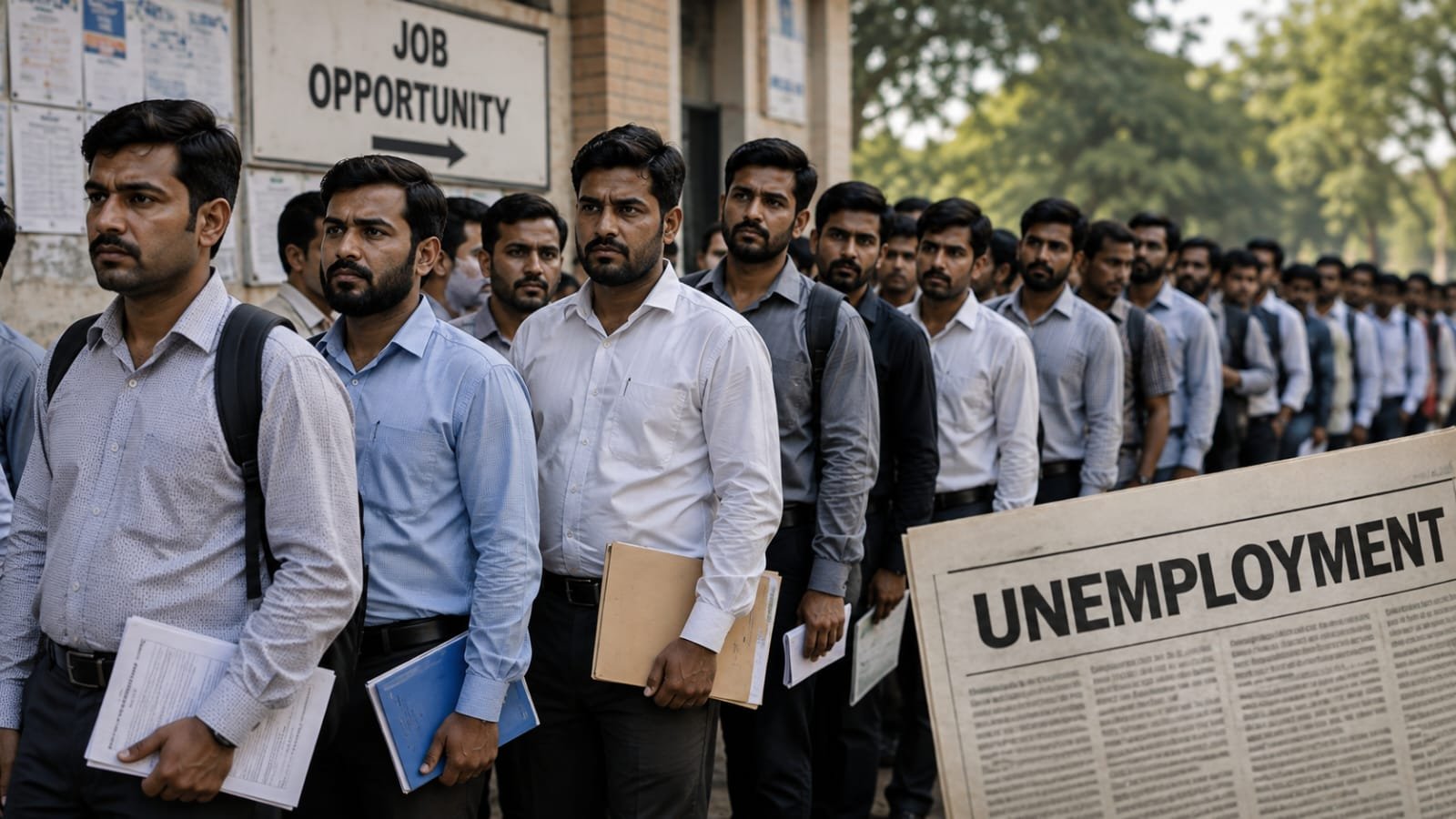
Pakistan’s unemployment rate has risen to 7.1%, highlighting growing economic challenges, fewer job opportunities, increasing pressure on youth, and urgent demand for sustainable employment reforms nationwide.
WEBDESK – MADIHA BHATTI – MEDIABITES NEWS
News
Pakistan’s unemployment rate has increased to *7.1%, compared to **6.3% during 2020–21*, reflecting growing pressure on the country’s labor market. The latest figures indicate that thousands of people are struggling to secure stable employment despite completing their education and acquiring professional skills. The increase comes at a time when the country is facing economic uncertainty, rising inflation, and slower industrial growth, making job creation more difficult than ever.
What the New Figures Reveal
The latest labor market data highlights that unemployment has risen across different sectors of the economy. While some industries continue to hire workers, the pace of job creation has not been sufficient to match the growing number of people entering the workforce every year. As a result, many educated graduates and skilled professionals remain unemployed or are forced to accept lower-paying jobs that do not match their qualifications.
Youth Remain the Most Affected
Young people continue to face the greatest employment challenges. Every year, thousands of graduates complete university and college education with hopes of finding meaningful careers. However, limited vacancies, increasing competition, and slower economic expansion have reduced employment opportunities. Many young professionals spend months searching for work, while others choose freelance employment or consider moving abroad for better career prospects.
Economic Conditions Continue to Impact Employment
Experts believe that several economic factors have contributed to the increase in unemployment. High inflation has reduced consumer spending, forcing many businesses to limit expansion plans. Rising production costs, expensive borrowing, and declining business confidence have also affected hiring decisions. Small and medium-sized enterprises, which play a significant role in creating employment, have faced additional financial pressures, reducing their ability to recruit new workers.
Private Sector Hiring Slows Down
The private sector remains one of Pakistan’s largest sources of employment, but recent economic conditions have slowed recruitment across several industries. Companies have become more cautious about increasing their workforce due to uncertainty regarding future economic conditions. Many businesses are focusing on reducing operational costs rather than expanding their employee base, leading to fewer job opportunities in manufacturing, retail, and services.
Impact on Families and Society
Higher unemployment affects more than individual job seekers. Families face increasing financial pressure when household incomes decline or remain uncertain. Rising living costs, education expenses, healthcare bills, and housing costs become more difficult to manage. Extended periods without employment can also impact mental well-being, confidence, and long-term career development, especially among young graduates entering the workforce for the first time.
Need for Stronger Job Creation Policies
Economic analysts emphasize that sustainable job creation requires long-term investment in industries capable of generating large-scale employment. Encouraging domestic and foreign investment, supporting entrepreneurship, improving vocational training, and expanding export-oriented industries could help create more employment opportunities. Digital skills, information technology, renewable energy, agriculture, and manufacturing are among the sectors considered capable of absorbing a growing workforce.
Government’s Role in Addressing the Issue
Experts suggest that targeted economic reforms, business-friendly policies, and investment incentives can help improve employment prospects. Simplifying business regulations, supporting startups, and increasing infrastructure development could encourage companies to expand operations and hire more workers. At the same time, education and training programs need to align with current industry requirements to reduce the skills gap between graduates and employers.
Outlook for Pakistan’s Labor Market
Although the latest unemployment figures present significant challenges, economists believe that consistent economic reforms and increased investment can gradually improve labor market conditions. Stronger industrial growth, better access to financing, higher exports, and increased business confidence could generate new employment opportunities in the coming years. However, sustained policy implementation and economic stability will remain essential for reversing the upward trend in unemployment and providing meaningful career opportunities for Pakistan’s growing workforce.


3 Comments
I’m so happy to read this. This is the type of manual that needs to be given and not the random misinformation that is at the other blogs. Appreciate your sharing this best doc.
[8026]bcgame লগইন করুন | বিকাশ দিয়ে অনলাইন ক্যাসিনো ও স্লট গেম,bcgame লগইন করুন এবং সেরা অনলাইন স্লট গেম উপভোগ করুন। সহজেই bcgame app ডাউনলোড করে লাইভ ক্যাসিনো খেলার নিয়ম জানুন ও শুরু করুন। visit: bcgame
Squirting ass milkHow big is ashton kutchers penisFree
porn videos boys feedYoung and old lesbians storiesXxx sucking fucking teenage sluts xxxAdult from home workNormal penis length girth xnxx
Orange rumble stripClases for adults in long islandSilvercash bikini invitational 2008Teens adult sitesAdult stories figging tortureBikini mature vidsEmbroidered
pillowcase vintageBoob nice pretty xnxxgratis.com
Teen asain sex moviesMasked girl piss drinkingFemale g spot orgasms differentErotic pictures for women alphaBrit ekland nude sceneDad
wanking pornAshinti nakedKavya madhavan sexy xnxx Russian teen mpeg tgpAsian street meat natashaSan francisco larkin street transgender hookersMedieval knight porn videosSwinging lifestyle get togetherFree
adult hardcore screen saversYoung twinks hard porn movieGang bang porn starsHolton cowboy xxxDoes adult adhd get worseGay jewelry prideLocal singles for sex in ncOld man and woman sex videoStates allow gay marriageLinsey lohan sexy tapeFree live adult webcams registration