



As Pakistan battles catastrophic monsoon floods, a surprising $2 billion move from the Asian Development Bank sparks hope — but can this game-changing project truly reshape the nation’s future?
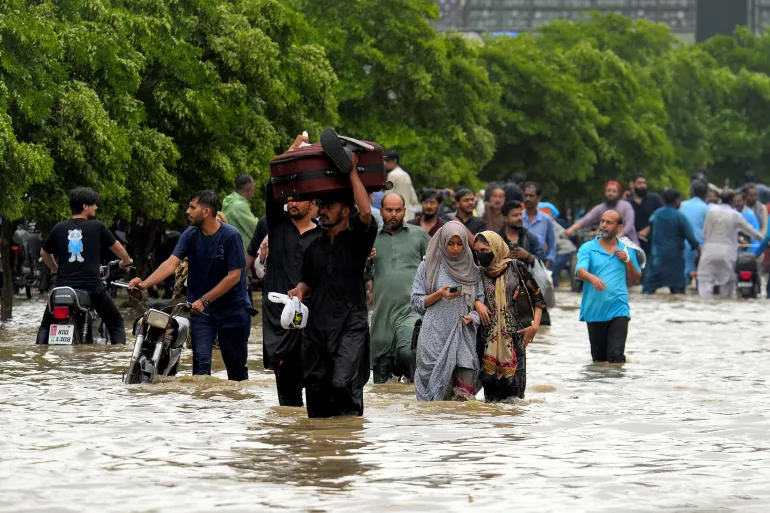
WEBDESK — Pakistan is battling one of its deadliest monsoon seasons in recent history, with nearly 750 people killed and thousands displaced after catastrophic floods and landslides swept across the country.

The Buner district in Khyber Pakhtunkhwa was hit hardest, where a sudden cloudburst dropped 150 mm of rain in just one hour, killing more than 300 people. Rescue teams are still searching for survivors amid destroyed homes and roads.
Amid the devastation, a major development has offered Pakistan a lifeline: the Asian Development Bank (ADB) has pledged $2 billion to revive the stalled Karachi–Rohri railway upgrade, a project once tied to Chinese financing under CPEC.
The modernized corridor is critical for transporting copper ore from Balochistan’s massive Reko Diq mine, expected to begin production in 2028. Earlier this year, ADB also approved a $410 million package to support the mining project, including a $300 million loan to Balochistan’s government.
Analysts say the intervention could reshape Pakistan’s economic trajectory — offering jobs, boosting exports, and showcasing flexibility beyond Chinese-led projects. But the timing is especially poignant, as the nation confronts natural disaster and infrastructure collapse.
For many, the rail upgrade is more than an economic project — it is a symbol of resilience, offering hope that Pakistan can rebuild stronger amid crisis.

