


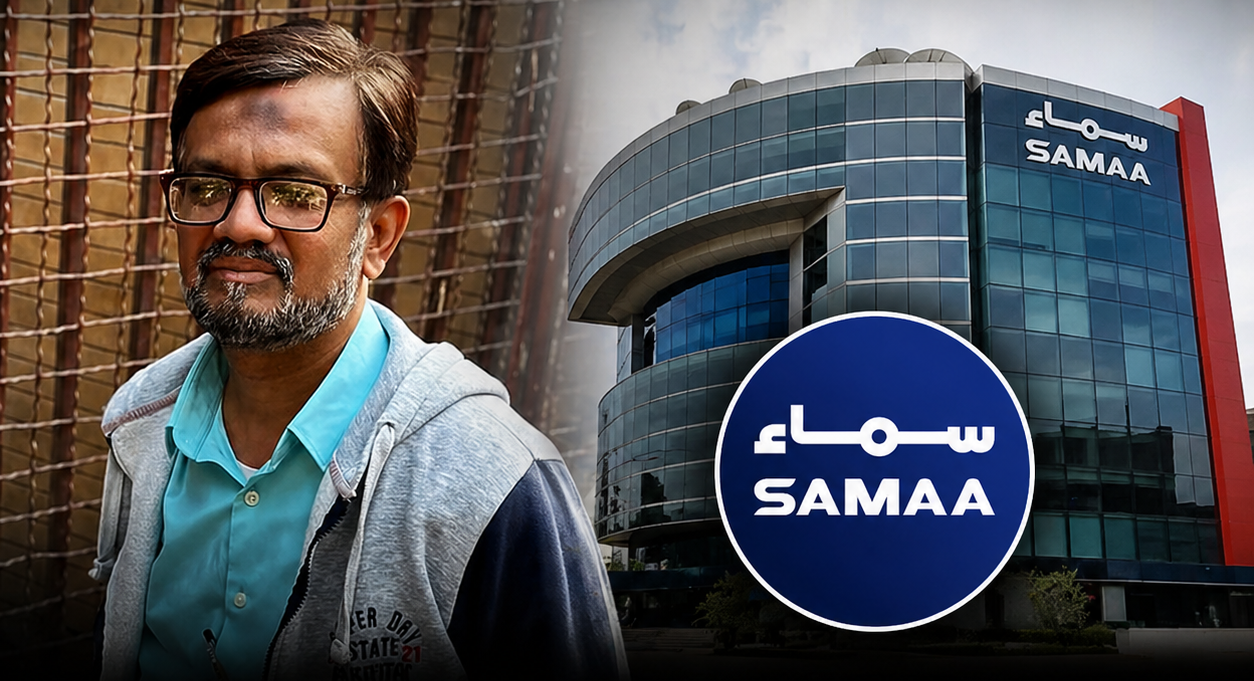
A young media worker’s death has intensified concerns over job insecurity, layoffs, and mental stress in Pakistan’s newsrooms, with colleagues questioning the silence of industry leaders.
WEB DESK | MEDIA CRISIS | ALI IMRAN JR.
Fresh details have emerged following the tragic death of Muizuddin, a prompter operator at Samaa TV, highlighting the growing pressures faced by media workers in Pakistan.
Muizuddin had relocated from Karachi to Lahore after the channel’s operations shifted following its acquisition by Aleem Khan from late media owner Zafar Siddiqui. Colleagues say the move marked a difficult transition, as many employees were forced to uproot their lives amid increasing uncertainty in the industry.
Tragedy linked to stress
According to coworkers, Muizuddin suffered a brain hemorrhage, allegedly triggered by intense workplace stress and job insecurity. He was described as a hardworking and complaint-free employee, known among colleagues for his dedication and quiet nature.
In a heartbreaking detail, friends revealed he had recently been searching for a small bicycle for his young children—an ordinary act that now reflects the personal struggles behind the headlines.
“A toxic newsroom environment”
Employees at Samaa TV claim newsroom conditions have become increasingly stressful, with layoffs, performance pressure, and uncertainty creating what some describe as a “mentally exhausting environment.”
“The atmosphere is so tense that almost everyone feels psychologically affected,” a colleague said, adding that fear of losing jobs has become a constant burden.
Muizuddin’s death is not being seen in isolation. Media workers recalled similar incidents, including the deaths of Bilal Bakhtiar and Bali, who also reportedly passed away during duty under stressful conditions.
Silence from the industry and authorities
The incident has sparked criticism of both media organizations and government authorities, particularly the Ministry of Information, for failing to address the worsening conditions faced by journalists and technical staff.
Despite ongoing layoffs and growing mental health concerns, critics say there has been little acknowledgment or meaningful action from media leadership or prominent on-air personalities.
A systemic crisis is unfolding
Pakistan’s media industry continues to struggle with financial instability, shrinking revenues, and organizational restructuring—factors that have led to job cuts and increased workloads.
However, the human cost of these changes is becoming increasingly visible.
Calls for urgent action
Journalists and media workers are now demanding:
- Immediate mental health support in newsrooms
- Job security frameworks and fair contracts
- Accountability from media owners and management
- Government intervention to regulate working conditions
Muizuddin’s untimely death has once again brought the crisis into sharp focus—raising urgent questions about how long media workers can continue under such pressure before more lives are lost.


2 Comments
Pingback: buy 5 meo dipt
Heya i’m for the primary time here. I came across this board and I in finding
It really useful & it helped me out much. I hope to give something
back and aid others like you aided me. xnxx