


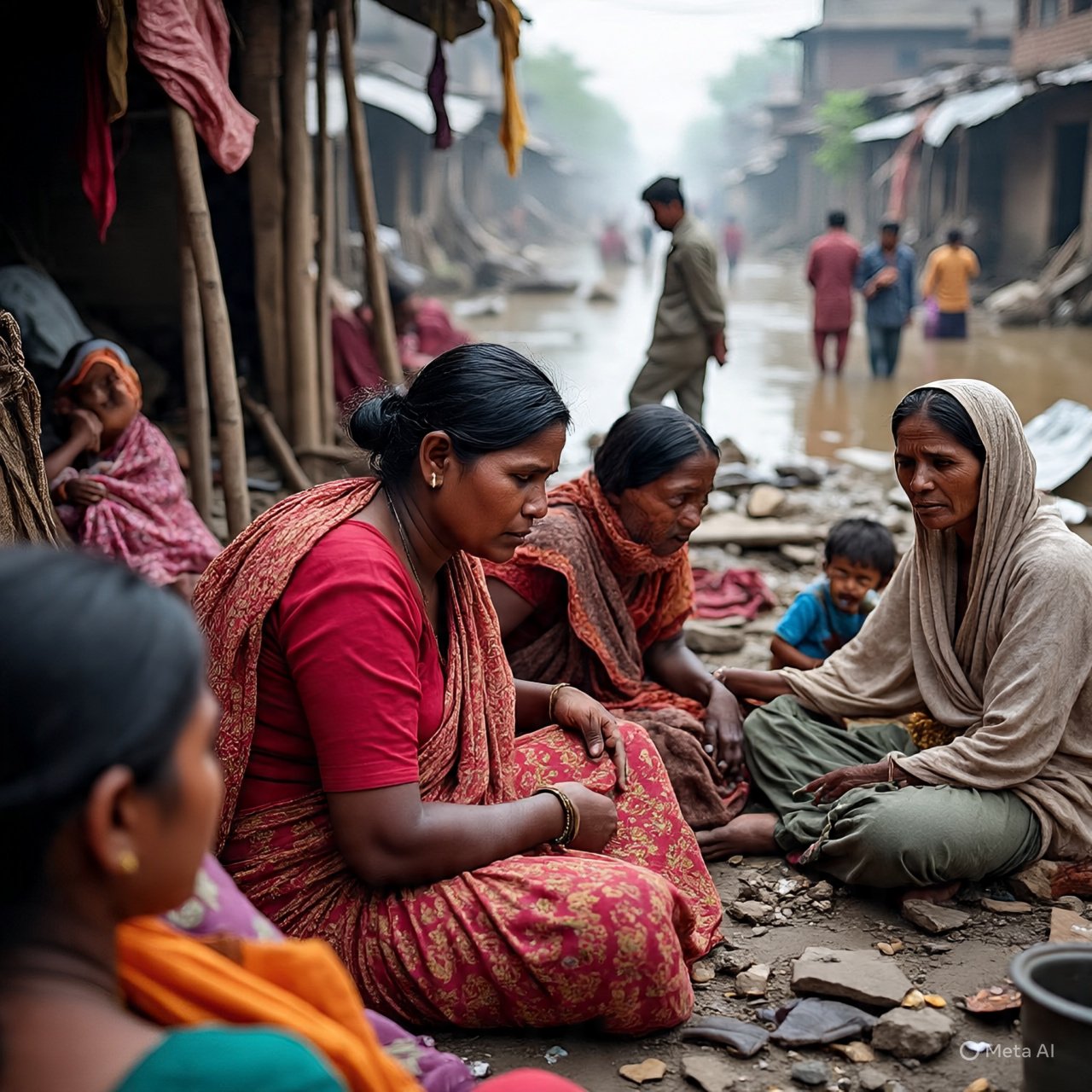
Every year, as heavy monsoon rains hit South Asia, millions face floods, landslides, and destruction. But women often suffer the most. In rural areas, women handle food, water, and family care but have little power in decisions. When floods come, men often leave first with valuable assets, while women stay behind to protect homes and the elderly. During Pakistan’s 2022 floods, many pregnant women were stranded without medical help, and shelters lacked privacy and safety.Gendered monsoon crisis. Similar struggles happen in India, Bangladesh, and Nepal, where women become invisible climate refugees with little aid or support.
In cities like Mumbai, Karachi, and Dhaka, poor women in informal settlements face unsafe housing, dirty water, and disease. Traveling for work becomes dangerous during floods, and disaster plans rarely consider single mothers or women-led households. Emergency shelters lack separate toilets and breastfeeding areas, making survival even harder.
Health care during disasters is also unequal. In Pakistan, over 650,000 pregnant women were affected by the 2022 floods, yet most had no access to maternal care. Gendered monsoon crisis. Contaminated water causes disease, and girls often miss school due to poor sanitation.
Women’s livelihoods are also hit hardest. Many work in farms, garment factories, or home businesses that are washed away during floods. Without collateral or documents, they cannot access recovery loans.
Despite their struggles, women lead many recovery efforts—from community kitchens to floating gardens. To build resilience, South Asia must include women in disaster planning, provide safe shelters, improve healthcare, and support women-led adaptation projects. True climate justice means recognizing women’s voices and leadership in facing monsoon disasters.

