


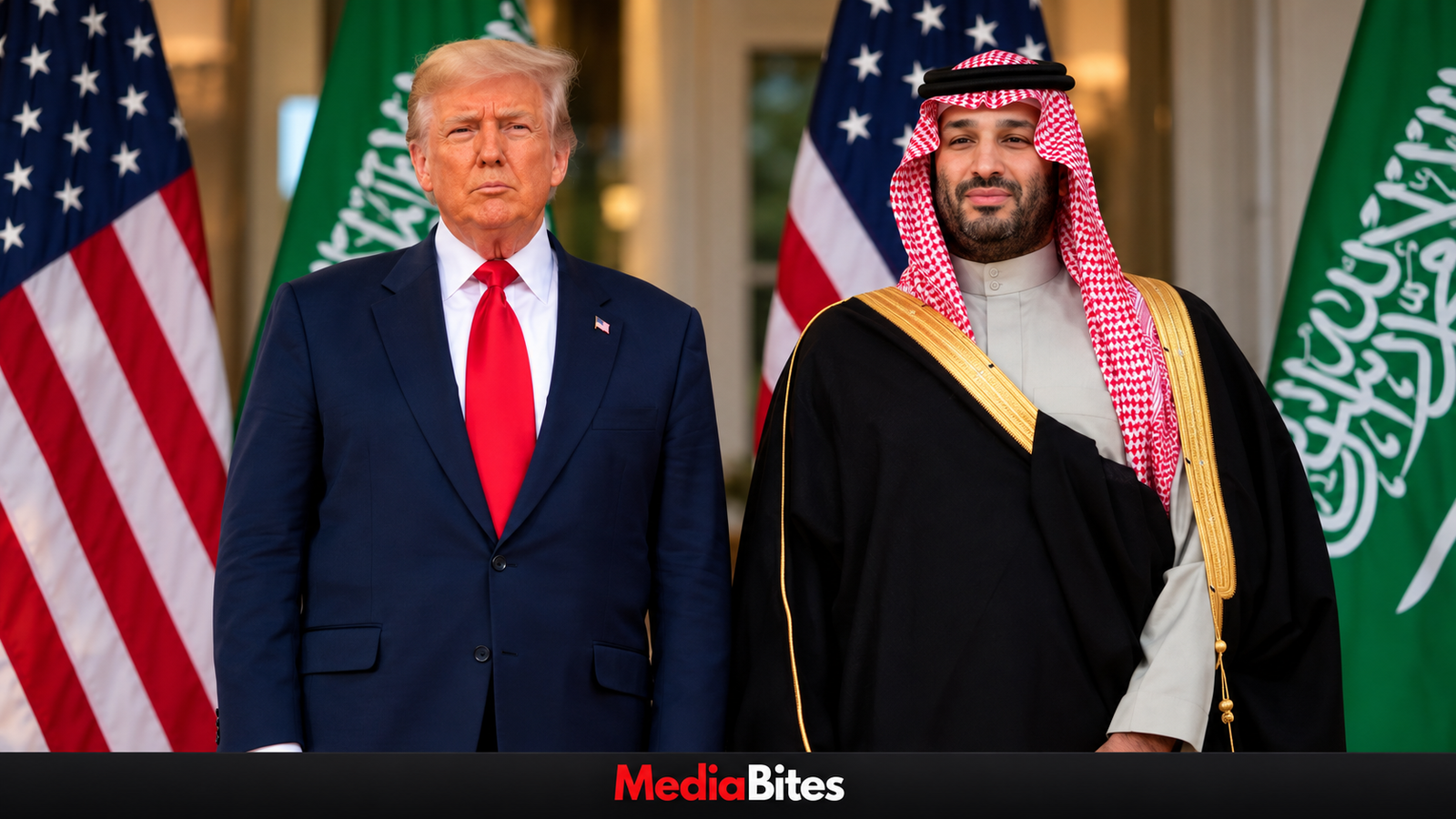
Saudi Arabia, Turkey and Pakistan have activated a new trilateral defense pact as Houthi attacks intensify. Analysts ask: Is Riyadh finally reducing its dependence on Washington’s security umbrella?
WEBDESK – MEDIABITES
For decades, the Saudi-American security relationship rested on an unwritten arrangement: Saudi Arabia kept oil flowing and markets stable, and Washington kept the kingdom safe. That arrangement is now being tested in ways it has not been before, and Riyadh is quietly building alternatives.
On October 5, Saudi Arabia, Turkey and Pakistan announced they would immediately activate collective defense commitments under the Mecca Agreement, signed in August, following intensifying Houthi attacks on Saudi territory. The three countries pledged to deploy agreed military forces and capabilities rapidly to Saudi Arabia — a significant step from words on paper to boots on the ground.
The trigger was a renewed escalation in Yemen. Saudi-backed Yemeni forces launched a major military operation on October 5 to reclaim territory from Houthi control, with Saudi air support. The Houthis, backed by Iran, have struck tankers, oil facilities and, in a symbolically charged attack, a power station in Medina supplying electricity to the Prophet’s Mosque.
What makes the moment significant is what Washington chose not to do. According to media reports, the Trump administration declined multiple Saudi requests for direct military action against the Houthis, providing intelligence support but stopping short of coordinated strikes. The memory of Operation Rough Rider in 2025 — 52 days, over a thousand strikes, and no decisive blow against Houthi capabilities — appears to have dampened American appetite for deeper involvement.
“America has let Saudi Arabia down on this,” said Mitchell Plitnick of the Foundation for Middle East Peace. He traces Saudi unease back further, to the 2019 drone and missile attacks on Saudi Aramco oil facilities, when Washington identified Iran as responsible but launched no military response. “It became clear then that the security partnership did not mean the US would join every conflict Saudi Arabia deemed necessary for its national security.”
Aaron David Miller, who served as State Department adviser under six presidents, offers a more measured reading. He argues the Trump administration had reasons to help Riyadh but was wary of a broader confrontation with Iran and a new military front in Yemen so close to the midterm elections. The question, he says, is not whether the partnership exists but how far Washington will go in any given crisis — and that calculation shifts with every administration.
The Mecca Alliance: Supplement or Substitute?
The Mecca Joint Defence Agreement, whose full text has not been released, brings together three significant powers: Saudi Arabia, one of the world’s largest oil producers; Pakistan, a nuclear-armed state; and Turkey, a NATO member. At the October 5 emergency session, the alliance also appointed retired Pakistani General Nauman Mahmood as its first Secretary General for a three-year term, giving the pact an institutional backbone it previously lacked.
Analysts are careful, however, not to overstate what the alliance can deliver. Miller says it cannot be dismissed, but nor should it be mistaken for a replacement of American military capability. “It does not mean these three countries are prepared to confront Iran directly, or that the alliance is currently positioned to provide the military, intelligence and air defence capabilities the US has supplied Saudi Arabia for decades.”
Turkey’s Foreign Minister Hakan Fidan was explicit: the agreement does not obligate Turkey to deploy forces in offensive operations in another country’s territory. Pakistan made a similar clarification in September, saying immediate military action under the pact had not been considered in response to Houthi attacks.
Carnegie Endowment’s Amr Hamzawy describes the Mecca Alliance as a defensive arrangement focused on protecting Saudi territory, borders and critical infrastructure — not a license for wider military campaigns. He notes that Pakistani military personnel are already serving in Saudi Arabia, but draws a clear line between that presence and any readiness for direct confrontation with Iran or involvement in Yemen.
Is Israel Part of the Calculation?
Behind the regional realignment, analysts point to a longer-term question: as Saudi Arabia diversifies its security partnerships, does Israel become more relevant to Riyadh’s strategic calculus?
Both countries share a common adversary in Iran. Israel’s former deputy national security adviser Chuck Freilich argues that Israeli capabilities in air defense, missile interception and intelligence make it a natural potential partner for Saudi Arabia — and unlike the United States, Israel cannot simply step back from the region. “For Israel, the conflict with Iran is an existential question,” he said.
Saudi Arabia has long conditioned any normalization with Israel on meaningful progress on Palestinian statehood, a position Riyadh has not formally abandoned. But as Plitnick notes, the question is whether quiet security and intelligence ties can develop in the background, as they did with other Arab states before formal diplomatic agreements were announced.
Reports of a secret military meeting in Germany in September, attended by senior officials from the US, Israel, Saudi Arabia and several Arab states, have not been officially confirmed. Unverified reports of Saudi-Israeli contacts during Israeli Prime Minister Benjamin Netanyahu’s visit to the UAE were subsequently walked back.
The Bigger Picture
The more enduring shift may be less dramatic than a clean break with Washington — and more significant for that reason. Saudi Arabia is not replacing the American security umbrella. It is building a portfolio of relationships so that no single partner’s hesitation leaves it exposed.
“Saudi Arabia has been trying to diversify its foreign and defence policy since 2015,” said Salem Al-Yamani, former adviser to the Saudi Foreign Ministry. “What we are seeing now should be understood in the context of that broader strategy — not as a turn away from Washington, but as an effort to build balanced relationships with multiple partners.”
Hamzawy frames it most directly: the real question is not whether the partnership between Saudi Arabia and the United States continues, but how far Washington is willing to go in practice — in any given crisis, under any given administration. That, he says, is a question no alliance document can answer.
Riyadh already knows that. It is building accordingly.

